
This Sourdough Oatmeal Bread is a hearty, sandwich-style loaf made with rolled oats, whole wheat flour, and active starter. Easy to make, it can be baked the same day or fermented overnight for extra flavor.
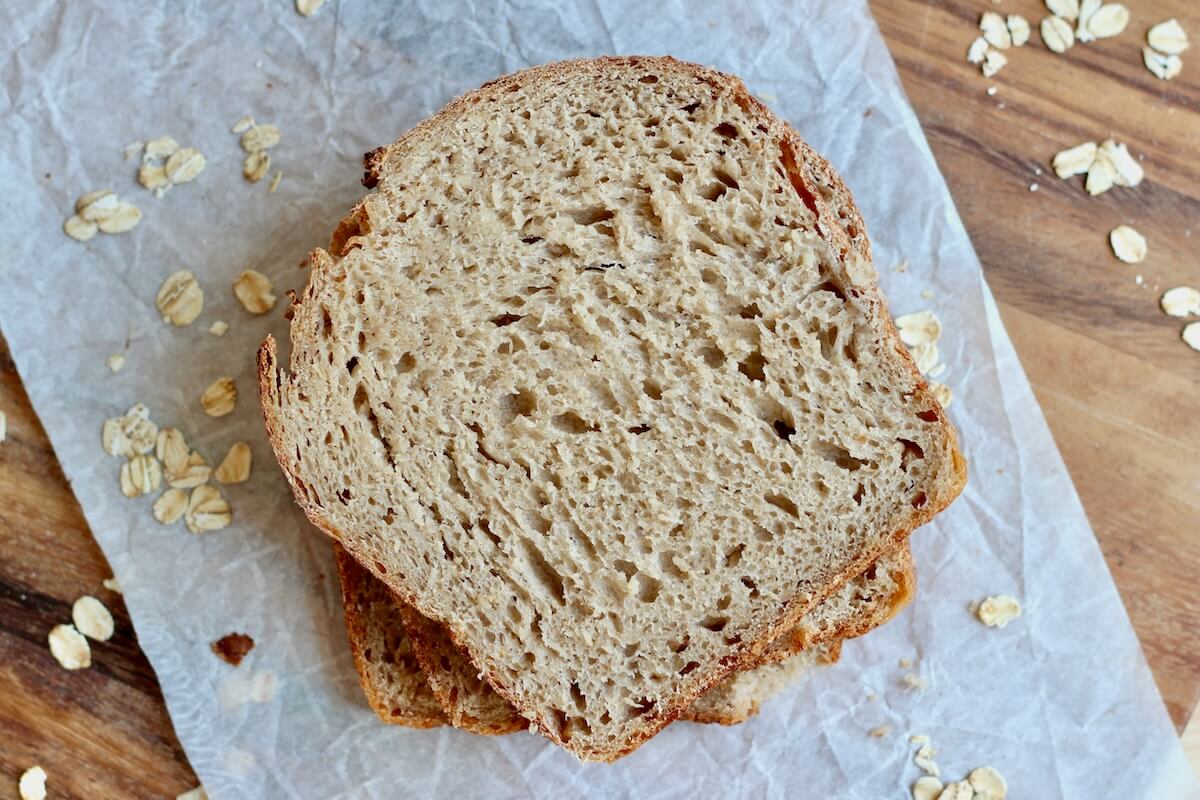
Oatmeal has been one of my favorite foods for years. I’ve probably eaten it nearly every morning for over a decade!
So, of course, I was all in on the idea of adding my favorite breakfast food to sourdough bread.
For this sourdough oatmeal bread, I soak rolled oats in hot water before mixing them into the dough, which softens them and prevents them from soaking up too much of the dough’s water. I also added some whole wheat flour to make the loaf a bit heartier and healthier.
This dough works best with an active starter, though you can use discard that’s a day or two old (it may just take a little longer to rise). I bake it in a loaf pan for a classic sandwich-style bread, perfect for breakfast sandwiches, turkey sandwiches, or grilled cheese.
Easy to make the same day or ferment overnight, this oatmeal sourdough bread is sure to become a staple in your recipe collection.
I hope you give it a try and enjoy it as much as I do!
For a lightly-sweetened oatmeal bread, give my honey oat or maple oat sourdough bread recipes a try!
Disclaimer: Some links throughout this post are affiliate links. As an Amazon Associate, I earn from qualifying purchases. You can learn more by visiting my Affiliate Disclosure Page.
Ingredients & Substitutions
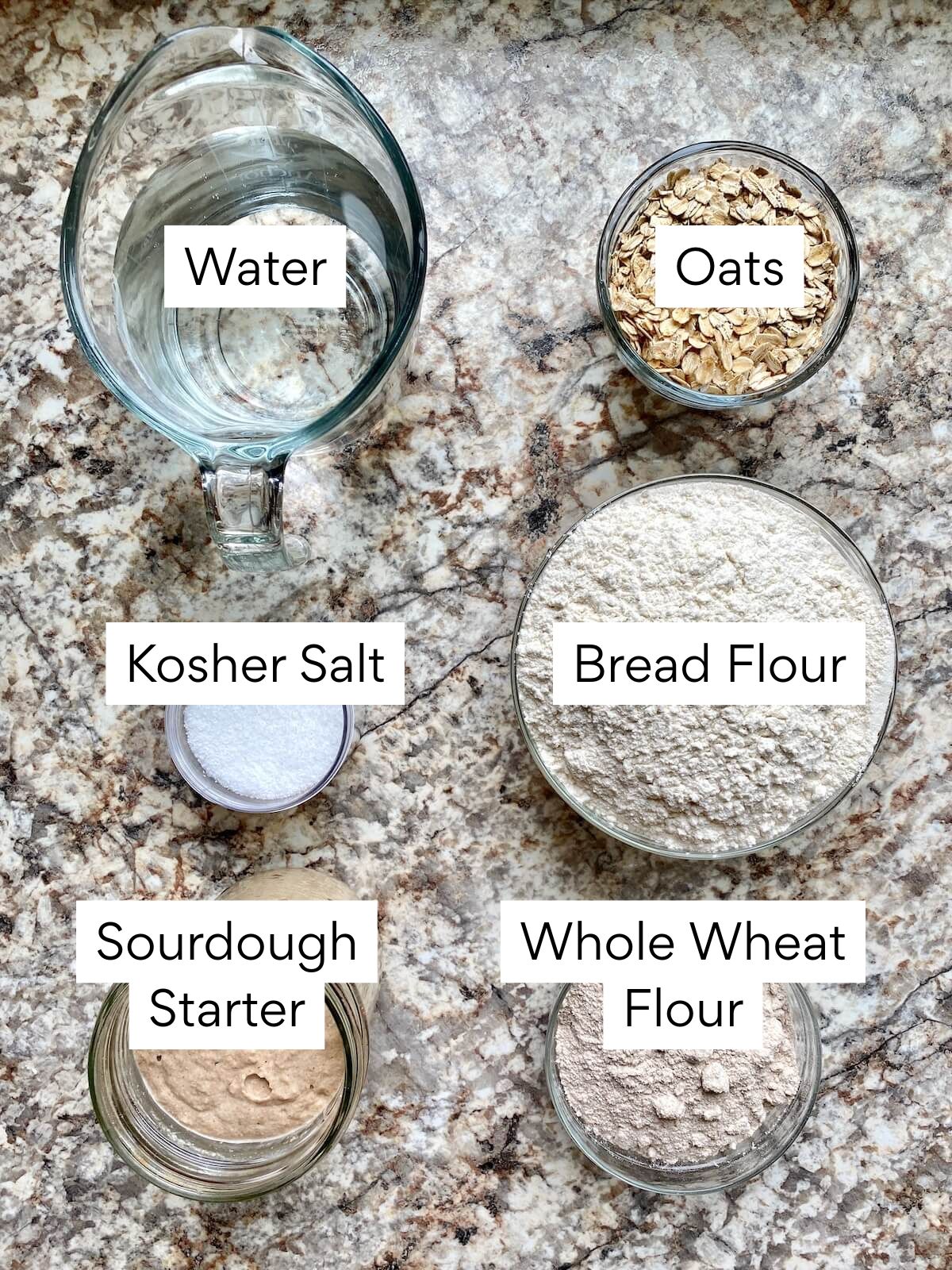
Here are some notes on key ingredients. For a full list of ingredients, check out the recipe card below.
- Active Sourdough Starter- Your starter should be bubbly and active before mixing. You can use fresh sourdough discard (within a day or two), but the dough may take longer to rise.
- Rolled Oats- Soak in hot water before adding to the dough. This softens the oats and prevents them from drawing water from the dough.
- Bread Flour- Provides structure, chew, and a good rise. All-purpose flour can be substituted, but your loaf may be slightly softer and less well risen.
- Whole Wheat Flour- Adds flavor, nutrition, and a slightly denser texture. You can adjust the ratio with bread flour if you prefer a lighter loaf.
- Water- Lukewarm or room temperature water encourages fermentation. You can adjust the amount depending on your preferred dough hydration and your kitchen’s humidity.
- Kosher Salt- Enhances flavor. I use Diamond Crystal Kosher Salt (2.8 grams per teaspoon). If you’re using Morton’s or table salt, use half as much or weigh it for best results.
Tips for Success
- Start with an active starter. A bubbly, well-fed starter gives your dough strength and helps develop a soft, open crumb.
- Weigh your ingredients. Using a kitchen scale ensures consistency and the right dough hydration, which is especially important with whole wheat flour and oats.
- Soak the oats. Letting the oats soak before adding them to the dough softens them and prevents them from drawing too much water from the dough.
- Be patient with the bulk rise. Wait until the dough is puffy and doubled. This helps create a light, airy texture.
- Build tension when shaping. Tension helps the loaf rise well in the oven.
- Cool completely before slicing. Letting it cool fully prevents a gummy interior.
How to Make Sourdough Oatmeal Bread
Follow these steps to turn your active starter and rolled oats into a soft sourdough oatmeal sandwich loaf.
Step 1: Feed starter. Feed about 6–12 hours before mixing. Make sure it’s bubbly and active.

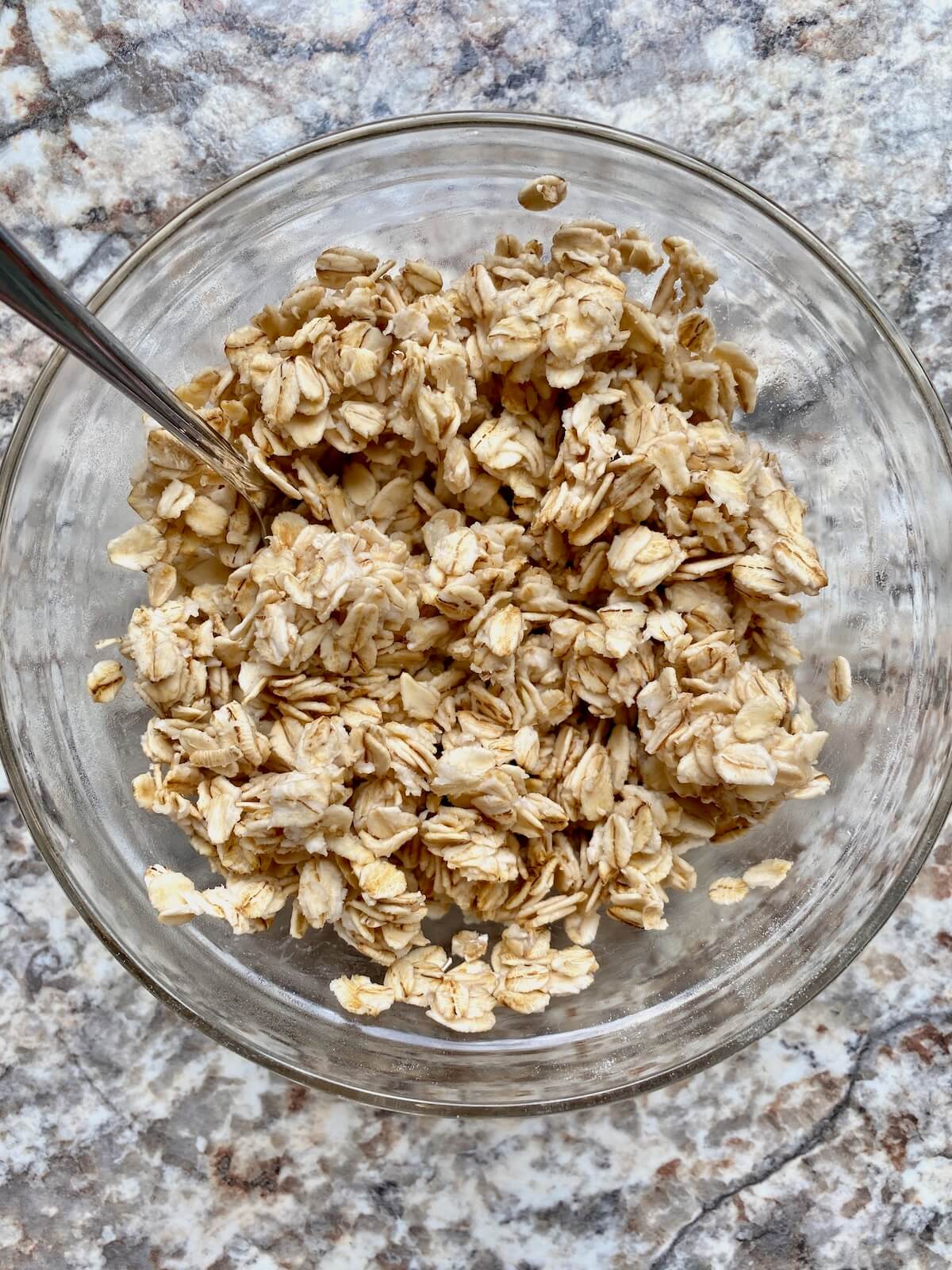
Step 2: Soak oats. Combine oats with hot water and let sit 30 minutes.
Step 3: Autolyse. Mix bread flour, whole wheat flour, and water until no dry flour remains; rest 30 minutes.

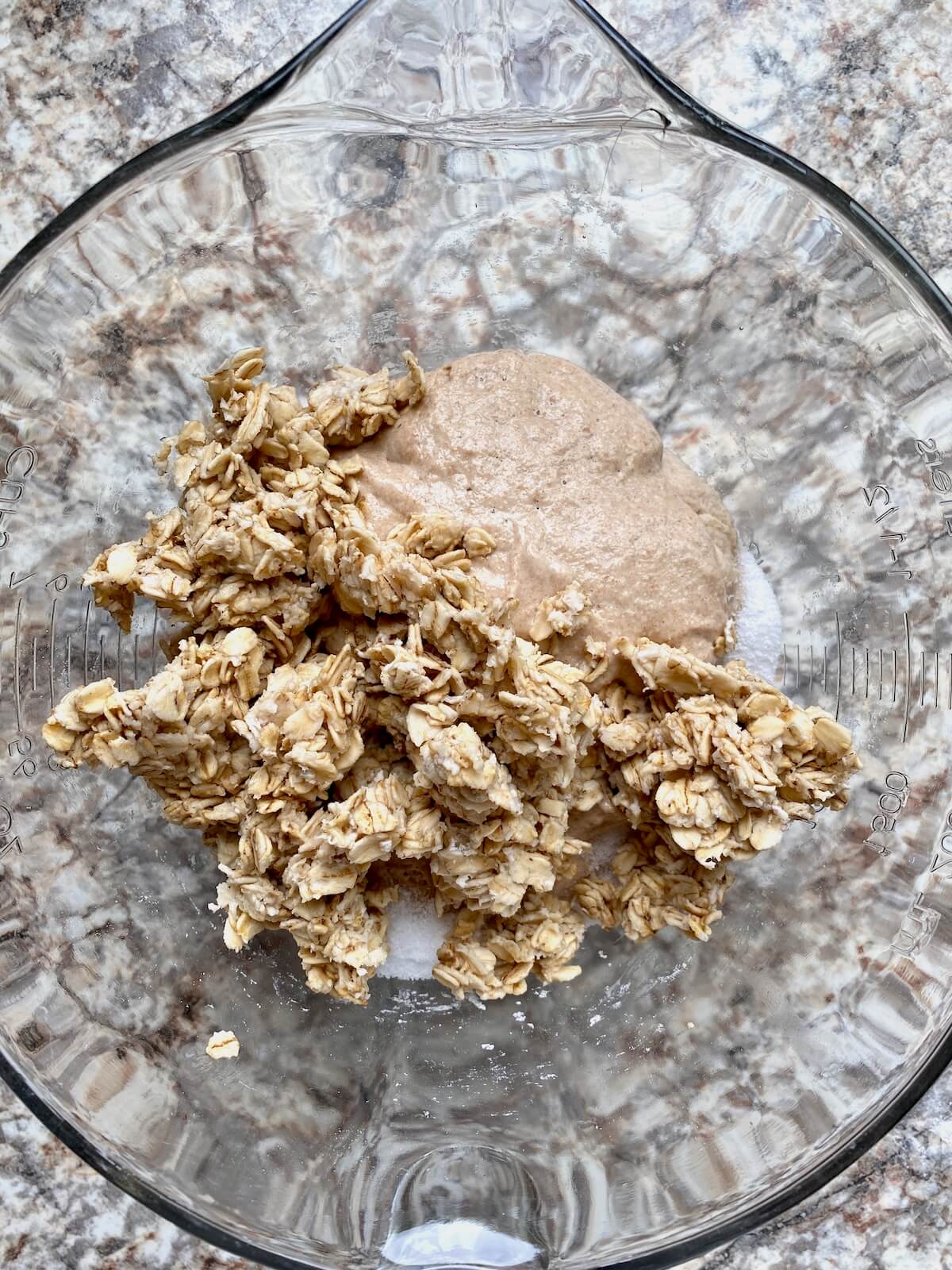
Step 4: Mix the dough. Add soaked oats, starter, and salt; knead until smooth, then rest 20 minutes.
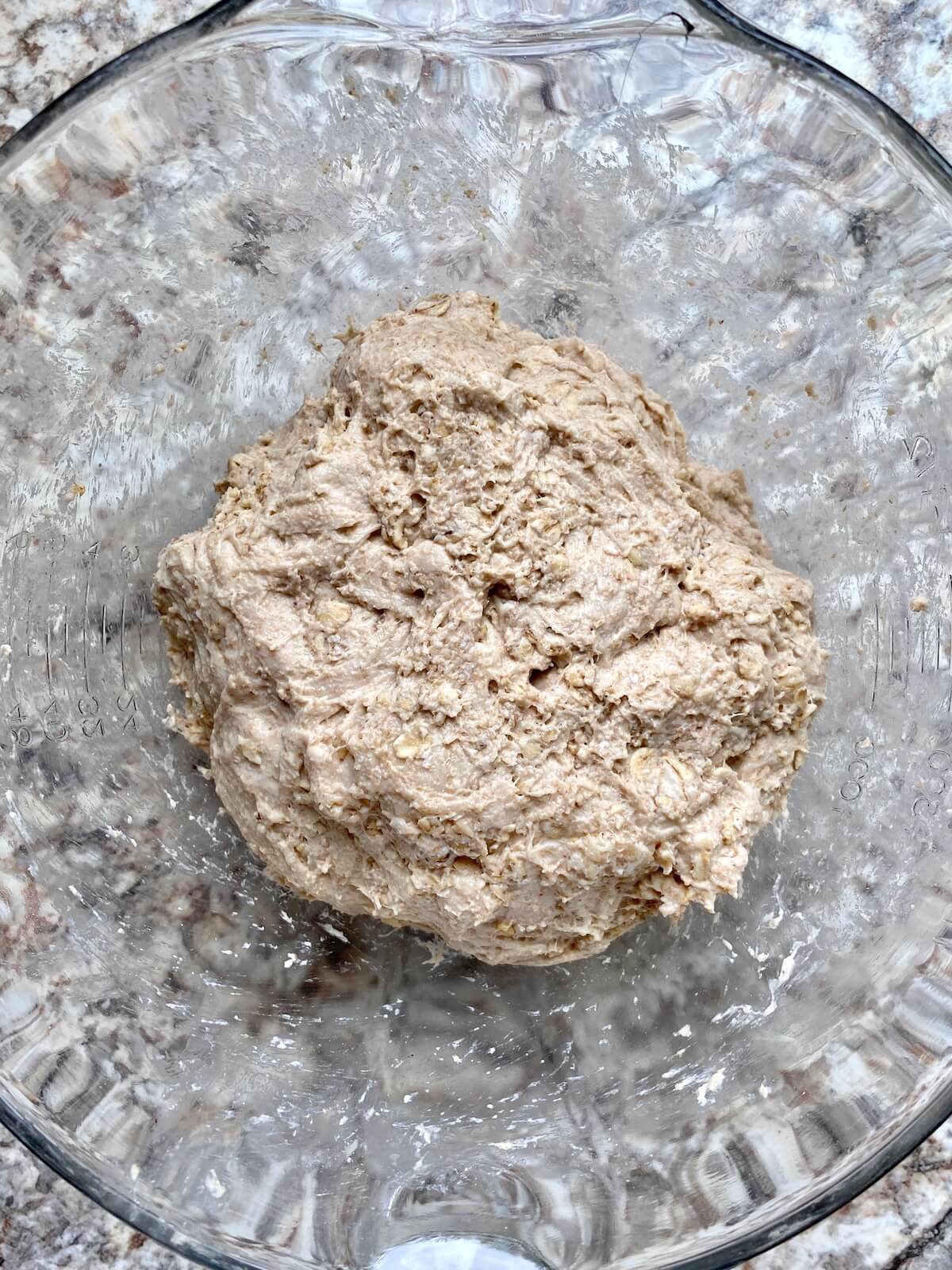
Step 5: Stretch and fold. Perform 4 sets of stretch-and-folds, resting 20 minutes between each.


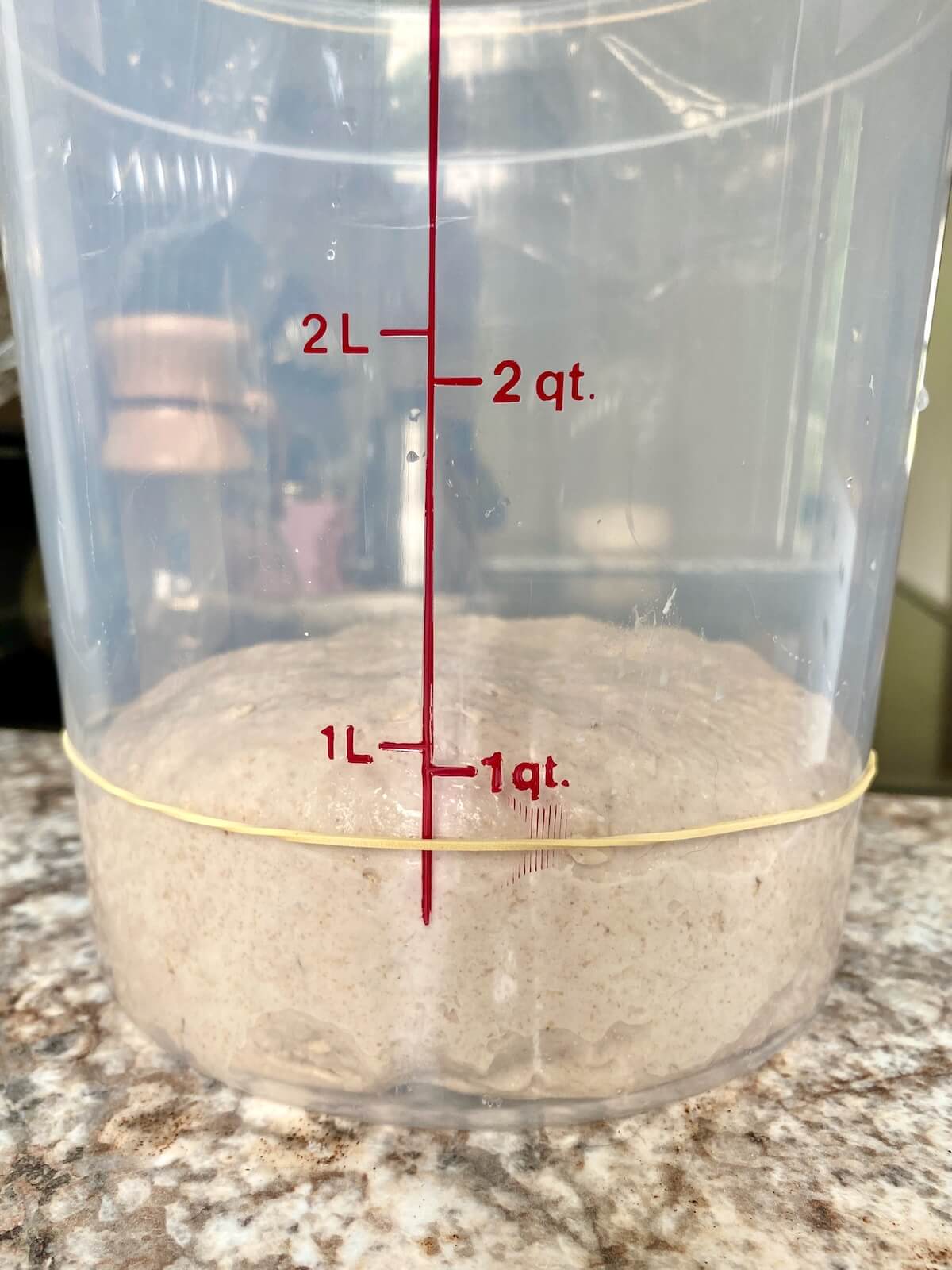
Step 6: Bulk fermentation. Cover and let dough double in size, 4–12 hours depending on temperature.

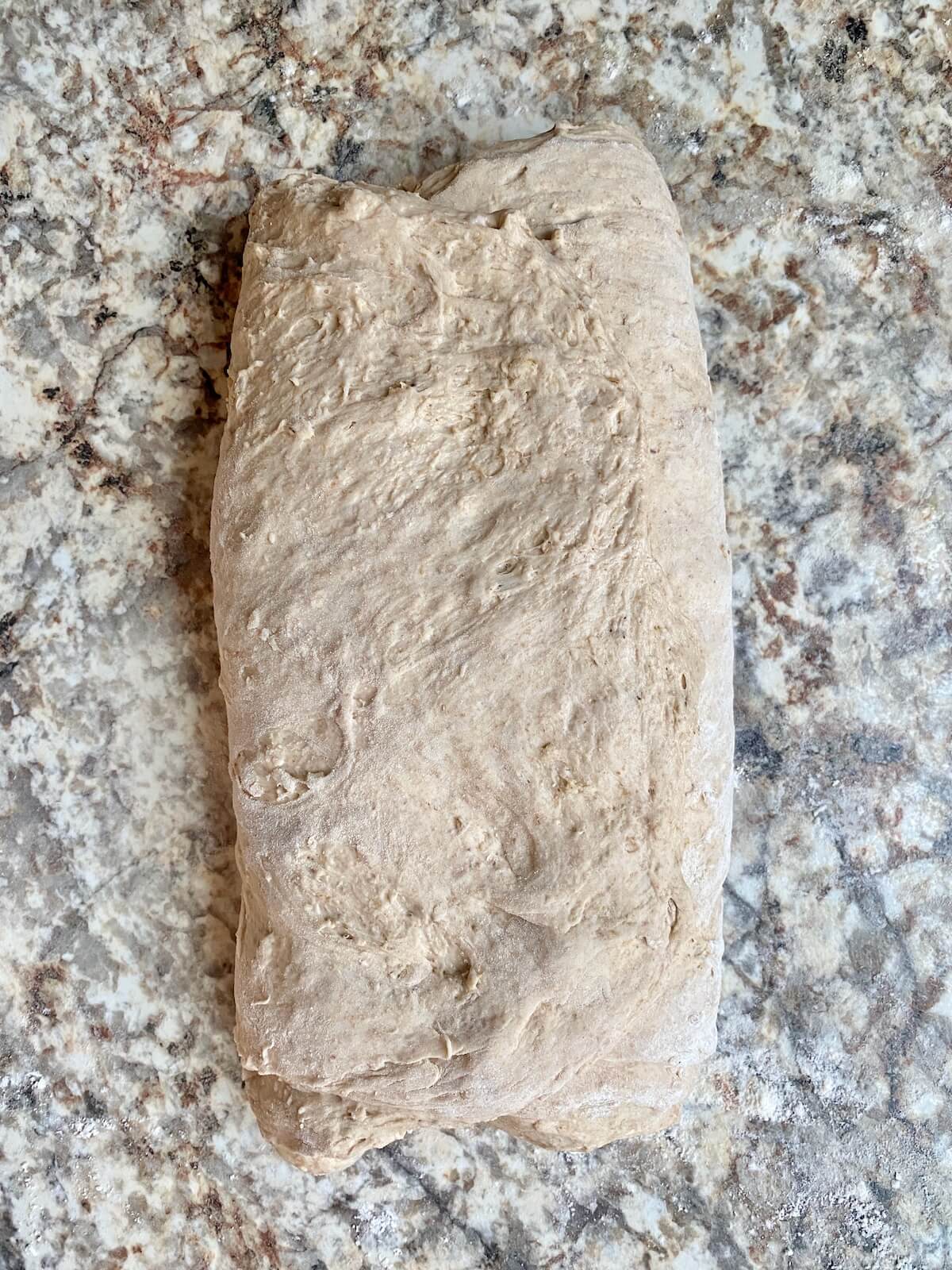
Step 7: Shape. Turn out dough, stretch into a rectangle, then shape into a ball or loaf with surface tension.

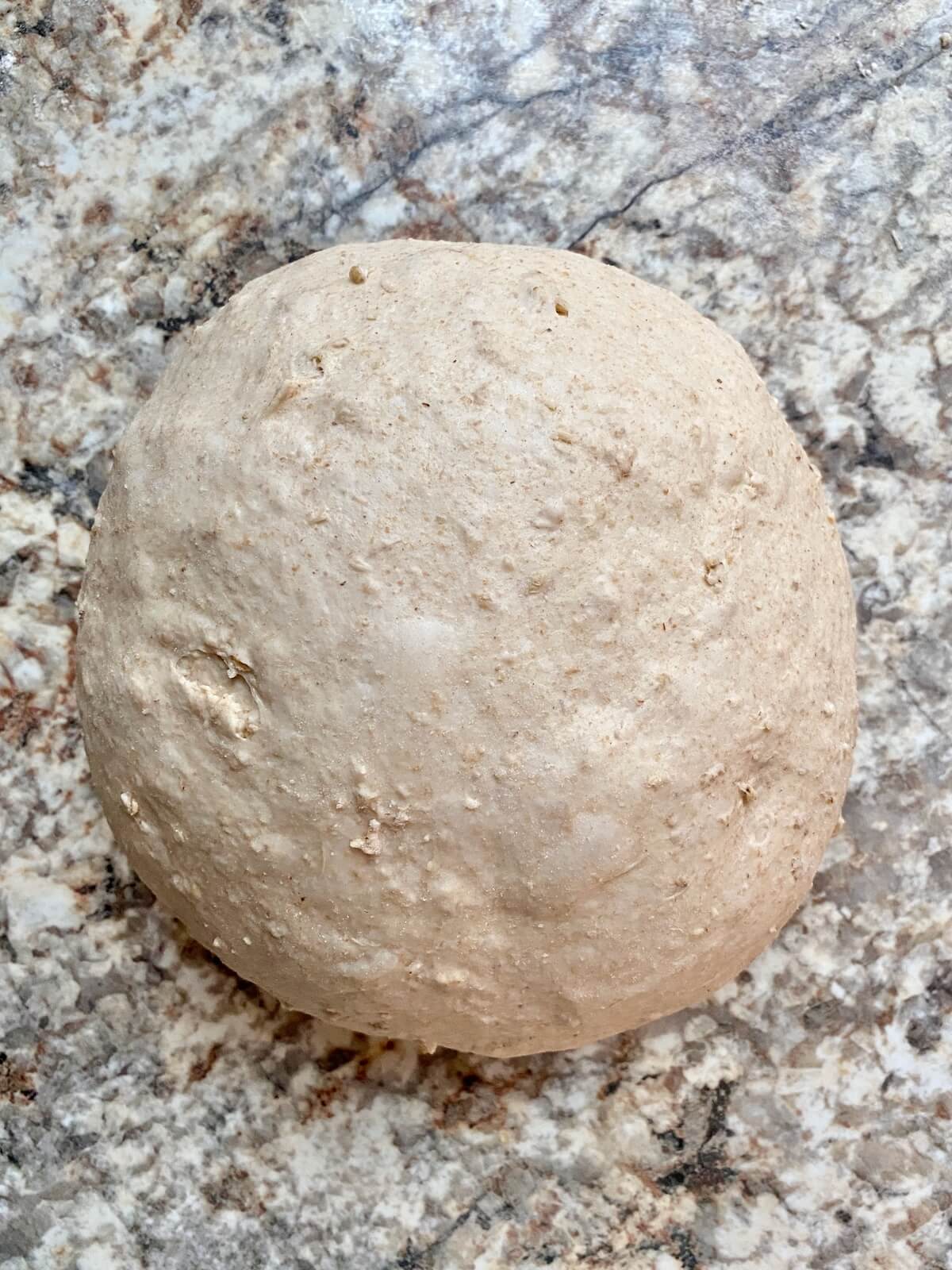
Step 8: Proof. Place seam-side down in a loaf pan. Let rise until puffy, 2–4 hours at room temperature (or refrigerate overnight for extra flavor).


Step 9: Bake. Preheat oven to 450°F. Cover the loaf with a second pan, foil, or place in a Dutch oven for steam. Bake 30 minutes covered, 15–20 minutes uncovered, then cool before slicing.

Baker's Timeline
Use this sample timeline to help plan out your oatmeal sourdough bread:
- 9:00 PM (Night Before): Feed your starter.
- 8:00–8:30 AM: Soak oats & autolyse flour + water.
- 8:30–9:00 AM: Mix dough & rest 20 minutes.
- 9:00 AM–10:00 AM: Stretch & folds.
- 10:00 AM–5:00 PM (varies): Bulk ferment (until doubled).
- 5:00-5:15 PM: Shape.
- 5:15–7:15 PM: Proof.
- 7:15–8:00 PM: Bake. Cool completely before slicing.
Note: Rise times can vary depending on the strength of your starter and the temperature of your kitchen and dough. Use visual cues—like when your dough has doubled in size—rather than the clock.
How to Store
Store your sourdough oatmeal bread (whole or sliced) in a bread box or airtight container at room temperature for up to 3 days.
For longer storage, slice and freeze in a freezer-safe bag for up to 3 months. Thaw at room temperature or warm in the toaster or oven before serving.
Serving Suggestions
This hearty sourdough oatmeal bread is perfect for breakfast or brunch. Enjoy it toasted with butter or jam, as a breakfast sandwich, avocado toast, French toast, or in a French toast casserole.
For lunch or snacks, it’s great with cottage cheese, in a BLT, turkey, or grilled cheese sandwich. You can also cube and toast it to make croutons for soups and salads.

Are you tired of watching your sourdough discard go to waste?
It’s time to turn excess discard into something delicious with my new ebook - Everyday Sourdough!
Inside, you’ll find 27 tried-and-true sourdough discard recipes that will transform your leftover starter into mouthwatering creations your family and friends will love.
No more guilt about wasting your discard - with Everyday Sourdough, you have endless options to quickly make something amazing anytime.
Let's Connect!
Be sure to leave a comment below if you have any questions. You can also connect with me on Instagram, Facebook, Pinterest, or via email at [email protected].
More Sourdough Bread Recipes

📖 Recipe

Sourdough Oatmeal Bread
Equipment
- Straight-sided container (optional, for bulk fermenting)
Ingredients
Soaked Oats
- 1 cup (80 grams) rolled oats
- ½ cup (120 grams) hot water
Oatmeal Sourdough Bread
- 3 cups (360 grams) bread flour
- 1 cup (120 grams) whole wheat flour
- 1 ¼ cups (300 grams) water
- ½ cup (100 grams) active sourdough starter
- 4 teaspoons (11 grams) Diamond Crystal Kosher Salt measure by weight or use 2 teaspoons if using Morton's brand or table salt
Instructions
- About 6–12 hours before mixing, feed your sourdough starter so it’s active, bubbly, and doubled in size. In a warmer kitchen (around 75–78°F), it may take closer to 6 hours, while in a cooler space (65–68°F), it could take 12 hours or more.
- In a small bowl, combine 1 cup rolled oats with ½ cup hot water. Let soak for 30 minutes.1 cup (80 grams) rolled oats, ½ cup (120 grams) hot water
- In a large bowl, mix the bread flour, whole wheat flour, and 1 ¼ cups water until no dry flour remains. Cover and let rest 30 minutes to hydrate the flour.3 cups (360 grams) bread flour, 1 cup (120 grams) whole wheat flour, 1 ¼ cups (300 grams) water
- Add the soaked oats, active starter, and salt to the autolysed flour mixture. Knead until a cohesive dough forms. Cover and rest 20 minutes.½ cup (100 grams) active sourdough starter, 4 teaspoons (11 grams) Diamond Crystal Kosher Salt
- Lightly wet your hands. Grab one edge of the dough, stretch it upward, and fold it over to the opposite edge. Rotate the bowl 90° and repeat for all 4 edges. Gather the dough into a ball, seam-side down, and rest 20 minutes. Repeat this process 3 more times for a total of 4 sets, resting 20 minutes between each.
- Cover the dough and let it rise until puffy and doubled in size, about 4–12 hours depending on dough and room temperature. For easier tracking, use a straight-sided container and mark the starting height.
- Gently turn the dough onto a lightly floured surface and stretch into a rectangle. Fold one long edge toward the center, then the opposite edge over it, like folding a letter. Fold the short edges similarly. Flip seam-side down and shape into a round ball. Drag the dough gently toward you with a bench scraper to create surface tension and create a more loaf-like shape.
- Place the dough seam-side down in a standard loaf pan. Cover and let proof until very puffy and nearly at the top of the pan, about 2–4 hours at room temperature. For extra flavor, refrigerate overnight and then proof at room temperature before baking.
- About 20 minutes before baking, preheat oven to 450°F. Cover the loaf pan with a second loaf pan or tent loosely with foil to create steam for a higher rise and crustier exterior. Or place the pan inside a preheated Dutch oven to trap steam.
- Bake covered for 30 minutes. Then, remove the cover and bake an additional 15–20 minutes until golden brown and fully baked.
- Let the bread cool in the pan for 10 minutes, then transfer to a wire rack to cool completely before slicing.
Notes
- Tip: This dough can also be shaped into a rustic boule or batard and proofed overnight in a well-floured banneton. Bake inside a preheated Dutch oven for a crusty, artisan-style bread.
- Storage: Store bread at room temperature for up to 3 days. For longer storage, slice and freeze in a freezer-safe bag for up to 3 months.



Christine says
Like you, I have had a favorite oatmeal molasses bread recipe for many, many years and eat it regularly. I've now been making sourdough for about a year and was going to attempt to make an oatmeal sourdough for Christmas. This is perfect timing! I'm going to try it this week. I'm sure it is going to be amazing. I'm so excited. Thank you for sharing. This definitely saved me some aggravation.
Ashley Petrie, RDN, LDN says
Hi Christine, I love that! I’m so glad the timing worked out and this saved you some trial and error. I hope you love it just as much as your classic oatmeal molasses bread. Let me know how it goes when you bake it! 😊
Kate says
This is the best bread! Turned our beautifully. Thank you for this recipe, I look forward to trying others of yours.
Ashley Petrie, RDN, LDN says
Hi Kate! That makes me so happy to hear 🥰 I’m so glad it turned out well for you. Thanks so much for taking the time to leave a comment, and I hope you find a few more recipes you love!