
This Sourdough Potato Bread is made with active sourdough starter and mashed potatoes for the softest, fluffiest loaf. It’s easy to make and perfect for homemade sandwiches.
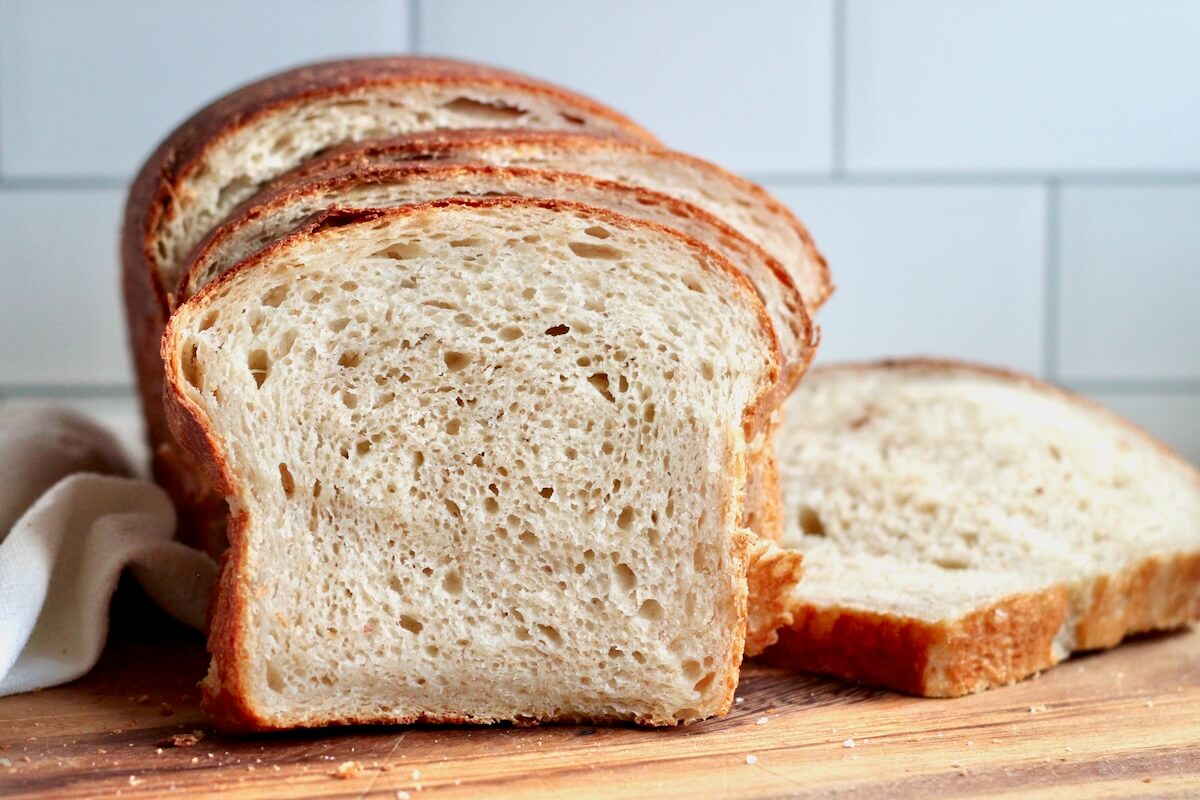
When I think of potato bread, I immediately think of the classic Martin’s bread I grew up with. Don’t get me wrong, it’s delicious! But as a dietitian and sourdough baker, I try to avoid all the extra ingredients.
So, of course, I had to make my own sourdough version.
I’ve been testing this sourdough potato bread recipe for a while, tweaking the potato-to-flour ratio until it was just right. I wanted enough potato to make the bread incredibly soft and moist, but enough flour so it wouldn’t be overly sticky or dense.
After a few (okay, several) failed loaves, I finally landed on this one. The potato starch holds onto moisture beautifully, giving you the softest, fluffiest sandwich loaf I’ve ever made. This dough also works perfectly as sourdough potato rolls—ideal for burgers, sliders, and sandwiches.
Truly, it’s going to be my new go-to loaf—though I do still love my classic sourdough sandwich bread, too.
I hope you give it a try and enjoy it as much as I do!
Disclaimer: Some links throughout this post are affiliate links. As an Amazon Associate, I earn from qualifying purchases. You can learn more by visiting my Affiliate Disclosure Page.
Ingredients & Substitutions
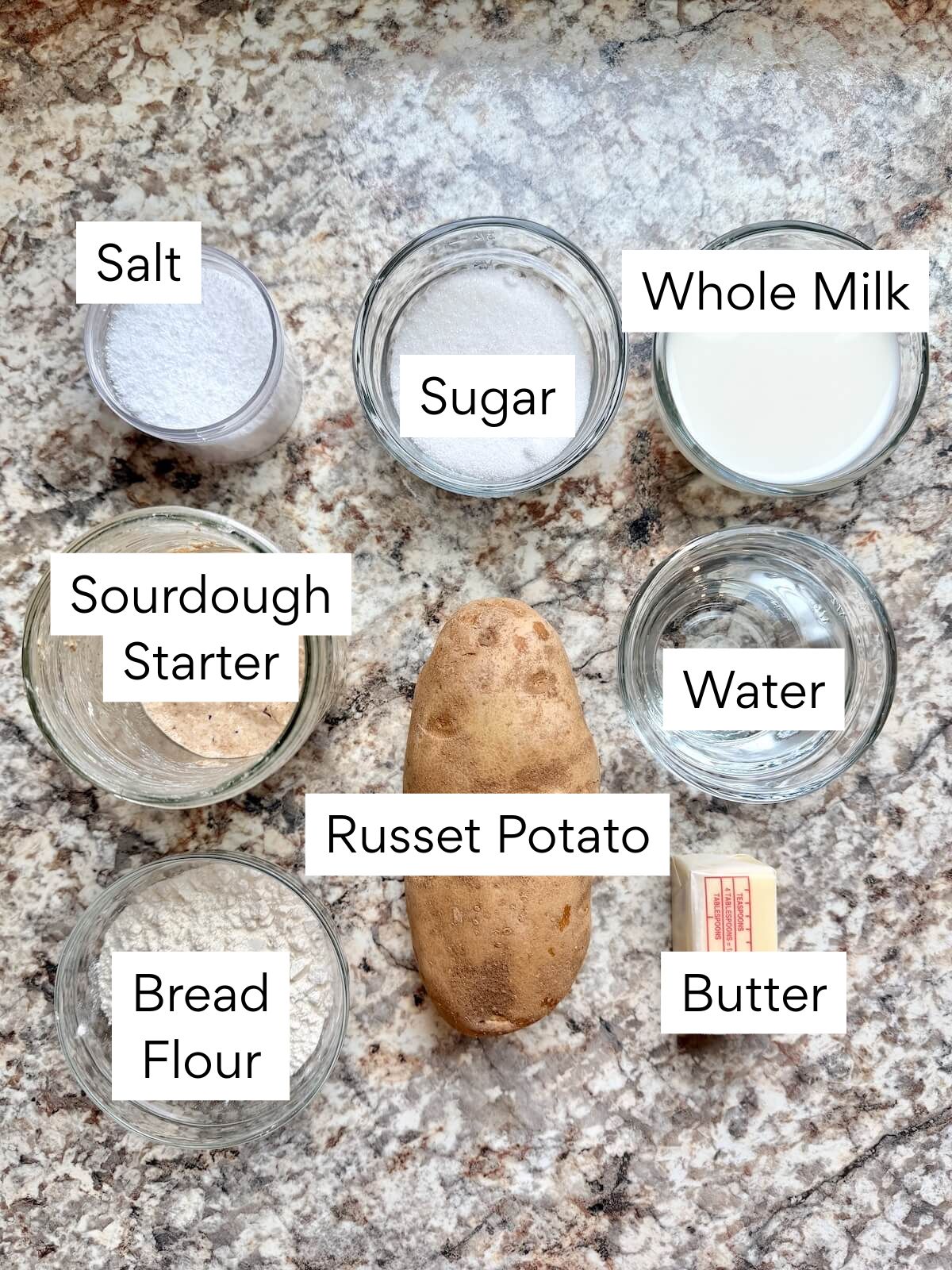
Here are some notes on key ingredients. For a full list of ingredients, check out the recipe card below.
- Active Sourdough Starter- Make sure your starter is bubbly and active before mixing. You can also use fresh sourdough discard (1–2 days old), but the dough may take longer to rise.
- Russet Potato- Russet potatoes are high in starch, which helps create an extra-soft, moist crumb. Be sure to mash the potatoes very well so there are no lumps in the dough.
- Whole Milk - Adds richness and tenderness to the bread. You can substitute with lower fat milk or even water if needed, though the loaf may be slightly less tender.
- Butter - Adds flavor and softness. Can substitute with a cooking oil, like olive or avocado, if desired.
- Bread Flour- Provides structure, chew, and a good rise. All-purpose flour works too, but the loaf may be a bit softer and slightly less tall.
- Sugar- Adds a touch of sweetness and helps feed the yeast for a better rise. You can reduce it slightly if you prefer a less sweet loaf.
- Kosher Salt- Enhances flavor. I use Diamond Crystal Kosher Salt (2.8 grams per teaspoon). If using Morton’s or table salt, use about half the amount or weigh for accuracy.
Tips for Success
- Weigh your ingredients. A kitchen scale ensures accurate hydration and consistent results.
- Start with an active starter. A bubbly, well-fed starter gives this enriched dough the strength it needs to rise properly.
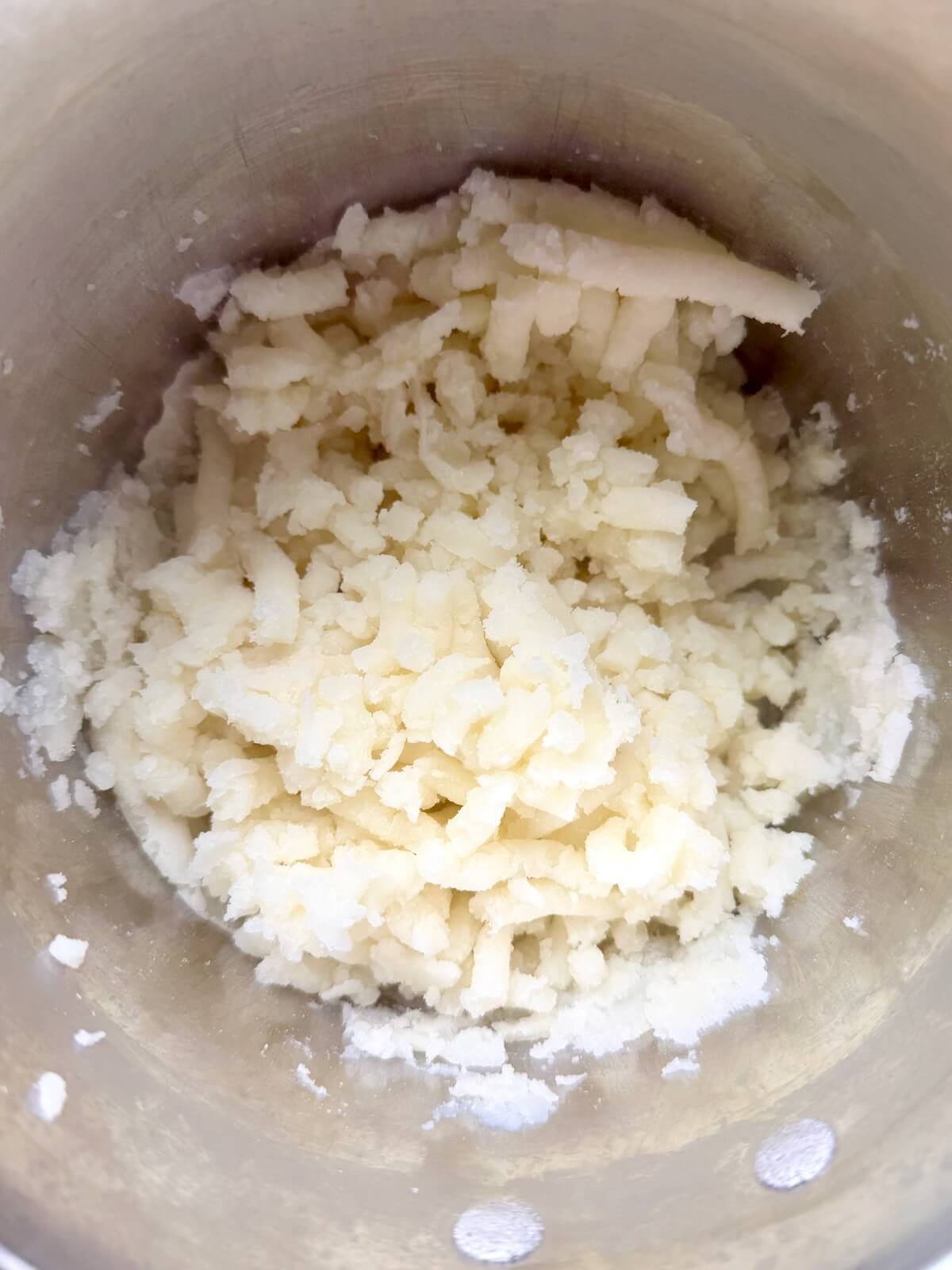
- Mash the potatoes completely smooth. Any lumps can create dense spots in the loaf, so take an extra minute to mash really well.
- Let the potato mixture cool before adding the starter. Aim for warm, not hot (about 80–90°F), so you don’t weaken the yeast.
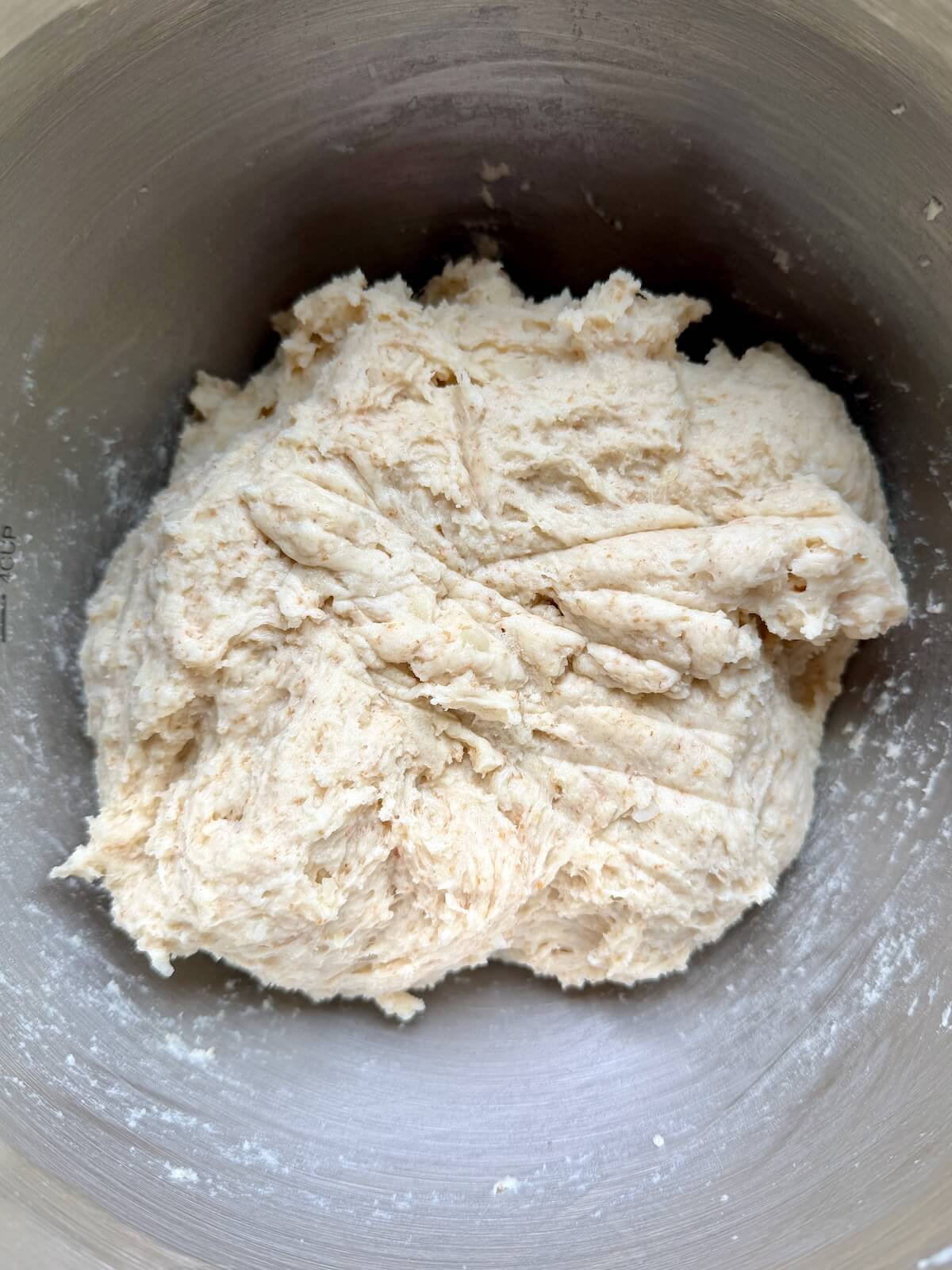
- Expect a slightly sticky dough. Potato starch adds moisture, so this dough will feel tacky—use flour as needed, but don’t overdo it.
- Be patient with the bulk rise. Don’t rush this step—wait until the dough looks puffy and roughly doubled for the best texture.
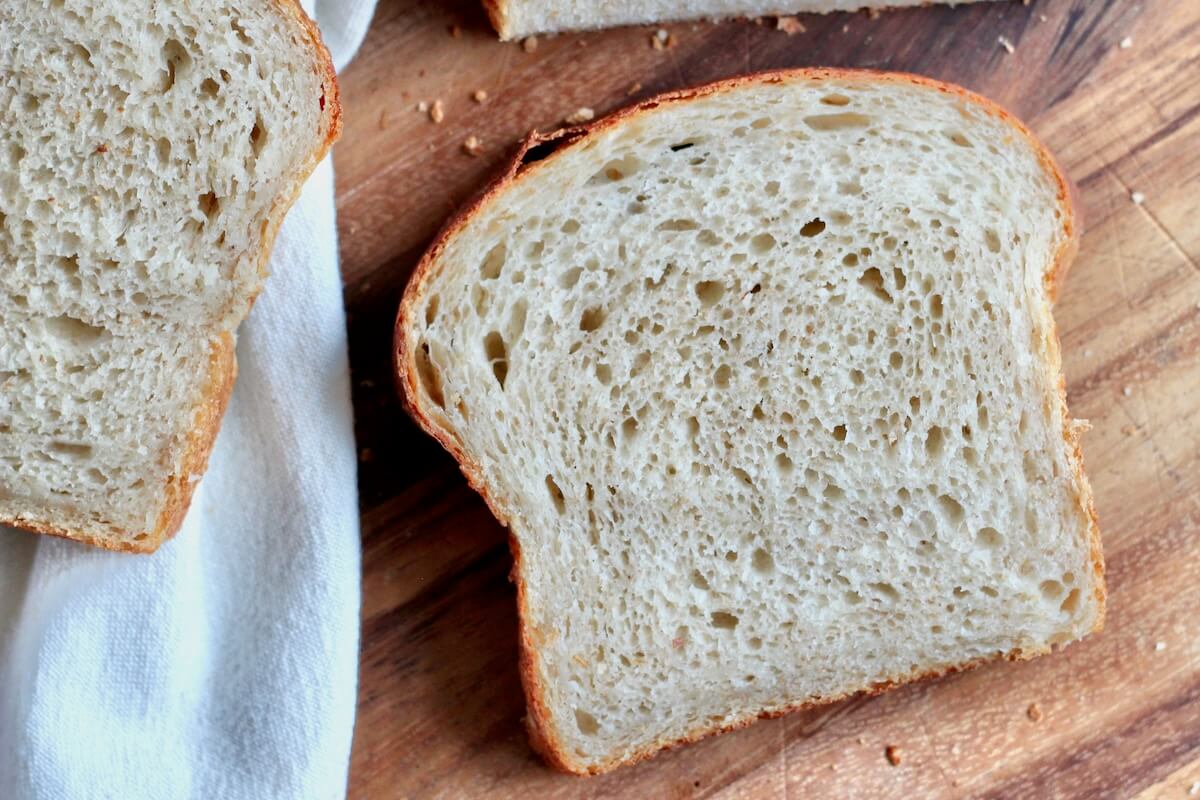
- Cool completely before slicing. Let the loaf rest at least 2 hours so the crumb sets and stays soft and fluffy.
How to Make Sourdough Potato Bread
Learn how to make potato sourdough bread with these step-by-step instructions and pictures.
Step 1: Feed starter. Feed your sourdough starter 6–12 hours before mixing so it’s active and bubbly.

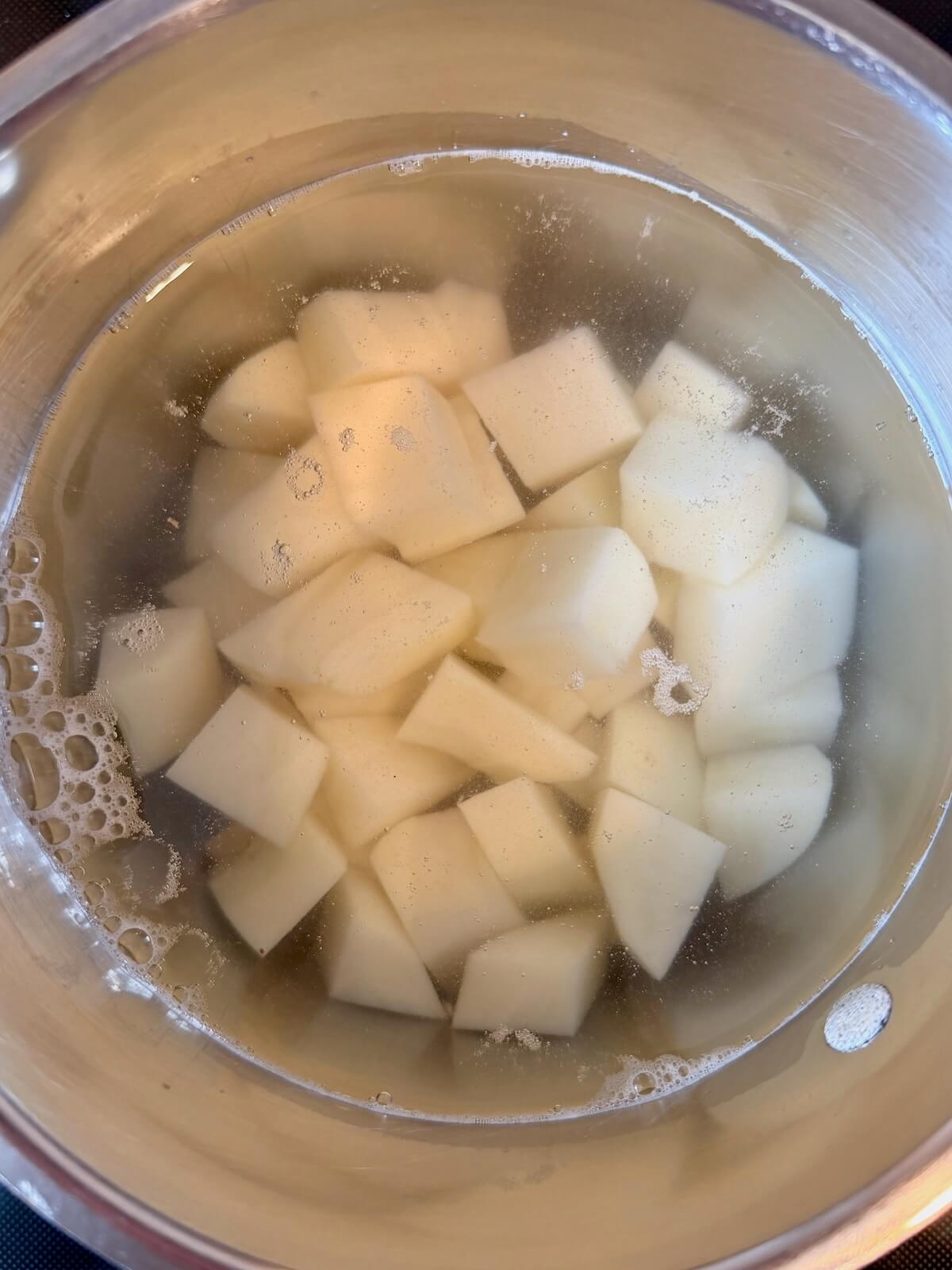
Step 2: Cook and mash potatoes. Boil the cubed potato until very soft. Drain and mash until completely smooth.
Step 3: Make potato base. While warm, stir in the milk, butter, sugar, and salt until melted and combined. Let cool to warm (not hot), then mix in the sourdough starter.
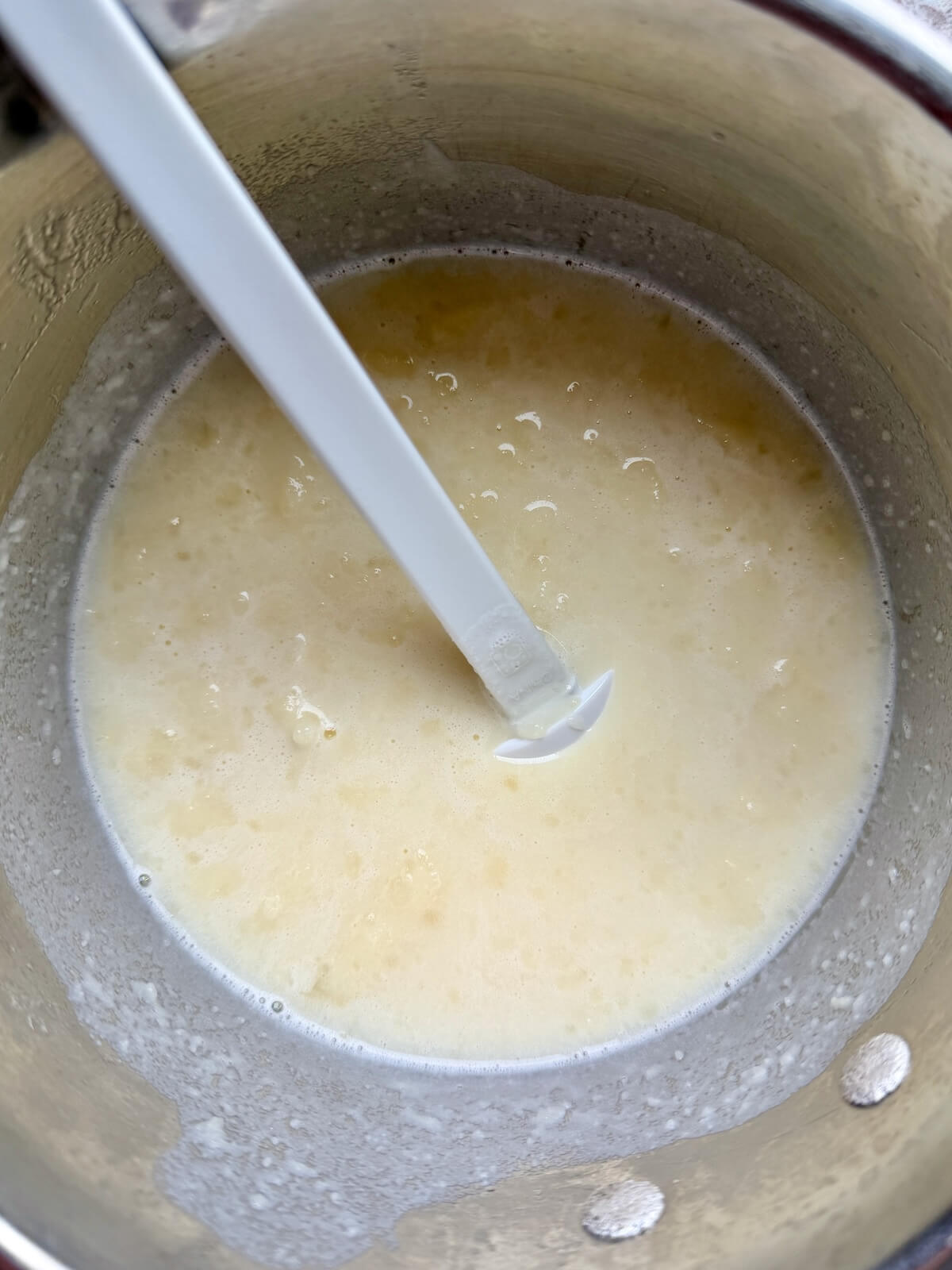
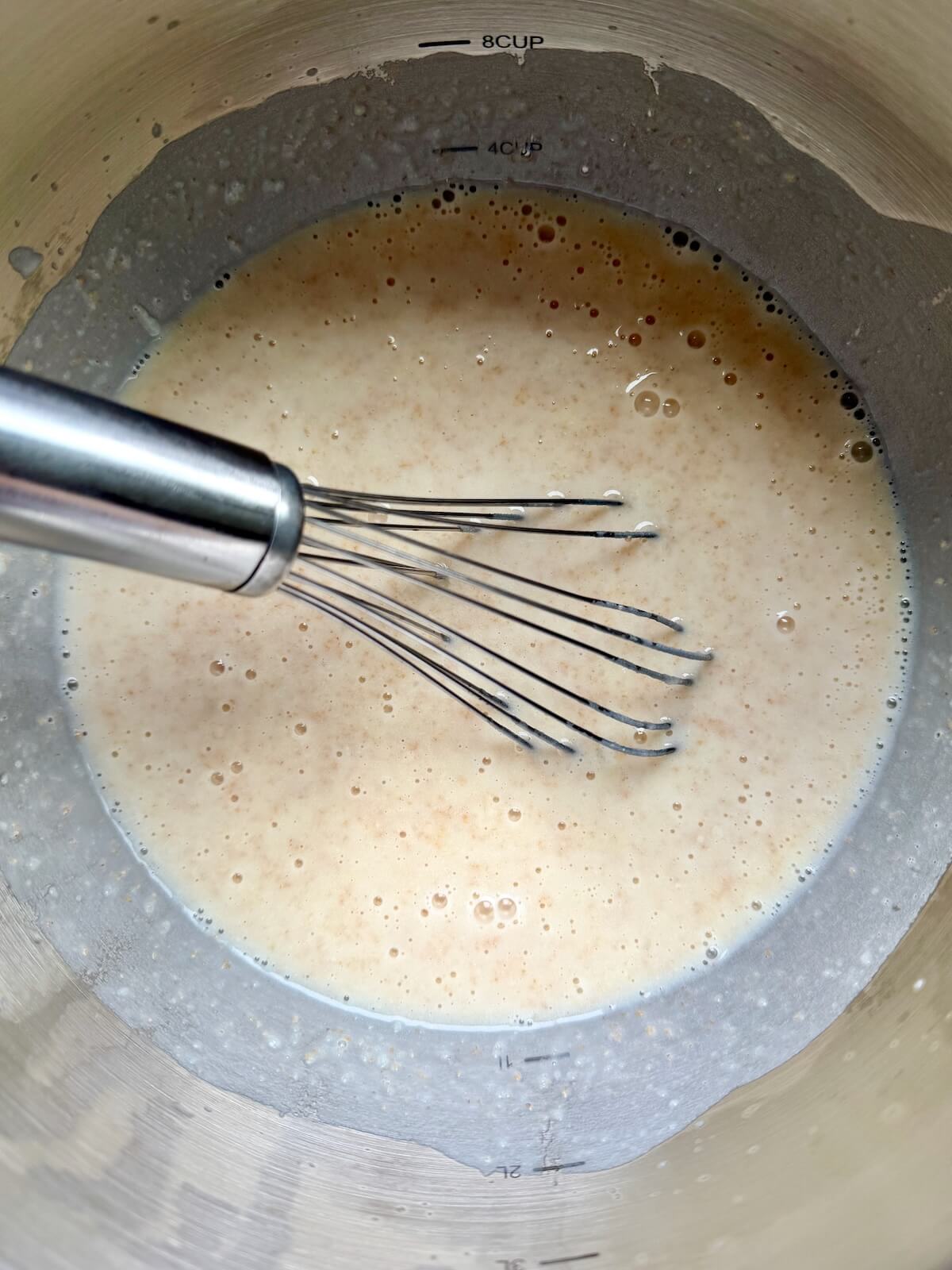
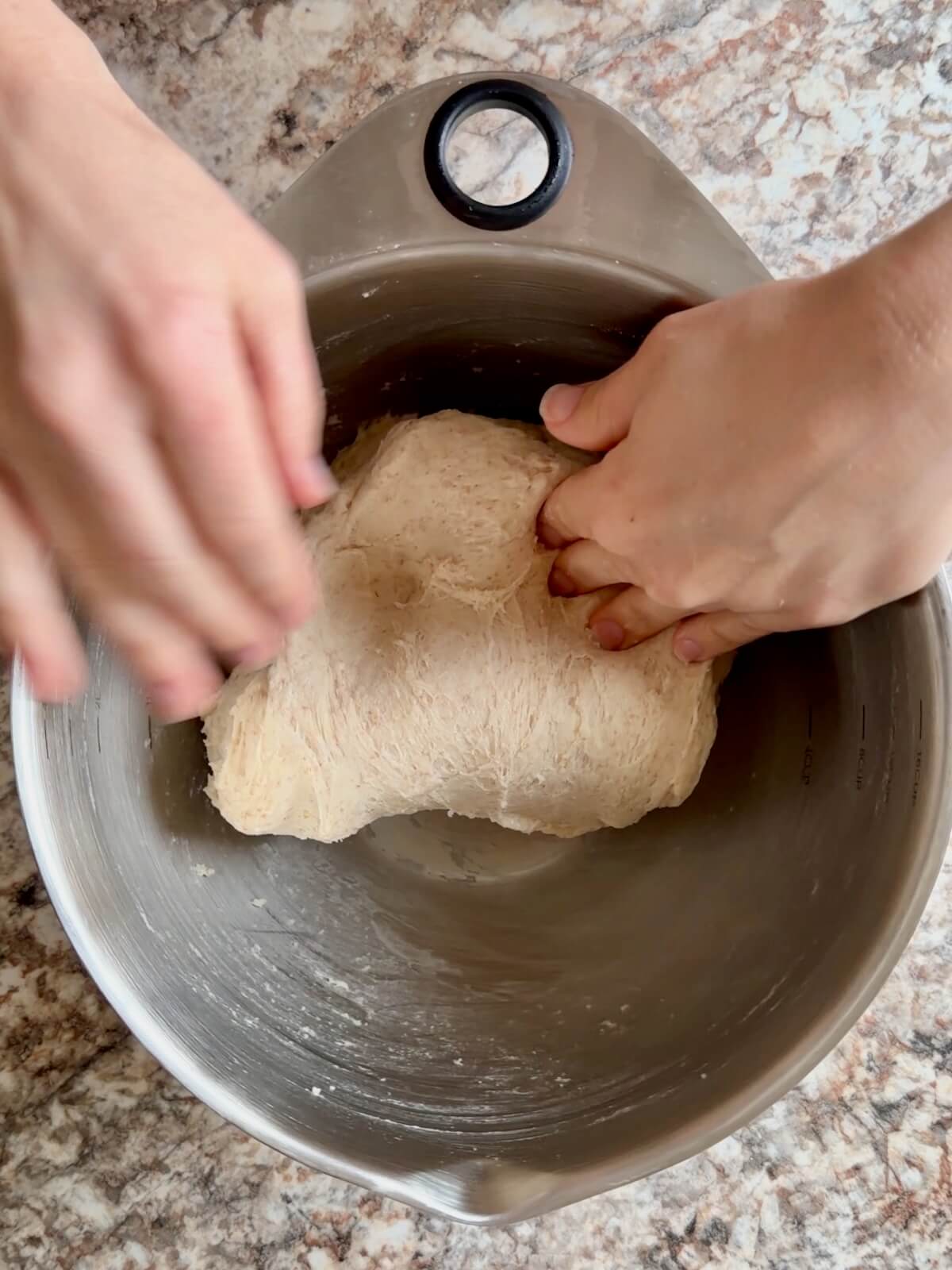
Step 4: Mix dough. Add the flour and mix until a sticky dough forms with no dry flour. Cover and rest for 20 minutes.
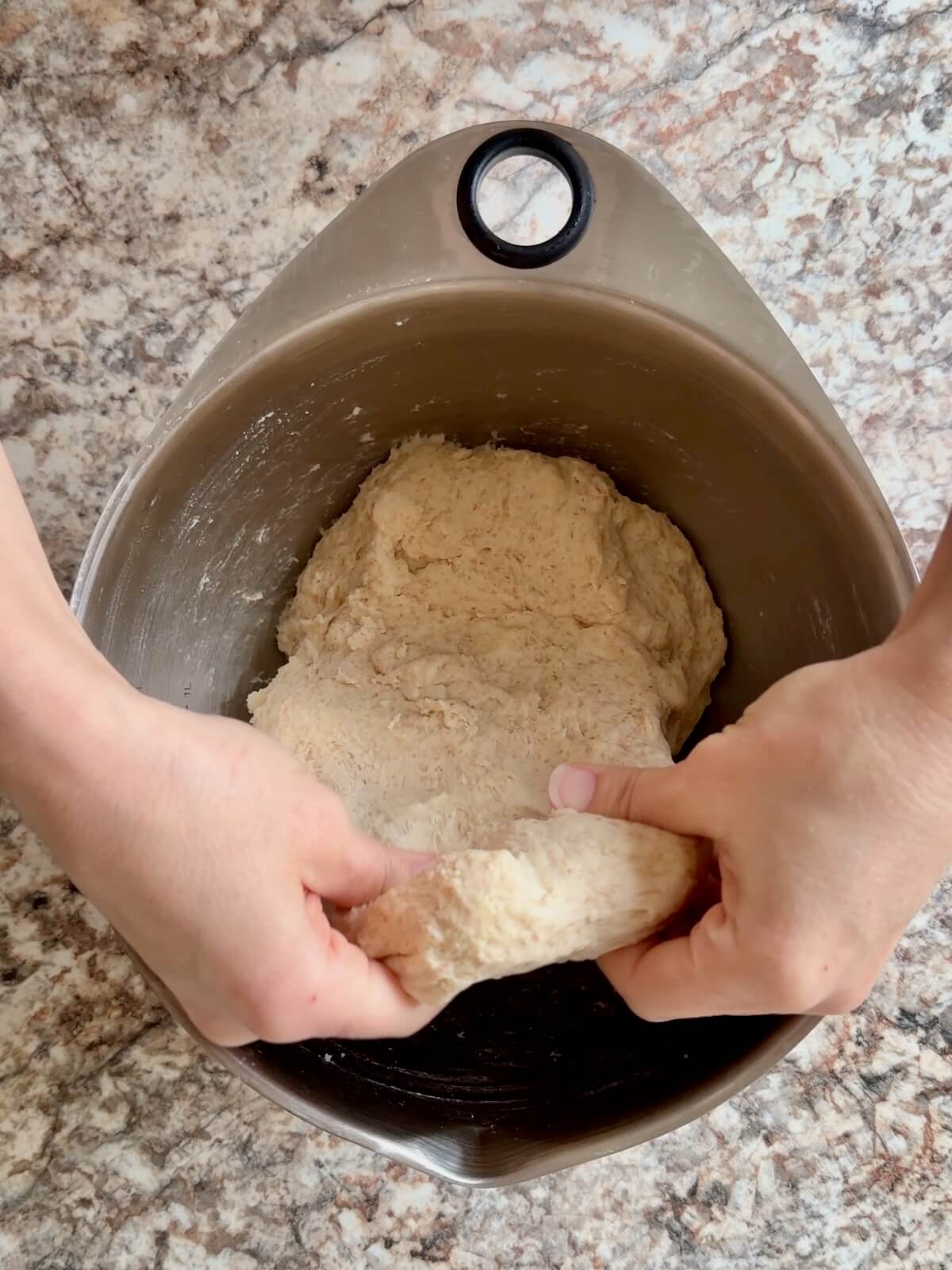
Step 5: Stretch and fold. Perform 4 sets of stretch and folds, resting 15 minutes between each set.

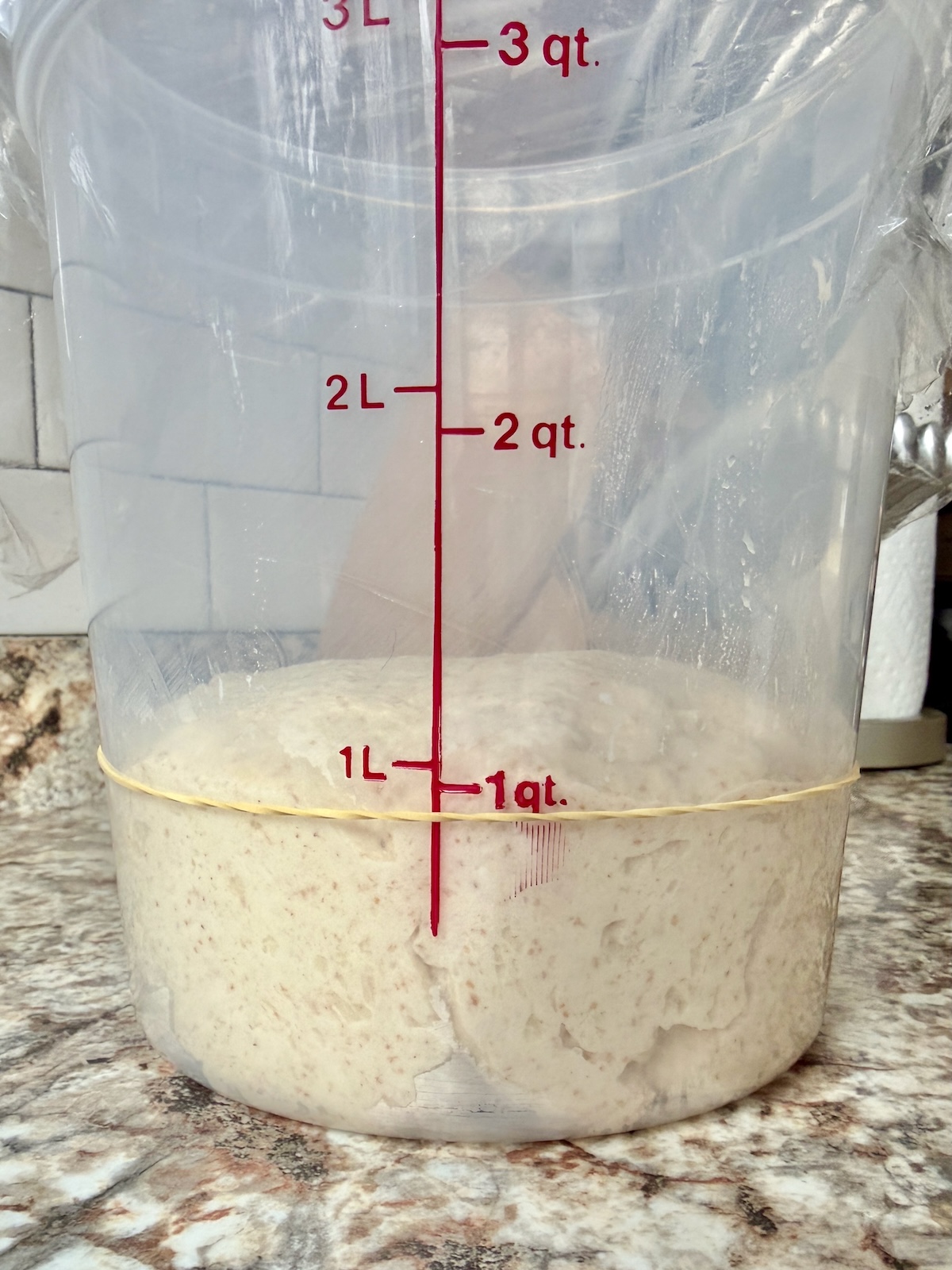
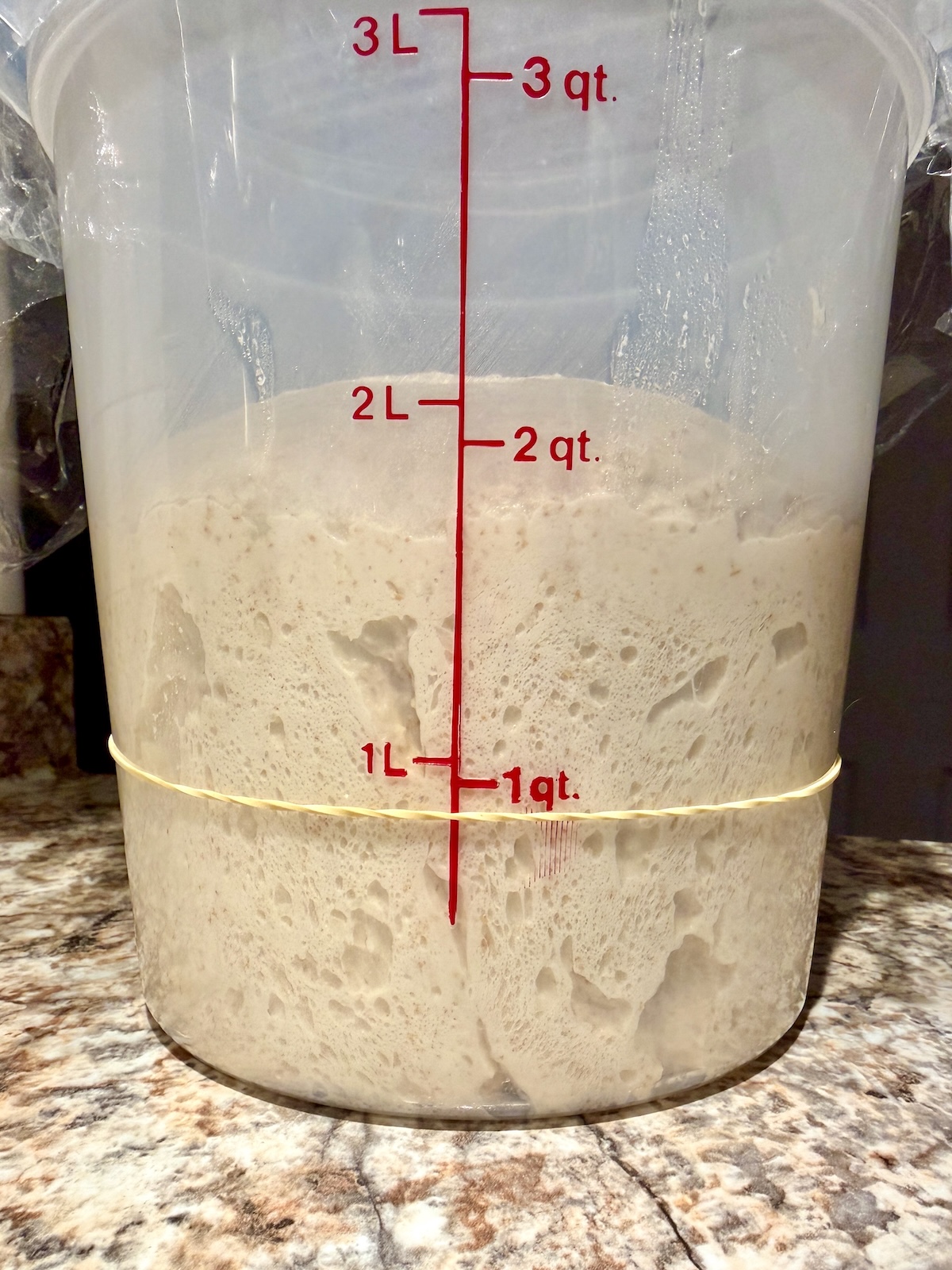
Step 6: Bulk fermentation. Cover and let the dough rise until bubbly and roughly doubled, about 4–12 hours.
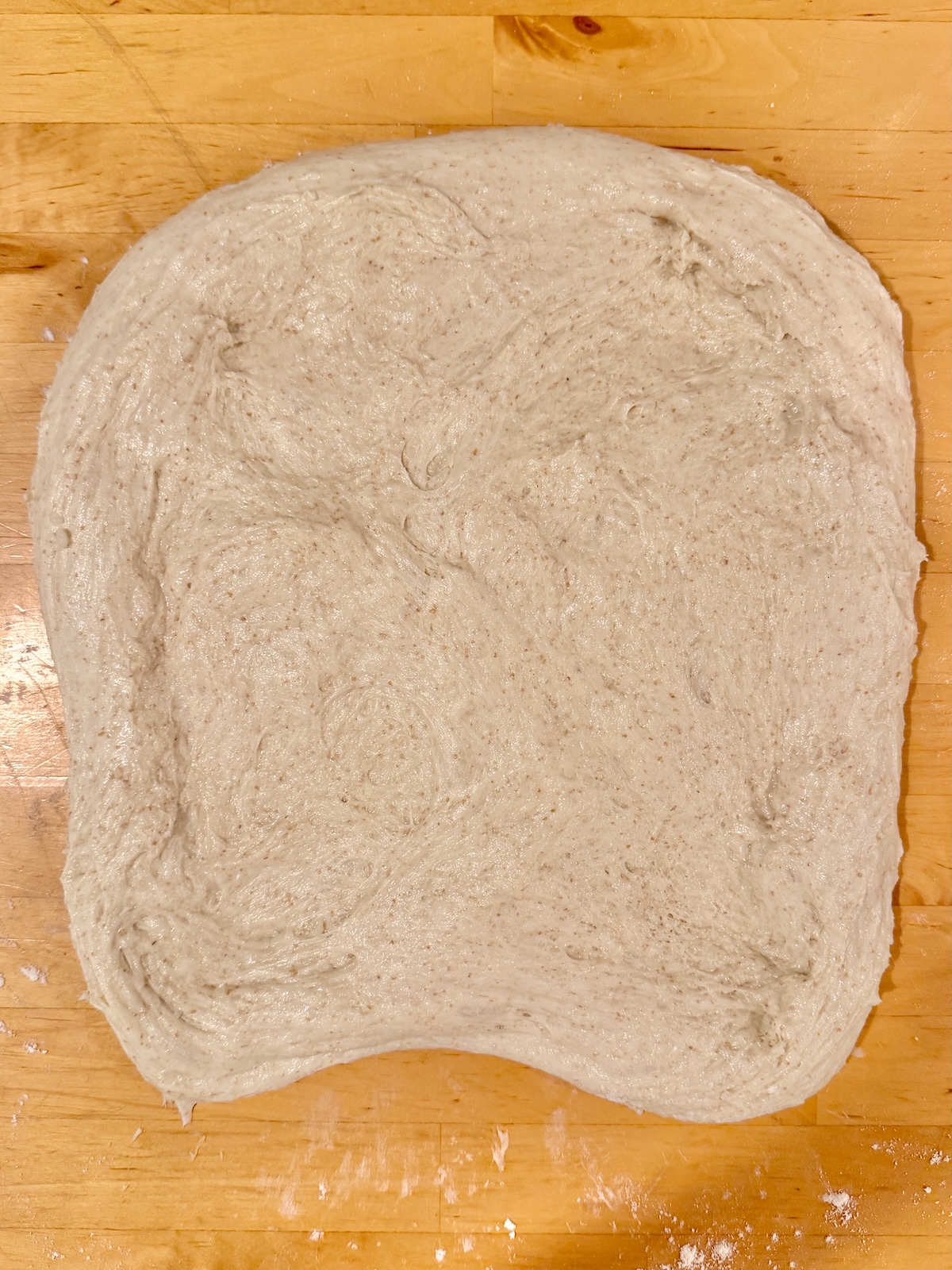
Step 7: Shape. Turn the dough out onto a floured surface, shape into a log, and place seam-side down in a loaf pan.

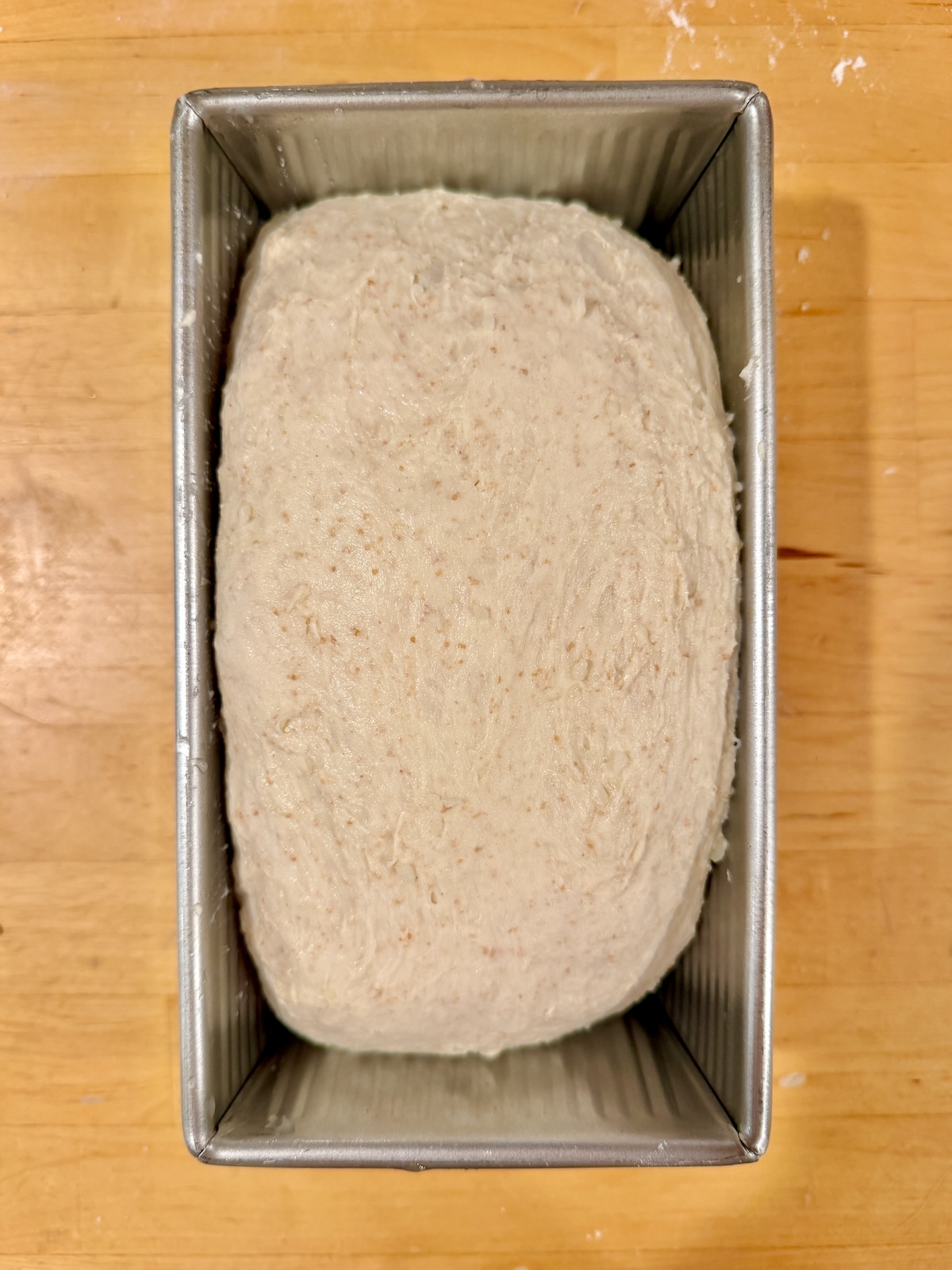
Step 8: Proof. Cover and proof at room temperature for 1–3 hours, or refrigerate overnight and proof the next day until the dough reaches the top of the pan.
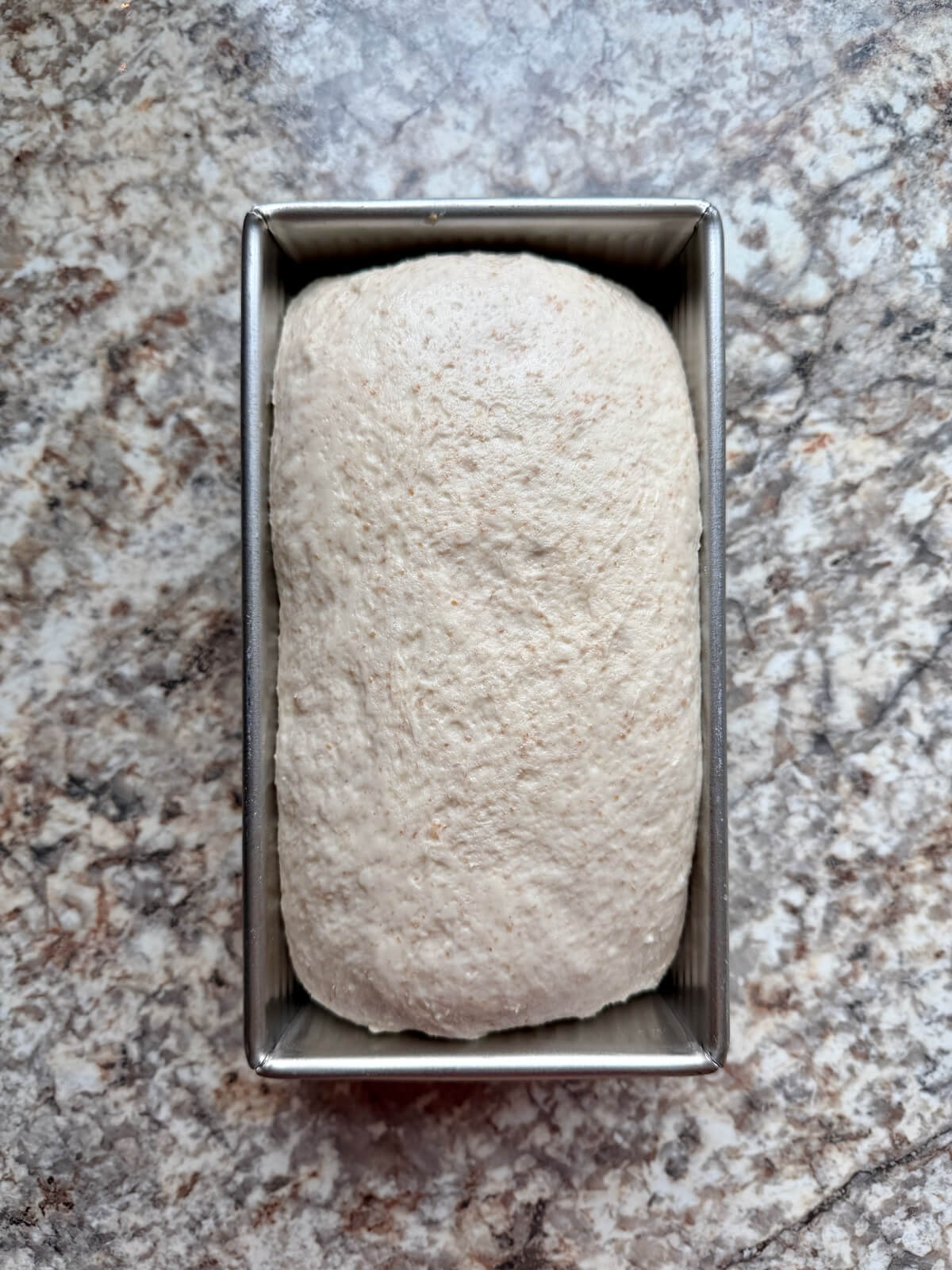
Step 9: Bake. Bake at 375°F for 45–50 minutes, until deeply golden and the internal temperature reaches about 190°F. Cool in the pan for 10 minutes, then transfer to a wire rack and cool completely before slicing.

Baker's Timeline
Use this sample timeline to help plan out your sourdough potato bread:
- 8:00 PM (Night Before): Feed your starter.
- 8:00–8:30 AM: Boil & mash potatoes.
- 8:30–9:00 AM: Mix dough.
- 9:00–10:00 AM: Do stretch and folds.
- 10:00 AM–6:00 PM (varies): Bulk fermentation (until doubled in size).
- 6:00–6:30 PM: Shape the dough.
- 6:30–8:30 PM (varies): Proof.
- 8:30–9:15 PM: Bake at 375°F.
- 9:15–11:15 PM: Cool completely before slicing.
Note: Rise times can vary depending on the strength of your starter and the temperature of your kitchen and dough. Use visual cues—like when your dough has doubled in size—rather than the clock.
How to Store
Store your sourdough potato bread, whole or sliced, in a bread box or airtight container at room temperature for up to 3 days.
For longer storage, slice the loaf and freeze it in a freezer-safe bag for up to 3 months. When ready to eat, thaw at room temperature or warm slices in the toaster or oven.
Serving Suggestions
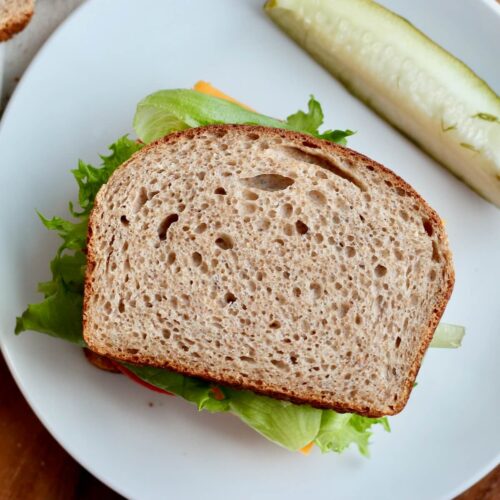
This sourdough potato bread makes the best sandwiches—try it for grilled cheese, turkey, eggs and bacon, or a classic BLT.
If your loaf starts to get a little stale, use it for French toast, French toast casserole, egg strata, croutons, stuffing, or homemade breadcrumbs.

Are you tired of watching your sourdough discard go to waste?
It’s time to turn excess discard into something delicious with my new ebook - Everyday Sourdough!
Inside, you’ll find 27 tried-and-true sourdough discard recipes that will transform your leftover starter into mouthwatering creations your family and friends will love.
No more guilt about wasting your discard - with Everyday Sourdough, you have endless options to quickly make something amazing anytime.
Let's Connect!
Be sure to leave a comment below if you have any questions. You can also connect with me on Instagram, Facebook, Pinterest, or via email at [email protected].



📖 Recipe

Sourdough Potato Bread
Equipment
- Straight-sided container (optional, for bulk fermentation)
Ingredients
- 1 small (227 grams) russet potato peeled and cut into 1-inch cubes
- 1 cup (240 grams) whole milk cold
- 4 tablespoons (57 grams) unsalted butter cold
- ¼ cup (50 grams) granulated sugar
- 4 teaspoons (11 grams) Diamond Crystal Kosher Salt use 2 teaspoons if substituting with Morton's brand or table salt
- ½ cup (100 grams) active sourdough starter
- 3 ½ cups (420 grams) bread flour
Instructions
- About 6–12 hours before mixing the dough, feed your sourdough starter so it’s active, bubbly, and roughly doubled in size.
- Add the peeled, cubed potato to a small saucepan and cover with cold water. Bring to a boil and cook for 10–15 minutes, or until the potatoes are very soft. Drain well, then return them to the saucepan and mash thoroughly until smooth with no large chunks remaining.1 small (227 grams) russet potato
- While the potatoes are still warm, add the milk, butter, sugar, and salt. Whisk until the butter is fully melted and the mixture cools to about 80–90°F (warm, but not hot). Once cooled, whisk in the active sourdough starter.1 cup (240 grams) whole milk, 4 tablespoons (57 grams) unsalted butter, ¼ cup (50 grams) granulated sugar, 4 teaspoons (11 grams) Diamond Crystal Kosher Salt, ½ cup (100 grams) active sourdough starter
- Transfer the potato mixture to a large bowl. Add the bread flour and mix with your hands until all the flour is fully hydrated and a sticky dough forms. Cover and let the dough rest for 20 minutes.3 ½ cups (420 grams) bread flour
- Lightly wet your hands. Grab one side of the dough, stretch it up gently, and fold it over the center. Rotate the bowl 90° and repeat until all four sides have been folded. Cover and rest for 15 minutes.Repeat this process 3 more times for a total of 4 stretch-and-fold sets, resting 15 minutes between each.
- Cover the dough and let it rise until bubbly and roughly doubled in size, about 4–12 hours (or longer) depending on room temperature and starter strength. Tip: A straight-sided container makes it easier to track the rise.
- Lightly flour your work surface and gently turn out the dough. Stretch it into a rectangle. Fold the long sides toward the center, then roll the dough up tightly like a jelly roll. Place seam-side down into a 9×5-inch loaf pan. Note: This dough is naturally sticky due to the potatoes—use flour as needed to prevent sticking.
- Cover and let the dough proof at room temperature for 1–3 hours, or until it rises to the top of the loaf pan. Alternatively, refrigerate overnight, then let the dough proof at room temperature for 3–4 hours (or longer) before baking.
- About 20 minutes before baking, preheat the oven to 375°F. Bake for 45–50 minutes, or until the loaf is deeply golden and the internal temperature reaches about 190°F. For a slightly taller, crustier loaf, you can cover the loaf pan with a second loaf pan or place it inside a lidded Dutch oven.
- Let the bread cool in the pan for 10 minutes, then transfer to a wire rack and cool for at least 2 hours before slicing.
Notes
- Storage: Store bread in airtight container at room temperature for up to 3 days or freeze for up to 3 months.



Dana says
The amount of flour listed in the recipe is :
1 ¾ cups (420 grams) bread flour.
However…
1 3/4 is usually around 220 grams
420 grams is closer to 3 1/3 cups
Ashley Petrie, RDN, LDN says
Hi Dana! Good catch, thank you for noticing that! I just fixed it. It should read 3 1/2 cups (420 grams) bread flour. I think I accidentally divided by 240 grams (roughly the amount in a cup of water). Thanks again!