
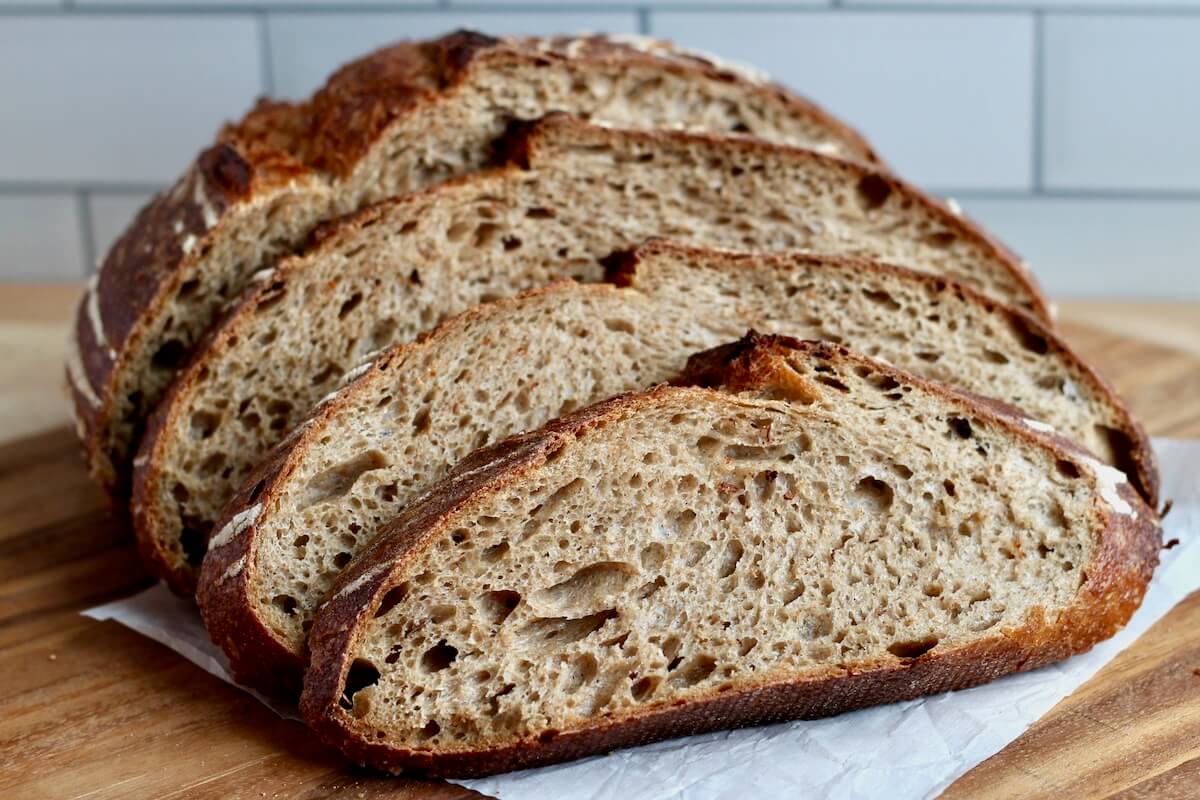
This Sourdough Rye Bread combines rye flour, molasses, and caraway seeds for a hearty, tangy, and flavorful loaf that's easy to make and perfect for beginners.
When I first picked up rye flour from a local mill in Massachusetts, I had no idea how different it was from whole wheat.
I jumped right in and made a sourdough rye bread with 50% rye flour. It turned out… okay. The bread was a bit dense, and the dough was tough to work with. Turns out, rye flour mixed with water is more like wet cement and doesn’t build gluten like wheat does. After some research, I found that most rye breads use around 30% rye flour.
For this recipe, I kept it beginner-friendly with 25% rye flour and added whole wheat for extra heartiness. A touch of molasses brings sweetness and depth, while caraway seeds add that classic deli rye flavor.
With simple steps like using a rye starter, autolyse, and stretch-and-folds, this rye sourdough bread is easy to make - even if you’re new to rye.
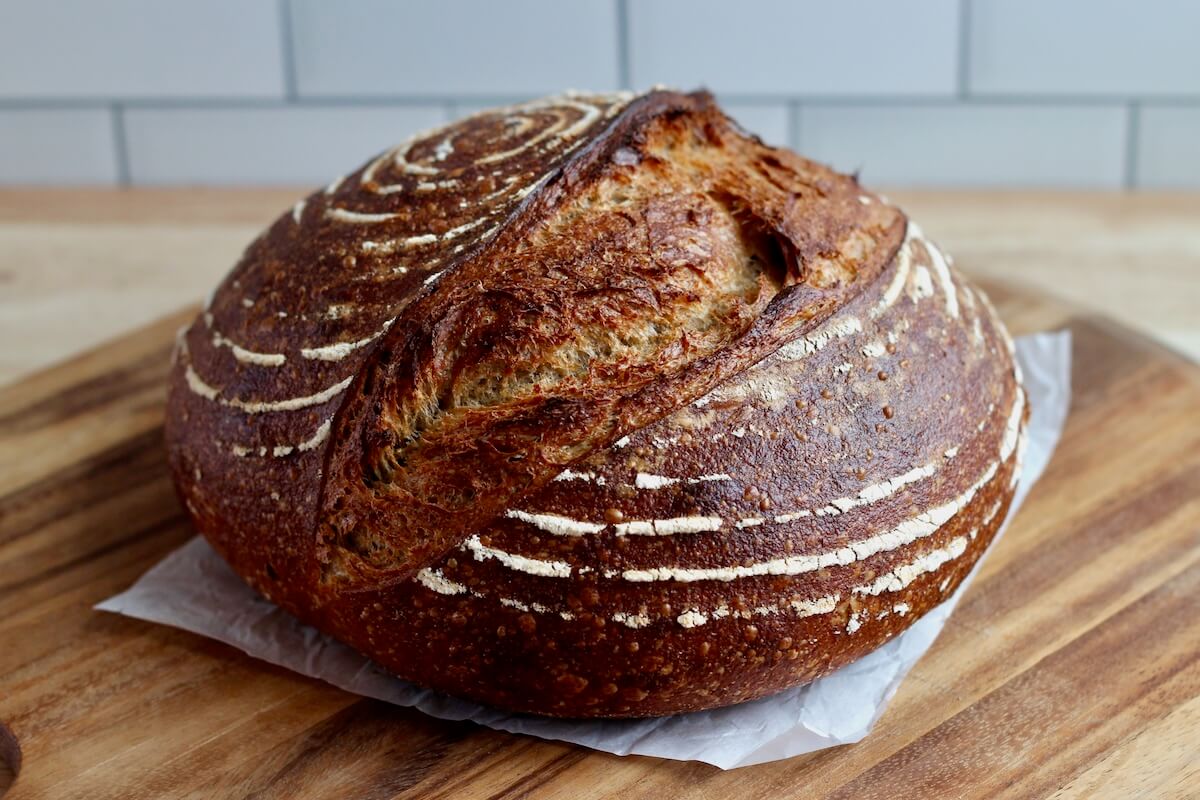
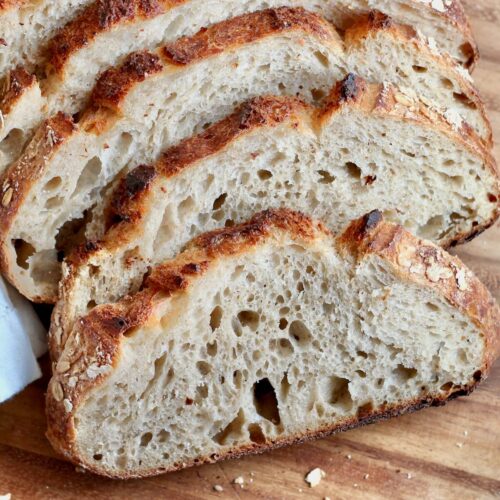
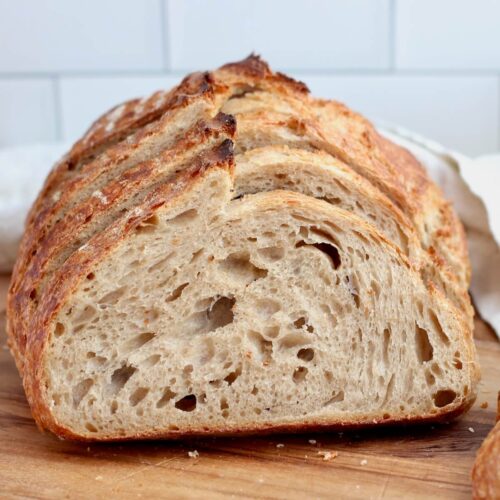
The result? A hearty loaf with a chewy crust and soft interior. It’s tangy, nutty, and slightly sweet, with just the right hint of caraway.
I hope you give this easy sourdough rye bread recipe a try and enjoy it as much as I do!
Disclaimer: Some links throughout this post are affiliate links. As an Amazon Associate, I earn from qualifying purchases. You can learn more by visiting my Affiliate Disclosure Page.
Ingredients & Substitutions
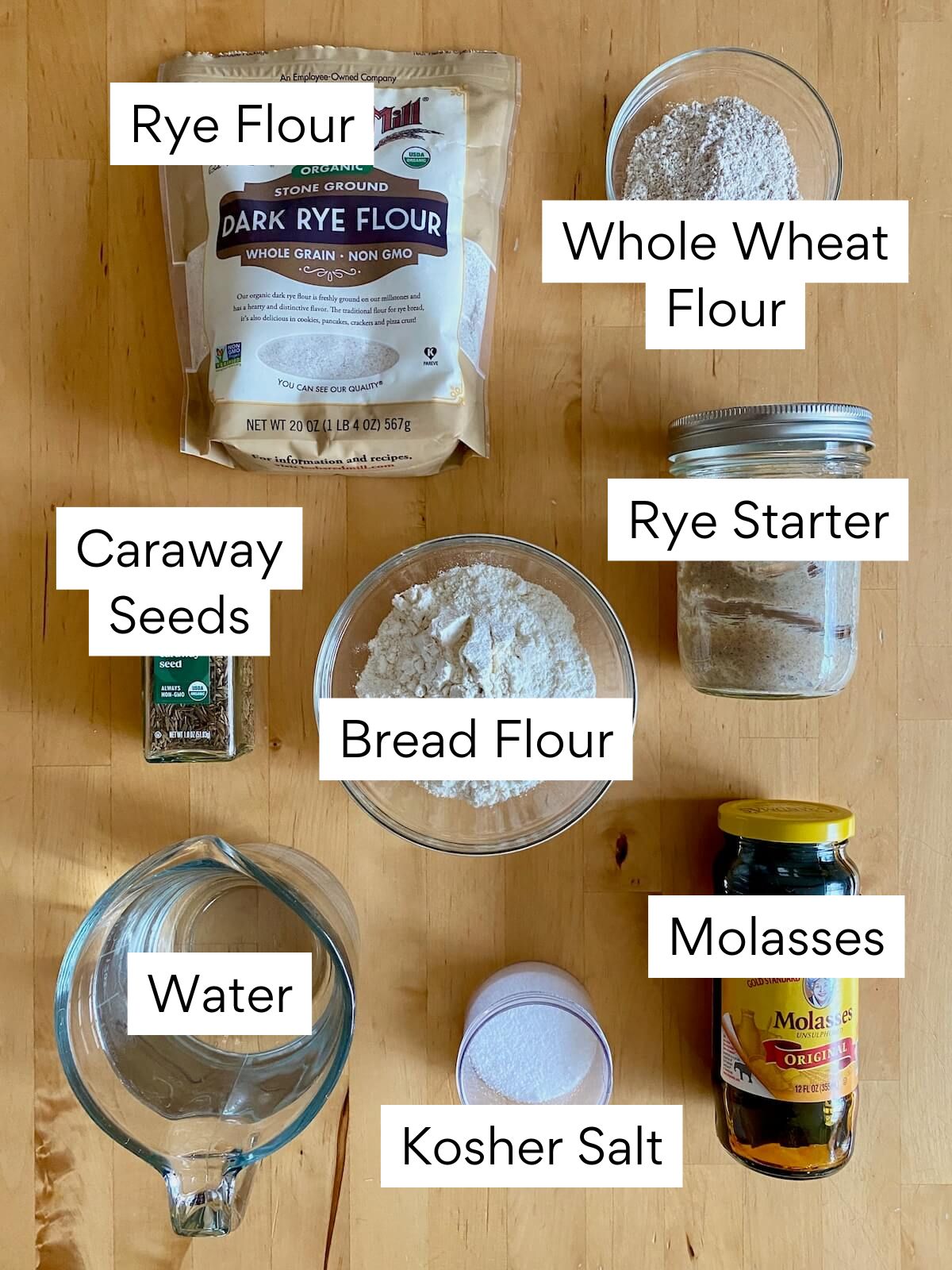
Here are some notes on key ingredients. For a full list of ingredients, check out the recipe card below.
- Active Sourdough Starter- Make sure your starter is bubbly and active for a quicker rise. For best results, feed your starter with rye flour or make a separate rye starter from your usual starter. Rye starters may ferment faster than wheat starters.
- Rye Flour- You can use either dark or light rye flour. This recipe uses about 25% rye flour, making it more beginner-friendly.
- Whole Wheat Flour- Adds a heartier texture to the bread. If you'd like, you can substitute it with more bread flour or rye flour if you're comfortable working with rye.
- Bread Flour- Provides a chewy texture and helps the bread rise. You can substitute it with all-purpose flour or more whole wheat flour. If you use whole wheat, you may need to add a bit more water to maintain the dough's consistency.
- Water- This dough is 75% hydration because rye and whole wheat flour absorb more water. Autolyse the water and flour before mixing the dough for stronger gluten development and to fully hydrate the flour.
- Molasses- Adds a subtle sweetness and depth of flavor.
- Caraway Seeds- Optional, but they provide the classic rye bread flavor.
- Kosher Salt- Enhances the flavor of the bread. I use Diamond Crystal Kosher Salt, which is about 8.4 grams per tablespoon. If you're using table salt or Morton's brand, be sure to measure by weight or use about half the amount.
Tips for Success
- Start with a small amount of rye flour. Rye can be harder to work with than wheat, so start with a smaller percentage (like the 25% in this recipe) and gradually increase as you get more comfortable.
- Use active rye starter. Make sure your starter is bubbly and active for the best rise. If using discard, make sure it's only a few days old, as older discard may cause the dough to rise more slowly. Rye ferments more quickly than wheat, so keep a close eye on the dough during fermentation to prevent overproofing.
- Find a warm spot to rise. Dough rises best in a warm environment. If your kitchen is cool, try placing the dough near a warm oven or on top of the fridge.
- Use a straight-sided container. A straight-sided container helps track the dough’s rise during bulk fermentation, allowing you to easily measure how much it’s grown.
- Build tension when shaping. When shaping, aim to create a tight surface without tearing. This helps the dough rise tall in the oven instead of spreading out.
- Cool completely. Let the bread cool for at least two hours before slicing to avoid a gummy texture and get that perfect crumb.
How to Make Sourdough Rye Bread
Making sourdough bread with rye flour is easier than it sounds! Here’s my step-by-step process with pictures to help you along the way:
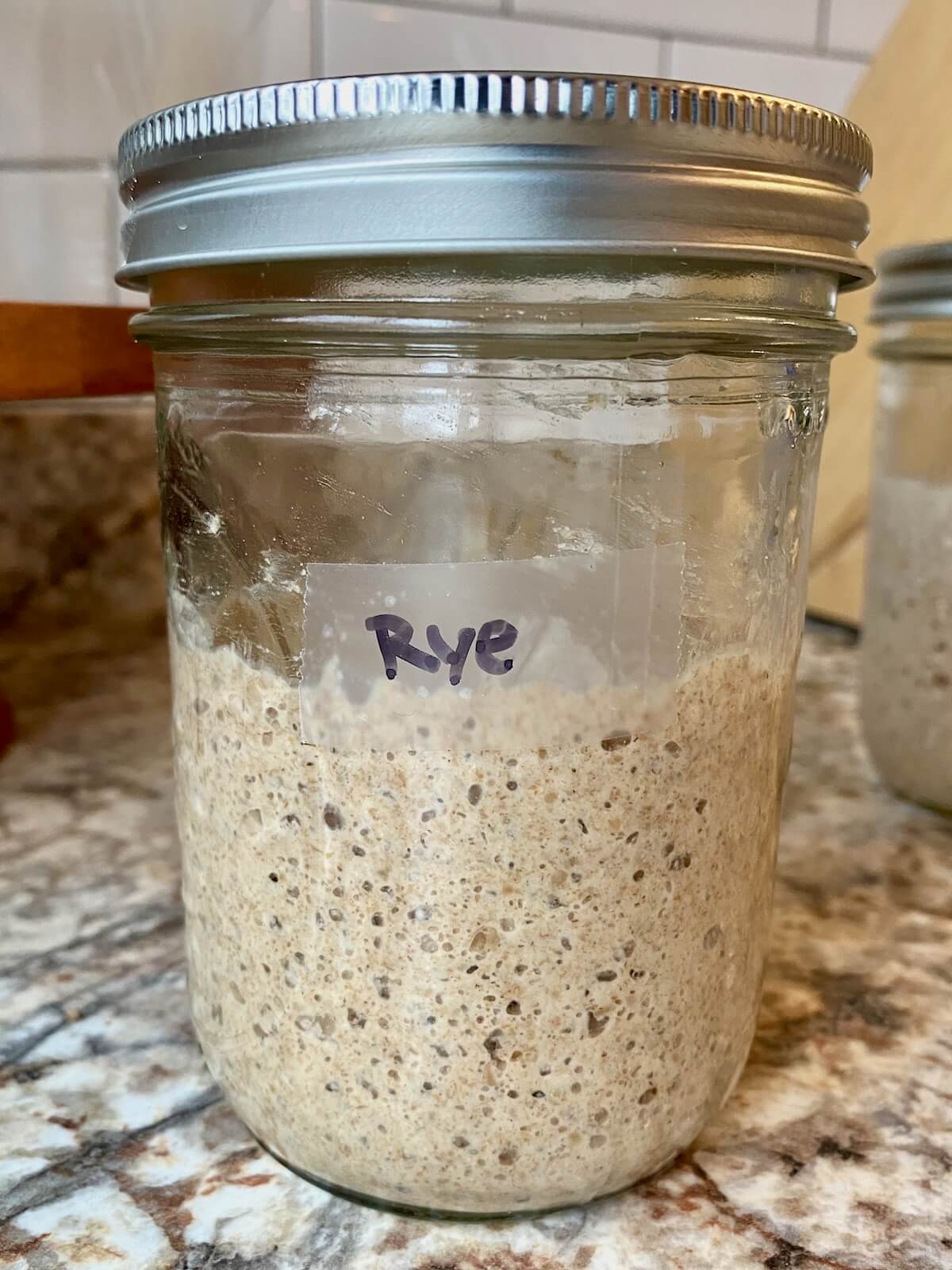
1. Feed Sourdough Starter
- About 6-12 hours before baking, feed your sourdough starter with rye flour to ensure it's bubbly and active.
- The timing will depend on your kitchen temperature - around 75°F takes 6 hours, cooler kitchens (65-68°F) might take 12 hours.
2. Autolyse
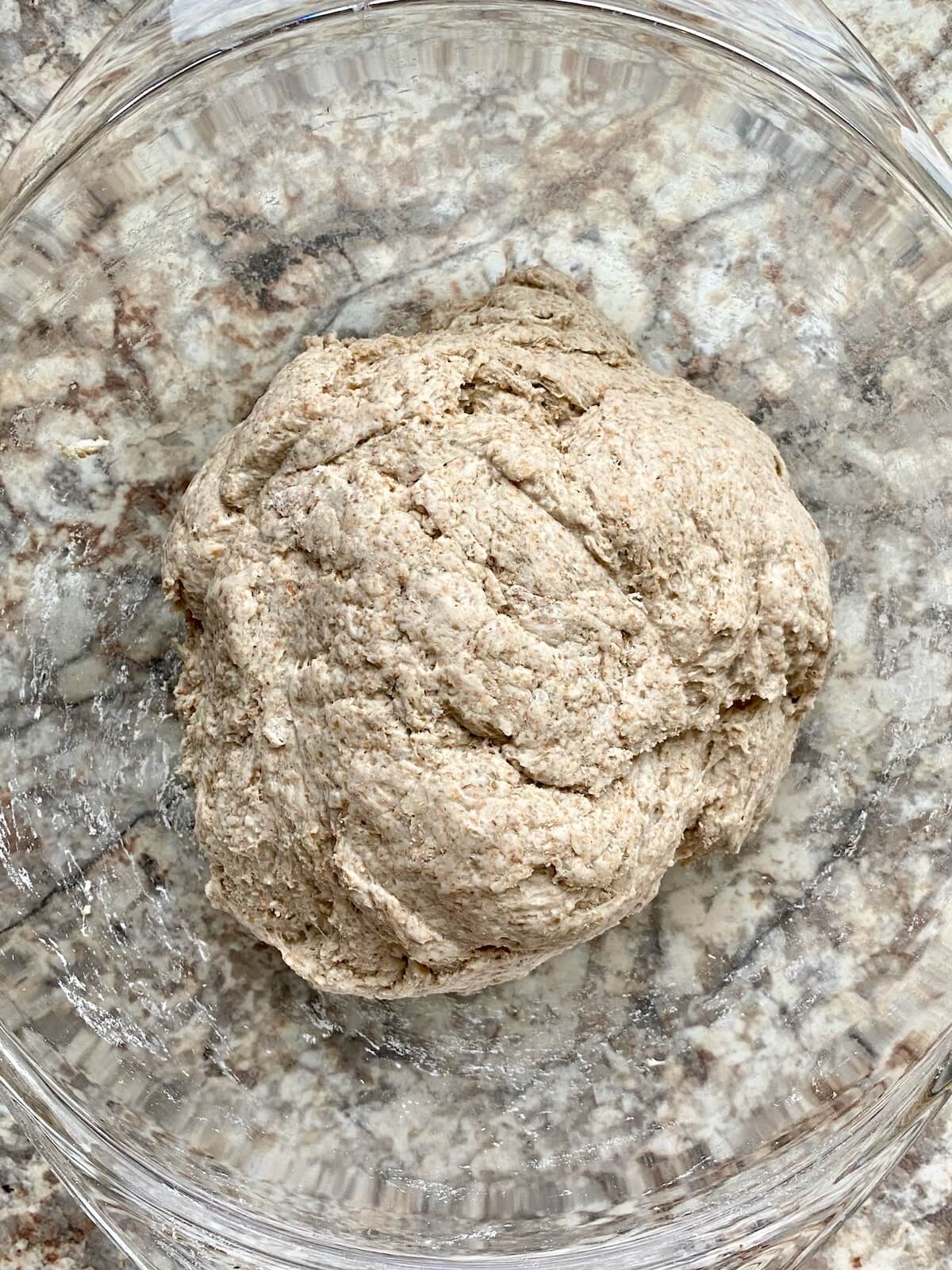
- In a large mixing bowl, combine the bread flour, whole wheat flour, and rye flour with 1 ¼ cups plus 2 tablespoons (330g) of warm water.
- Mix until combined, cover, and let rest for 30 minutes.
3. Dissolve Molasses and Salt
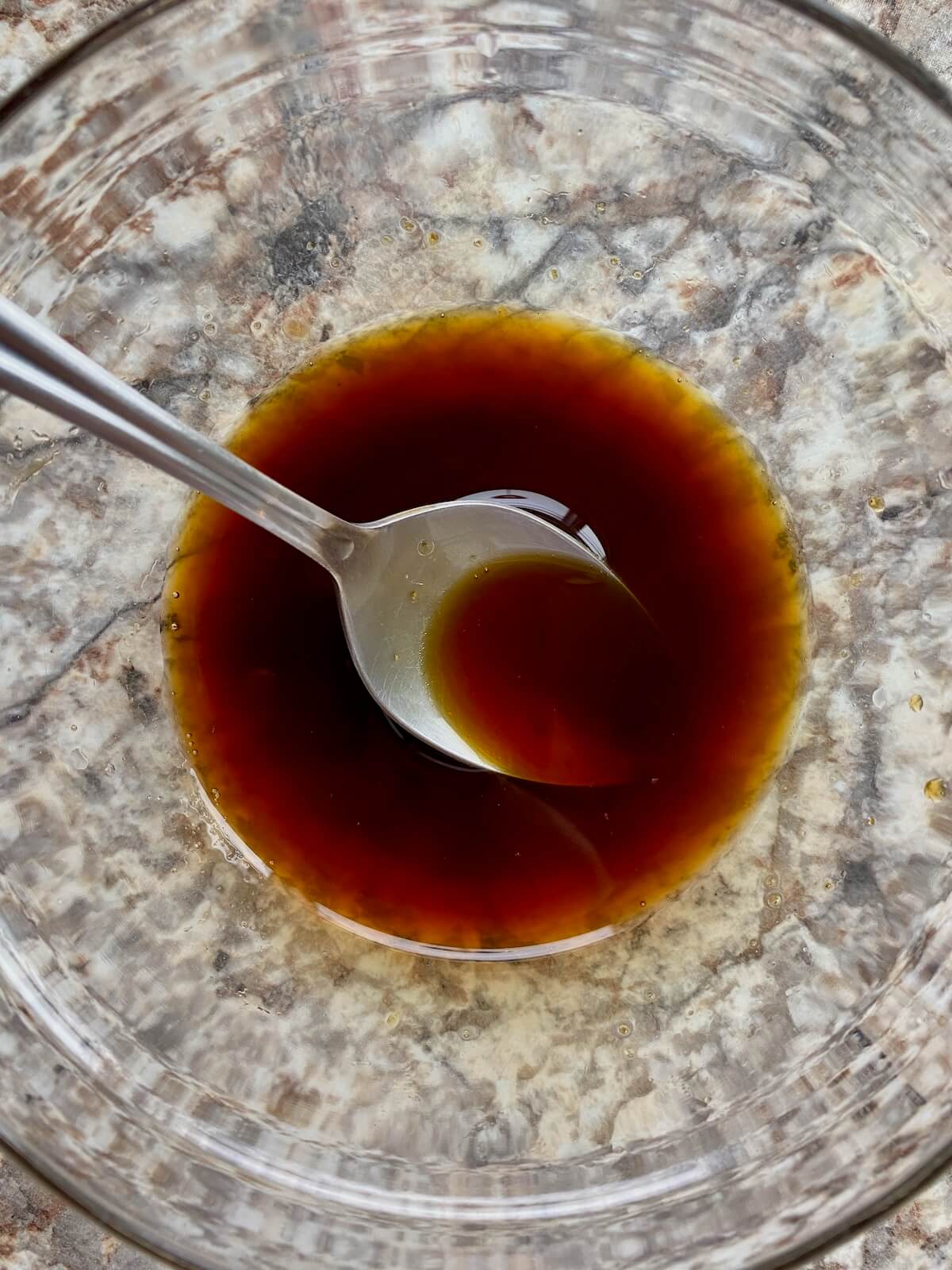
- In a small bowl, whisk together the remaining 2 tablespoons (30g) of warm water with the molasses and salt to dissolve. Set aside.
4. Mix Dough
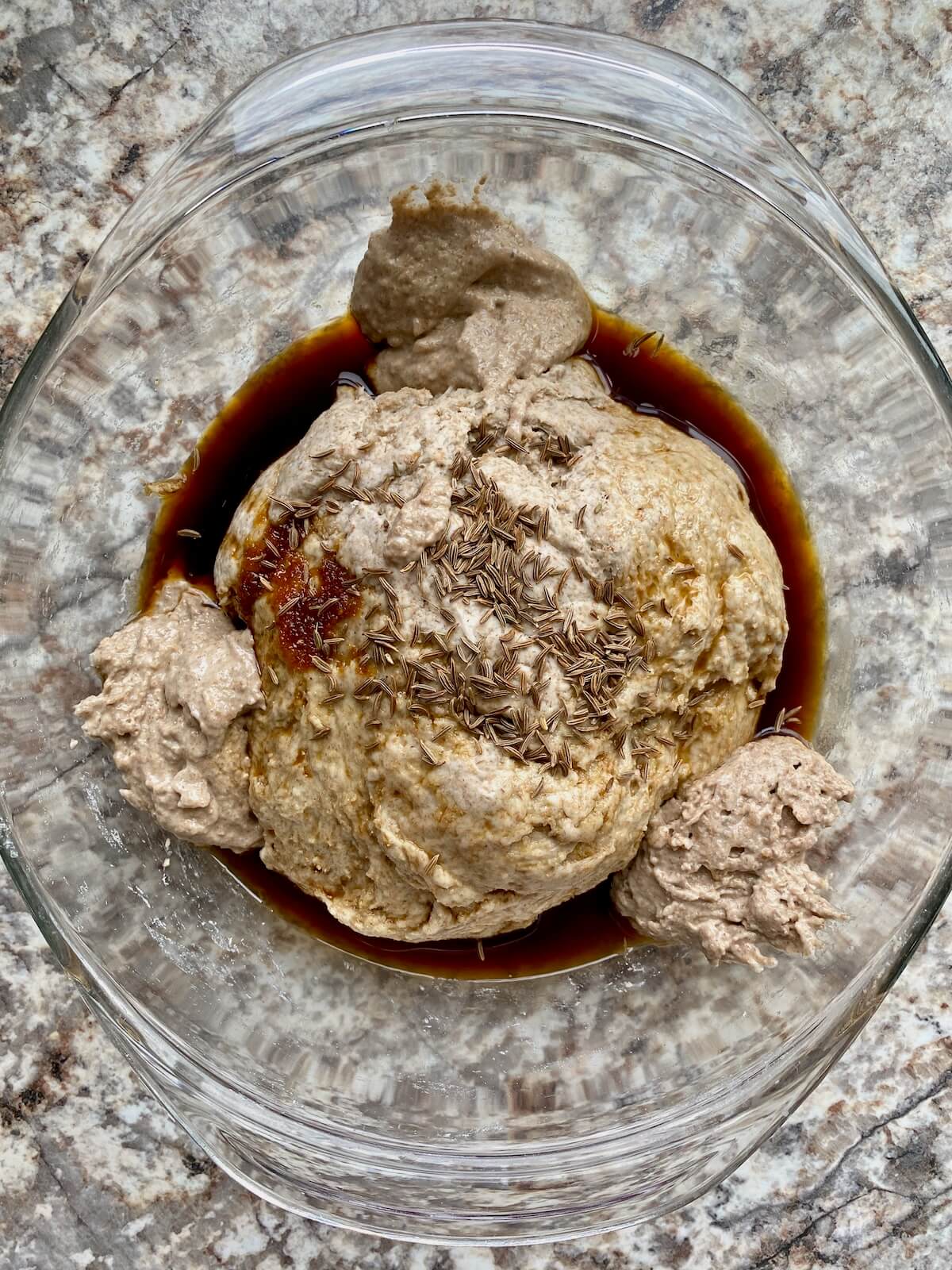
- After the 30-minute autolyse, add your active sourdough starter and the molasses-salt mixture to the flour-water mixture. If using, add the caraway seeds.
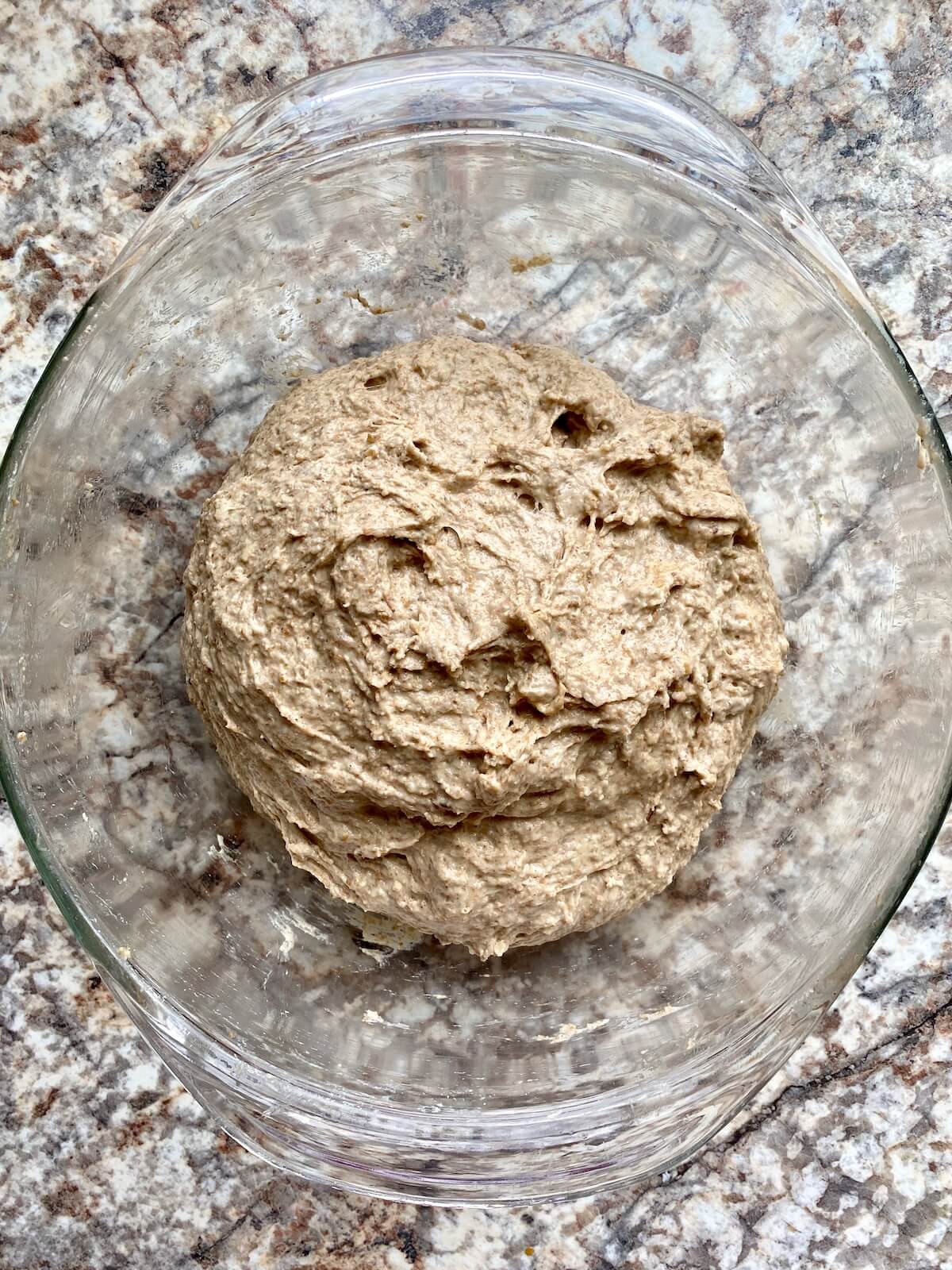
- Mix everything together thoroughly with your hands until a sticky, cohesive dough forms.
- Cover and let rest for 15 minutes.
5. Stretch and Fold
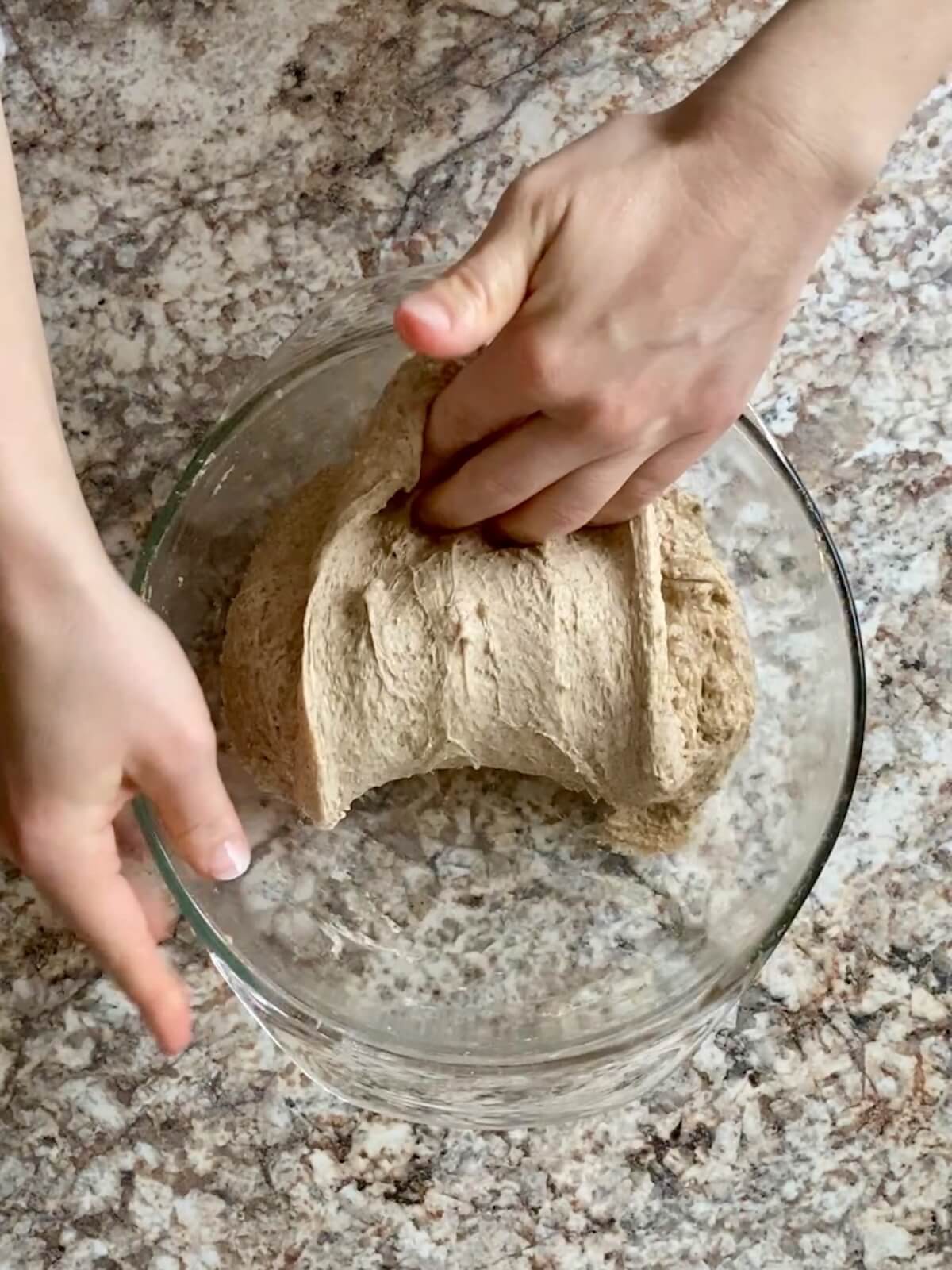
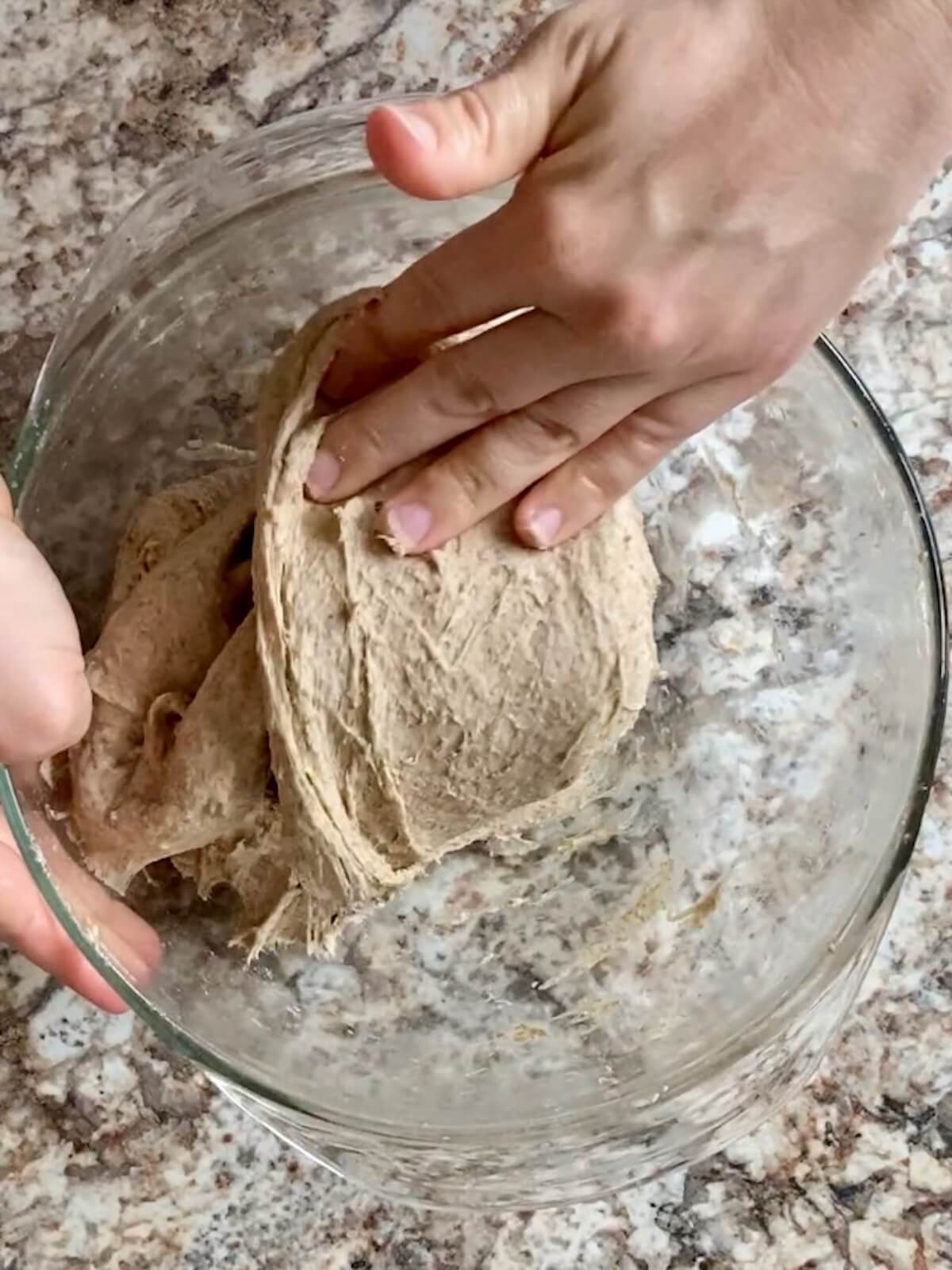
- Wet your hands lightly and perform the first stretch and fold.
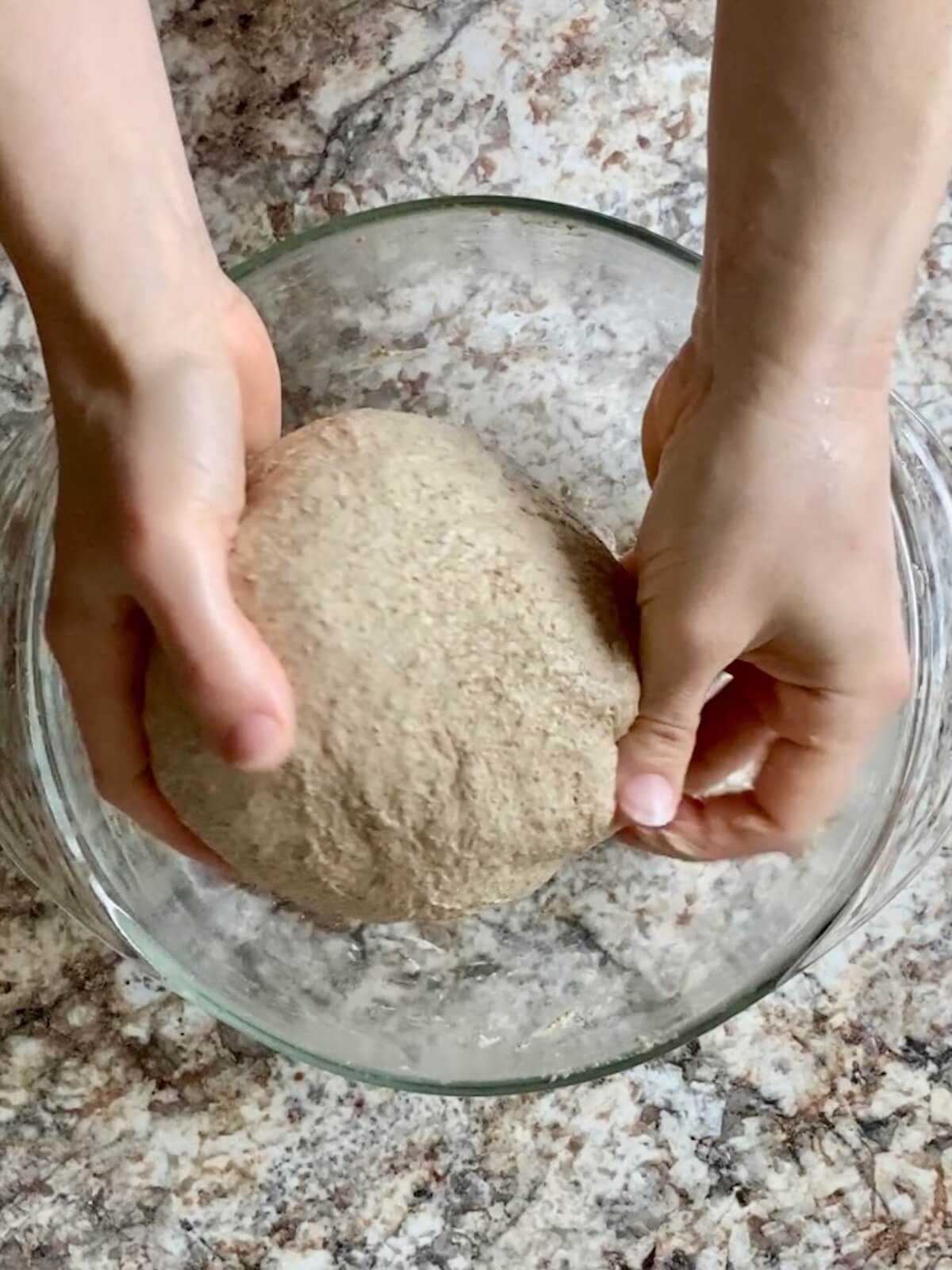
- Grab one edge of the dough, stretch it up, and fold it over itself. Rotate the bowl 90° and repeat this process until you’ve done it on all four sides of the dough. Gather the dough into a ball and flip it folded-side down.
- Cover and rest for 15 minutes.
- Repeat this stretch and fold process 3 more times (for a total of 4 sets), resting the dough for about 15 minutes between each round.
6. Bulk Fermentation
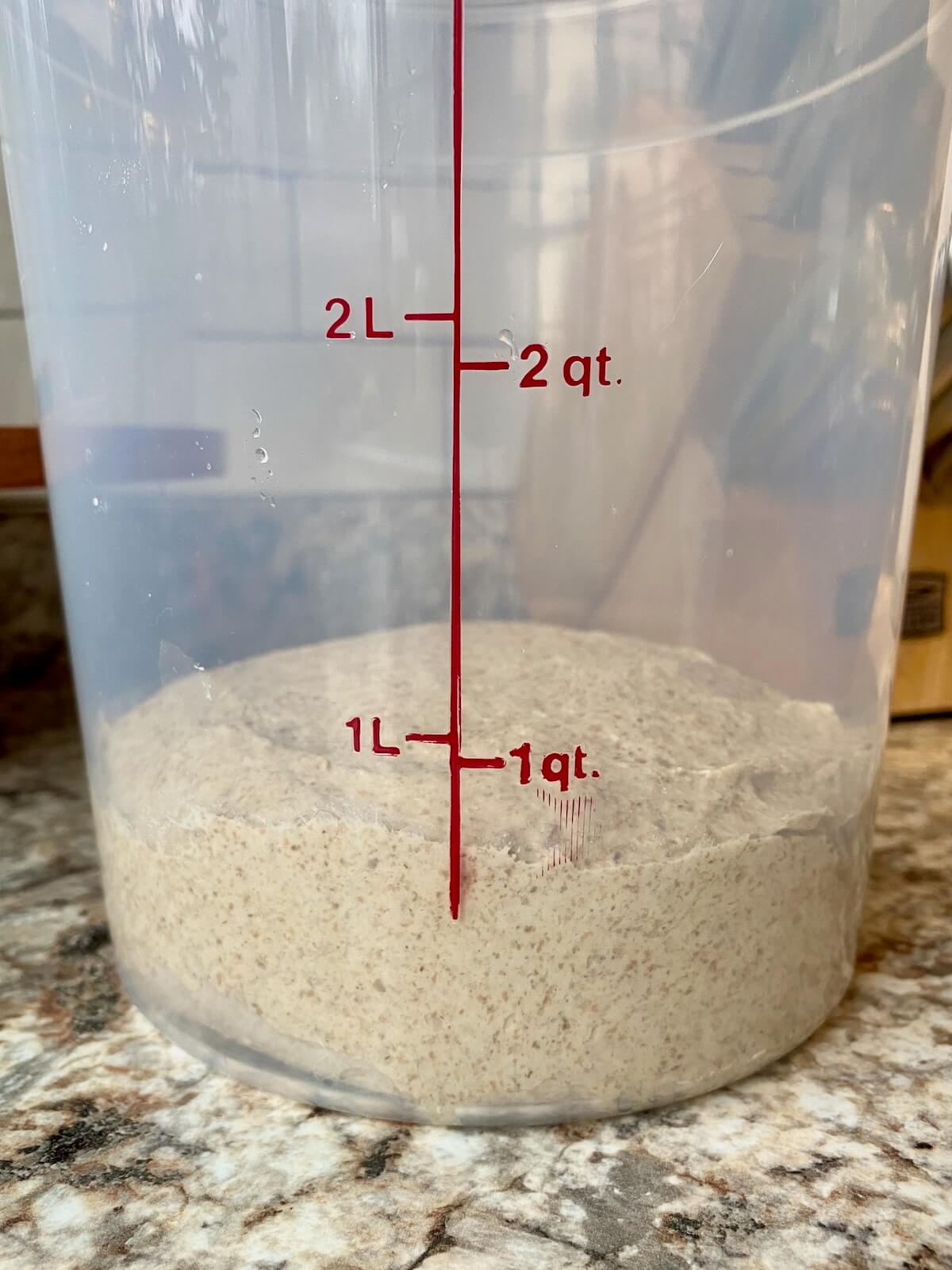
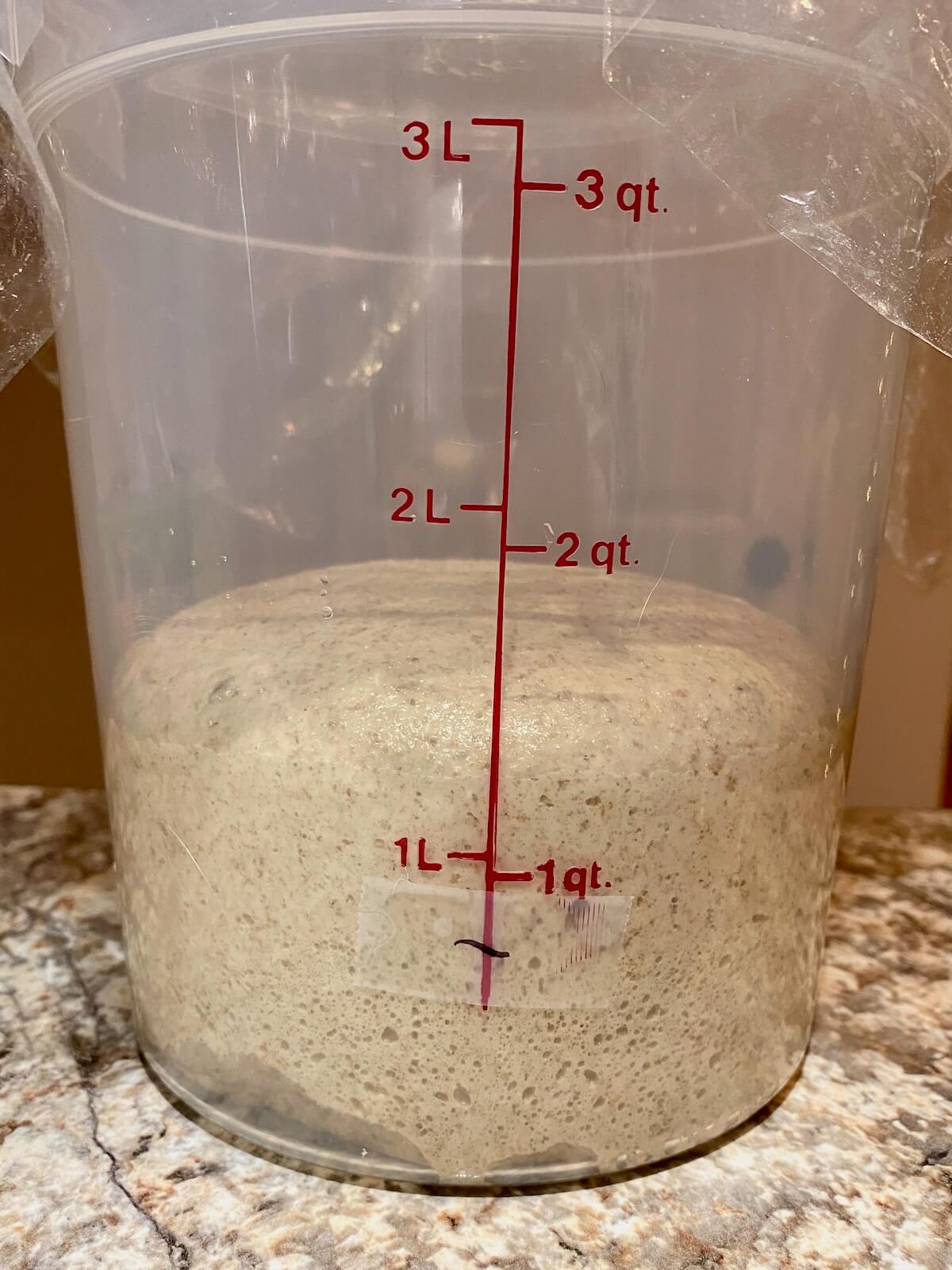
- Cover the dough and let it rise until it nearly doubles in size, with visible fermentation bubbles.
- This can take anywhere from 4-12 hours, depending on your kitchen temperature and starter strength. Rye starters may ferment more quickly, so keep an eye on the dough if you're using one.
🍞 Fermentation Tip: Transfer the dough to a straight-sided container and mark the starting level to track its progress.
7. Pre-Shape
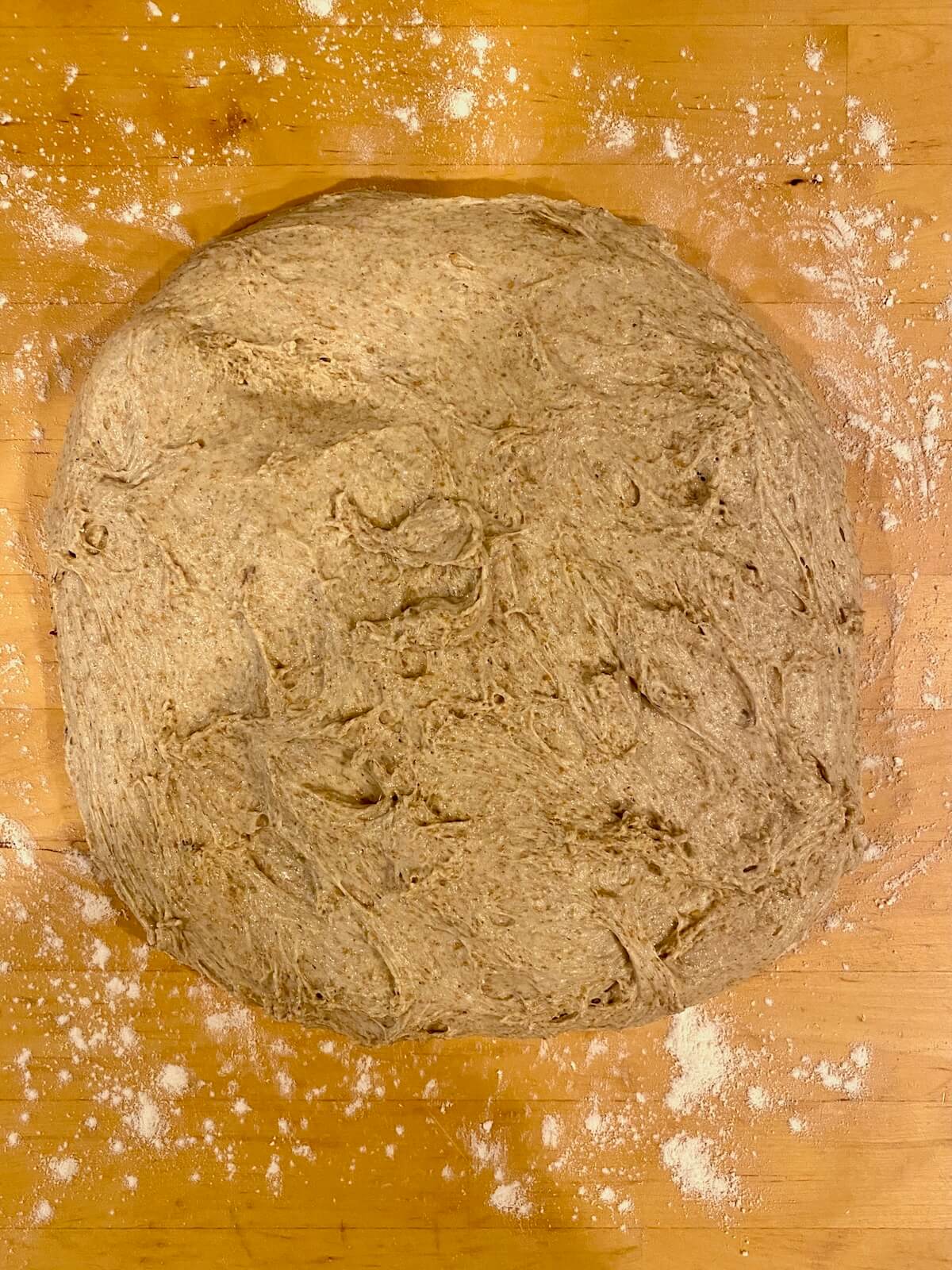
- Once the dough has risen, gently turn it out onto a floured surface.
- Stretch it into a rectangle. Fold both long sides in toward the center, then fold the short sides in. Flip the dough seam-side down.
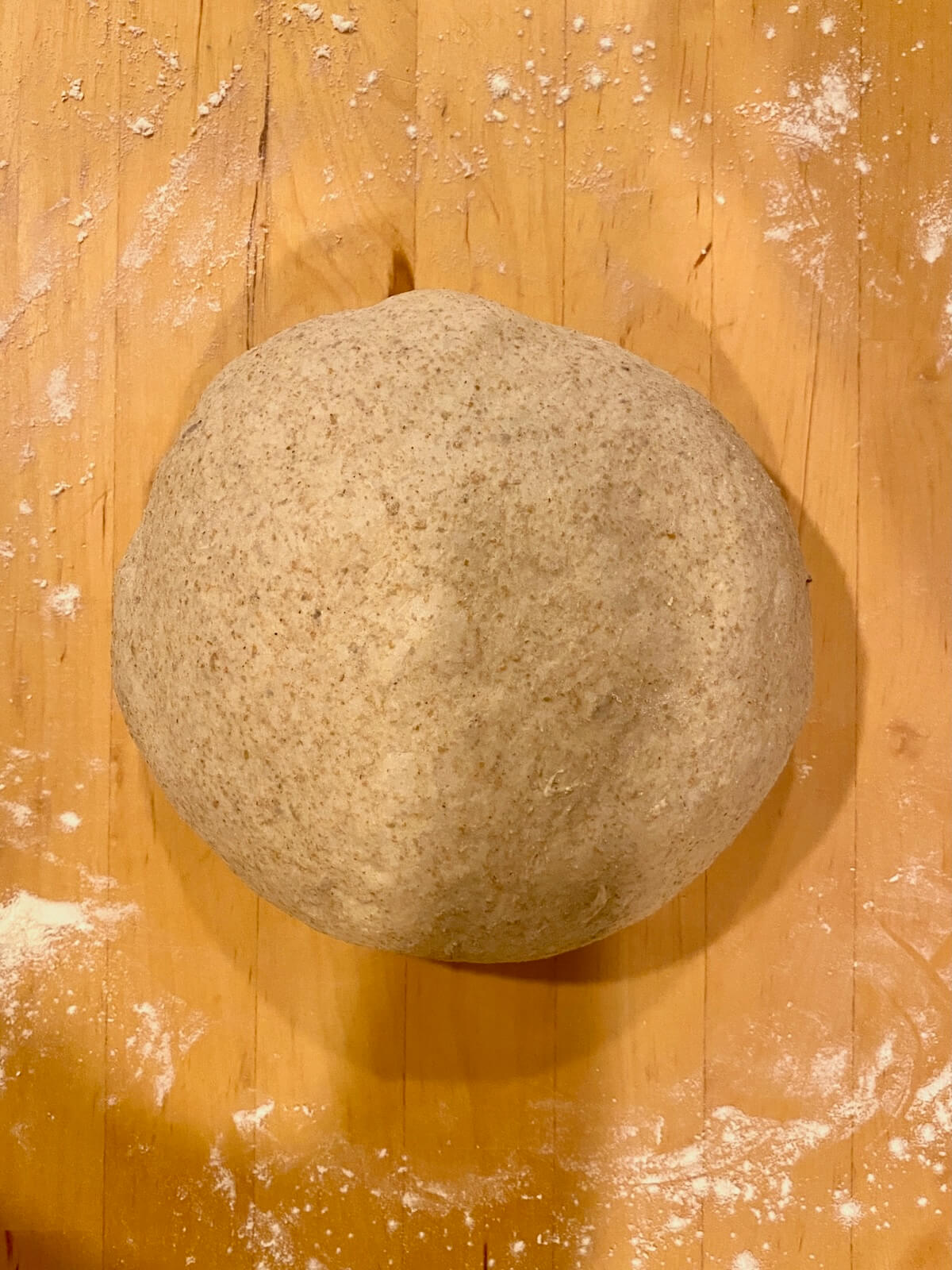
- Use your hands or a bench scraper to shape it into a round ball.
- Cover and rest for 15 minutes.
8. Final Shaping
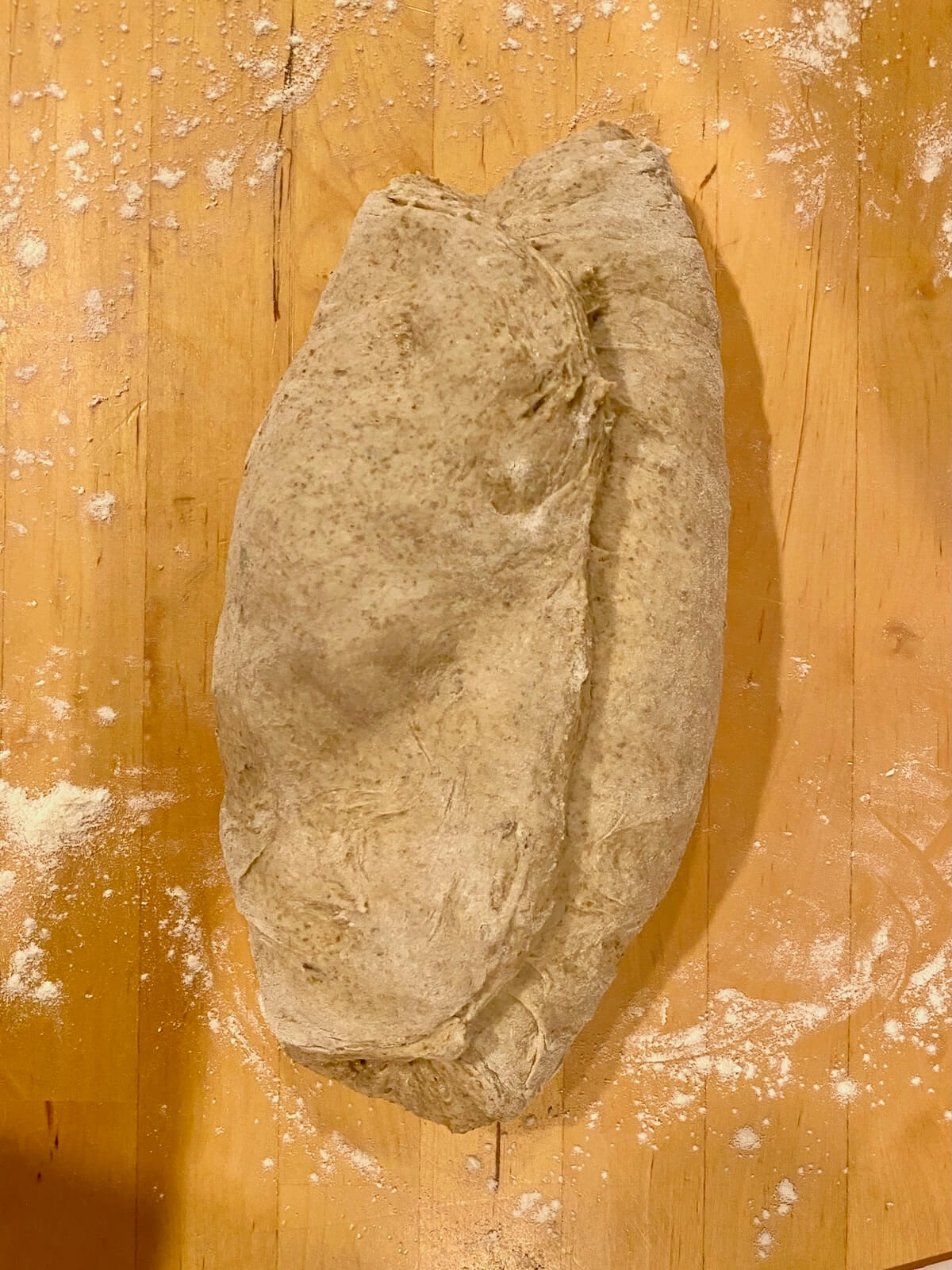
- Flip the dough seam-side up again and gently stretch it into a smaller rectangle.
- If you're using a bowl or banneton, repeat the shaping process above.
- For a batard, fold the shorter edges of the rectangle toward the center. Then, starting at one of the longer edges, roll the dough tightly into a log, pinching the seam and ends to seal.
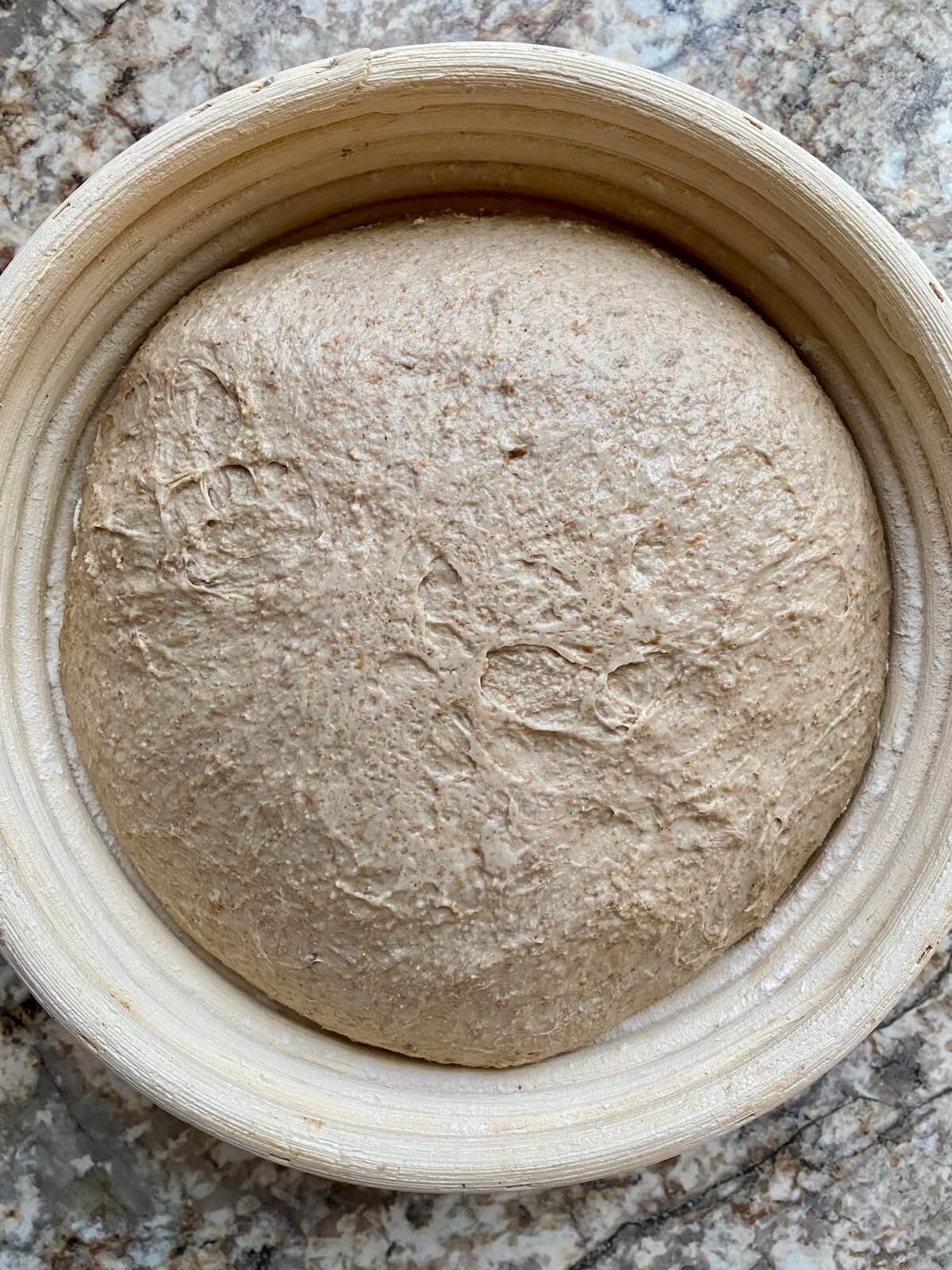
9. Cold Proof
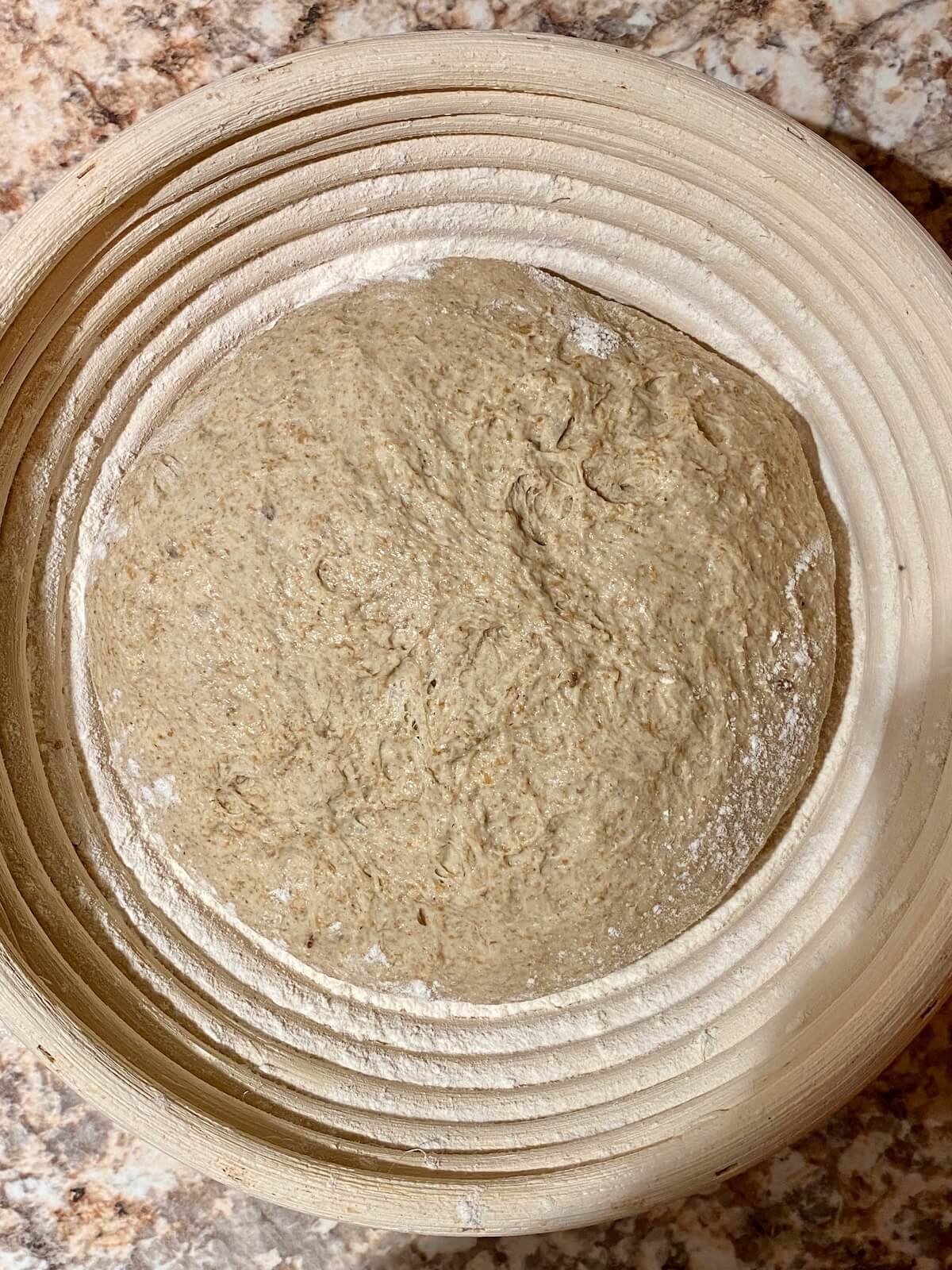
- Generously dust your proofing basket with rice flour.
- Transfer the dough, seam-side up, into the basket. Pinch the seam if needed to seal.
- Cover and refrigerate for 12-16 hours for cold proofing.
10. Bake the Bread
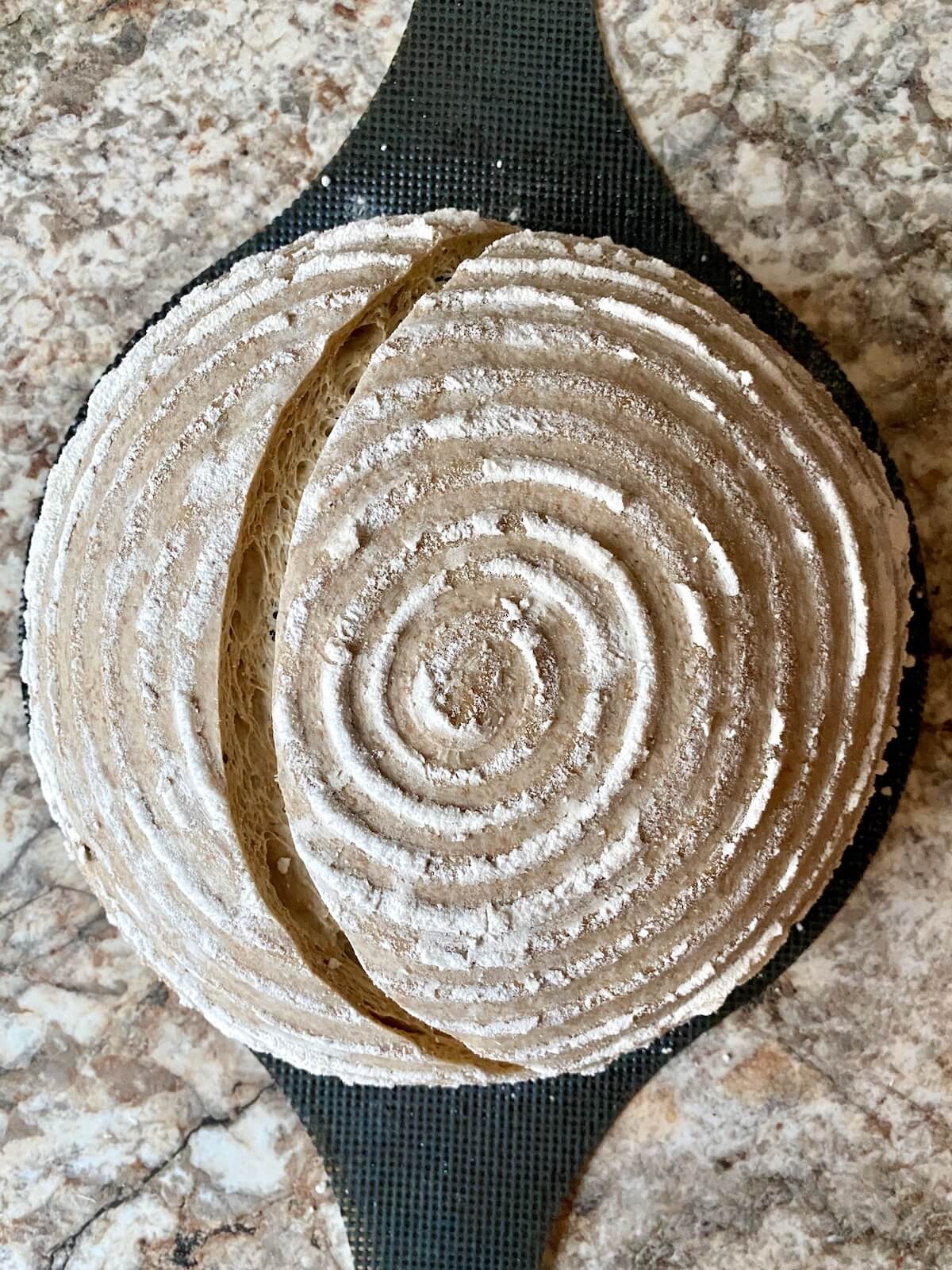
- Preheat a lidded Dutch oven to 450°F for 30-60 minutes.
- Turn the dough onto bread sling or parchment and score as desired.
- Add 2 ice cubes to the hot Dutch oven.
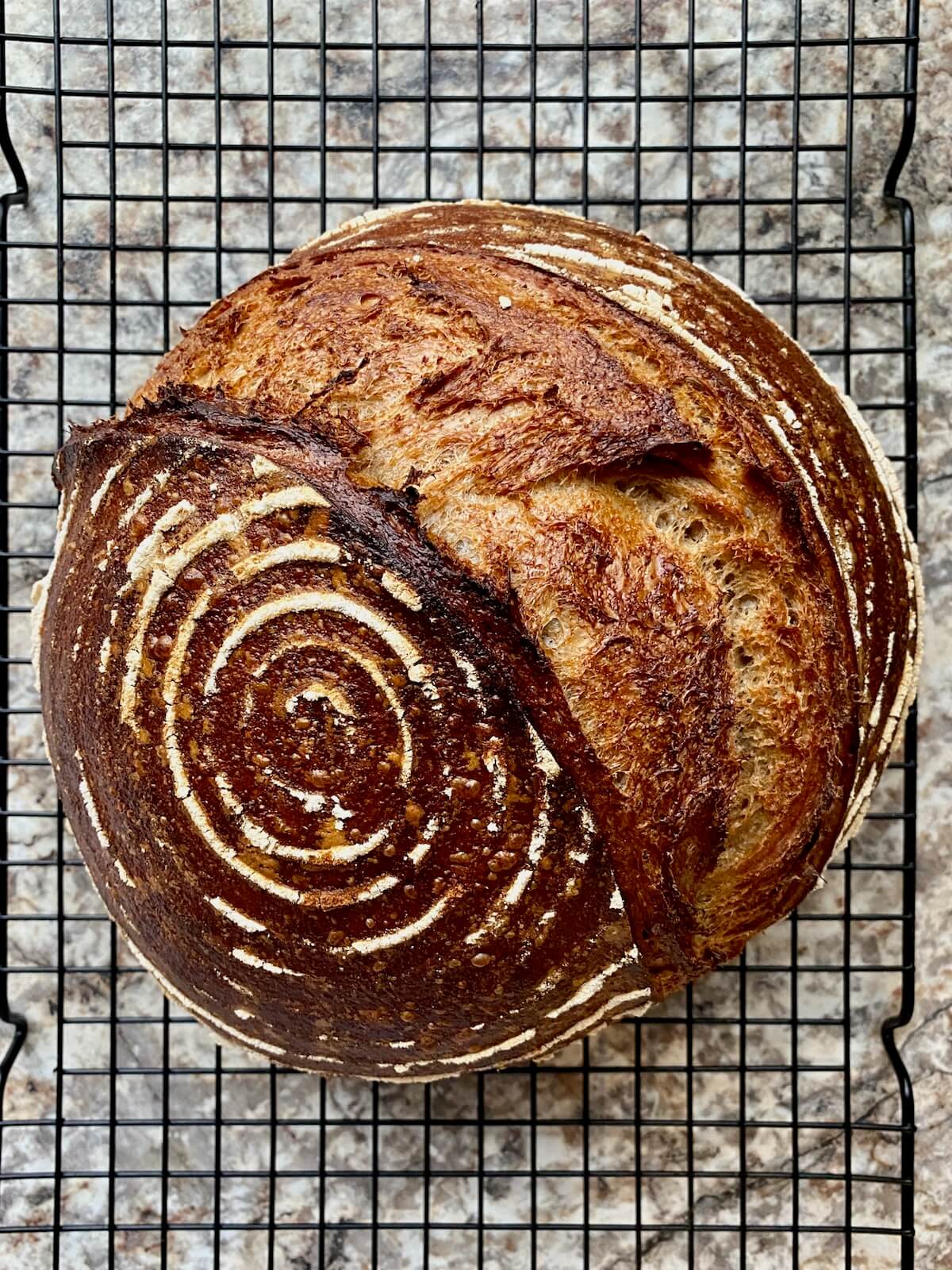
- Transfer the dough, cover, and bake for 45 minutes. Remove the lid and bake for 5 more minutes for a golden crust.
- Cool on a wire rack for 2-4 hours before slicing.
Baker's Timeline
Here’s an example of a schedule you can follow to make this rye sourdough bread:
- 8:00 PM (Night Before): Feed your starter.
- 8:00-8:30 AM: Autolyse.
- 8:30-8:45 AM: Mix the dough.
- 9:00-9:45 AM: Stretch and fold.
- 10:00 AM-3:00 PM (Varies): Bulk fermentation.
- 3:00-3:30 PM: Pre-shape and final shape.
- 3:30 PM-7:30 AM (Next Day): Cold proof.
- 7:30-8:15 AM: Bake.
- 8:15 AM-12:15 PM: Cool.
Note: Rise times will vary depending on the strength of your starter and the temperature of your kitchen and dough. It's best to rely on visual cues from your starter and dough rather than sticking strictly to the timeline.
How to Store
Sourdough rye bread will keep at room temperature in an airtight container or bread box for up to 4 days.
For longer storage, slice and freeze in a freezer-safe bag for up to 3 months. When you're ready to enjoy it, just thaw at room temperature or warm it in the toaster or oven.
Serving Suggestions
This easy sourdough rye bread is delicious served warm with homemade butter and strawberry apple jam, or with hummus and dill pickles for something more savory.
It also pairs perfectly with corned beef and cabbage or makes a great base for a comforting sourdough grilled cheese.

Are you tired of watching your sourdough discard go to waste?
It’s time to turn excess discard into something delicious with my new ebook - Everyday Sourdough!
Inside, you’ll find 27 tried-and-true sourdough discard recipes that will transform your leftover starter into mouthwatering creations your family and friends will love.
No more guilt about wasting your discard - with Everyday Sourdough, you have endless options to quickly make something amazing anytime.
Let's Connect!
Be sure to leave a comment below if you have any questions. You can also connect with me on Instagram, Facebook, Pinterest, or via email at [email protected].


📖 Recipe

Sourdough Rye Bread
Equipment
- Banneton or bowl lined with tea towel
- Lame or sharp knife
- Bread sling or parchment paper
- Straight-sided container (optional)
Ingredients
- 2 cups (240 grams) bread flour
- 1 cup (120 grams) whole wheat flour
- 1 cup (120 grams) rye flour light or dark
- 1 ½ cups (360 grams) warm water 80-90℉ (divided)
- 1 tablespoon (20 grams) molasses
- 3 ½ teaspoons (10 grams) Diamond Crystal Kosher Salt measure by weight or reduce volume by about half if using table salt or Morton's brand
- ½ cup (100 grams) active sourdough starter preferably fed with rye flour
- 2-3 teaspoons caraway seeds optional
- Rice flour for dusting bannetone
- 2 ice cubes for steam
Instructions
- About 6-12 hours before baking, feed your sourdough starter with rye flour to ensure it's bubbly and active. The timing will depend on your kitchen temperature - around 75°F takes 6 hours, cooler kitchens (65-68°F) might take 12 hours.
- In a large mixing bowl, combine the bread flour, whole wheat flour, and rye flour with 1 ¼ cups plus 2 tablespoons (330g) of warm water. Mix until combined, cover, and let rest for 30 minutes.2 cups (240 grams) bread flour, 1 cup (120 grams) whole wheat flour, 1 cup (120 grams) rye flour
- In a small bowl, whisk together the remaining 2 tablespoons (30g) of warm water with the molasses and salt to dissolve. Set aside.1 tablespoon (20 grams) molasses, 3 ½ teaspoons (10 grams) Diamond Crystal Kosher Salt
- After the 30-minute autolyse, add your active sourdough starter and the molasses-salt mixture to the flour-water mixture. If using, add the caraway seeds. Mix everything together thoroughly with your hands until a sticky, cohesive dough forms. Cover and let rest for 15 minutes.½ cup (100 grams) active sourdough starter, 2-3 teaspoons caraway seeds
- Wet your hands lightly and perform the first stretch and fold. Grab one edge of the dough, stretch it up, and fold it over itself. Rotate the bowl 90° and repeat this process until you’ve done it on all four sides of the dough. Gather the dough into a ball, flip it folded-side down, cover, and rest for 15 minutes. Repeat this stretch and fold process 3 more times (for a total of 4 sets), resting the dough for about 15 minutes between each round.
- Cover the dough and let it rise until it nearly doubles in size, with visible fermentation bubbles. This can take anywhere from 4-12 hours, depending on your kitchen temperature and starter strength. Rye starters may ferment more quickly, so keep an eye on the dough if you're using one. (Tip: Transfer the dough to a straight-sided container and mark the starting level to track its progress.)
- Once the dough has risen, gently turn it out onto a floured surface. Stretch it into a rectangle. Fold both long sides in toward the center, then fold the short sides in. Flip the dough seam-side down. Use your hands or a bench scraper to shape it into a round ball. Cover and rest for 15 minutes.
- Flip the dough seam-side up again and gently stretch it into a smaller rectangle. If you're using a bowl or banneton, repeat the shaping process above. For a batard, fold the shorter edges of the rectangle toward the center. Then, starting at one of the longer edges, roll the dough tightly into a log, pinching the seam and ends to seal.
- Generously dust your proofing basket with rice flour. Transfer the dough, seam-side up, into the basket. Pinch the seam if needed to seal. Cover and refrigerate for 12-16 hours for cold proofing.Rice flour
- The next day, place a lidded Dutch oven inside the oven and preheat to 450°F. Let the Dutch oven heat for 30-60 minutes once the oven reaches temperature.
- Turn the dough out onto a bread sling or parchment paper. Score the top of the dough with a lame or sharp knife. Carefully place 2 ice cubes in the Dutch oven for steam, then transfer the dough into the hot Dutch oven using the sling or parchment paper. Cover with the lid to trap the steam inside.2 ice cubes
- Bake at 450°F for 45 minutes with the lid on. Then, remove the lid and bake for an additional 5 minutes to achieve your desired crust color.
- Remove the bread from the Dutch oven and let it cool on a wire rack for at least 2-4 hours before slicing and serving.
Notes
- Quick Tip: For best results, use a food scale to measure all of your ingredients by weight.
- Storage: Store bread in an airtight container at room temperature for up to 4 days or slice and freeze for up to 3 months.



Heather Price says
The dough was a soupy mess. Something clearly off with the conversion of cups to grams, big waste of time and ingredients
Ashley Petrie, RDN, LDN says
Hi Heather, I can assure you the gram measurements in the recipe are accurate. The dough is meant to be on the wetter side, but it shouldn’t be soupy — so something may have gone a bit off in the process. Dough can feel soupy if the gluten isn’t fully developed, if it over-ferments, or even if the starter is especially runny or not at peak strength. If you decide to try it again, I’d be happy to help troubleshoot — feel free to share more details about your starter, fermentation time, room temperature, and the type of flour you used.
Denise H-F says
Hi, I love following your recipes, they are always very clear and concise. But I found several inconsistencies in this Rye Sourdough recipe.
Step 2, the written instructions say to use 1 1/4 cups plus 2 tablespoons (330 grams) of water, but in the list of referenced ingredients (still step 2) it lists the entire 1 1/2 cups (360 grams) of water.
Step 3, the written instructions say to whisk 2 tablespoons of water (30 grams) with molasses and salt. But in the referenced ingredients (still step 3) it again references the entire 1 1/2 cups (360 grams) warm water.
Step 4, the written instructions are all correct, but the referenced ingredients do not mention adding the salt/molasses mixture.
One of the things I love about your recipes is that you provide that 'checklist' of ingredients used in each step. It helps me make sure I included everything. It would be nice if this Sourdough Rye included the correct 'checklist' of at each step.
--Denise
Ashley Petrie, RDN, LDN says
Hi Denise! Thank you so much for your thoughtful comment and kind words—it really means a lot that you enjoy the clarity of my recipes.
You're absolutely right about the inconsistencies in the ingredient checklist under each step. The recipe card software I use automatically pulls the full ingredient list into each step unless I leave it blank, and unfortunately, I can’t customize it to reflect the exact quantities used in each stage.
That’s why I always write out the specific amounts needed in the step-by-step instructions, but I totally understand how the mismatch can be confusing—especially for a recipe like this with staggered water additions.
I’m still trying to figure out the best workaround, but your feedback helps a ton and I’ll be more mindful of this going forward. Thanks again for taking the time to point it out!
Ashley
Catherine says
I didn’t see the mistake. I just followed the info on the recipe directions. It was apparently correct. I’m making this as I send this. The dough smells amazing.
Note to Denise - your tone on your comment was unnecessary. You could have gotten your point across without all the attitude. 🙂
Judy says
I did notice the inconsistencies but followed the directions. The dough was very wet but came together nicely with the stretch and folds. Haven’t tasted it yet but it looks beautiful!
Ashley Petrie, RDN, LDN says
Hi Judy! I’m so glad to hear it came together nicely for you! The dough can definitely feel a bit wet at first, but those stretch and folds usually do the trick. I hope you loved how it tasted once you sliced into it!
Lyn Bott says
I have made your rye sourdough, which I like very much. My only issue is after bulk fermentation the dough is very sticky which makes it hard to shape. The dough is fine during the stretch & fold process. When I bake the bread it is dense but still rises and tastes good. Should I reduce the starter or the water?
Thank you
Ashley Petrie, RDN, LDN says
Hi Lyn! Rye is a bit stickier than wheat and with both the rye and whole wheat flour in this loaf, it does turn out a bit more dense than a loaf using all white flour. But if it's too sticky to manage you can try reducing the water a bit. My other thought is that it's possibly overproofing, which can make for a stickier dough after bulk fermentation because the gluten loses some of its elasticity. Whole grains like rye and whole wheat ferment more quickly so maybe try shortening you bulk timing and see if that helps with the stickiness.
Donna says
I'm so surprised this recipe doesn't have rave reviews. I've made it twice now and it's not only a very easy process, it's so delicious. I just gifted one to my mom for mother's day and she loved it! The only thing I can guess is that while it's beginner-friendly for rye, the high-hydration/sticky dough is more of an intermediate level as far as sourdough in general goes. Sticky dough can be intimidating to work with, especially during shaping. But the person who said 'soupy mess'- you have to get in there with your hands and really squeeze and massage it until it all comes together. If you're trying to stir it with a spatula or even a dough whisk, it's not going to work. So if you're comfortable with high hydration, or willing to learn, this is a pretty fool-proof recipe. And the loaf comes out absolutely gorgeous! This will be one of my new go-to sourdough recipes.
Ashley Petrie, RDN, LDN says
Hi Donna! Your review just made my day - I'm so glad you enjoyed this rye bread! And that your mom did, too! Such a sweet gift for Mother's Day. Thank you so much for sharing 🙂