
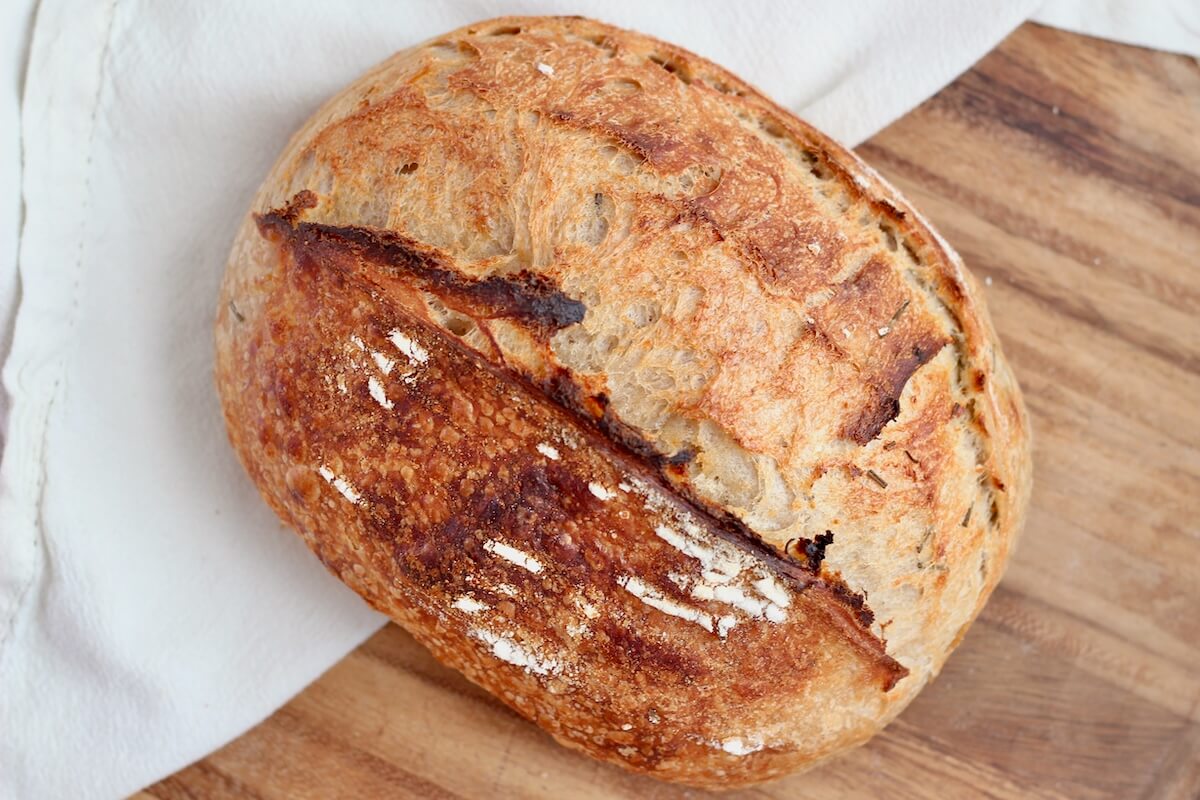
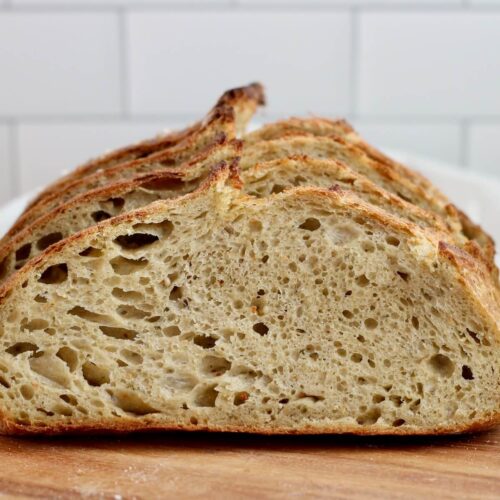
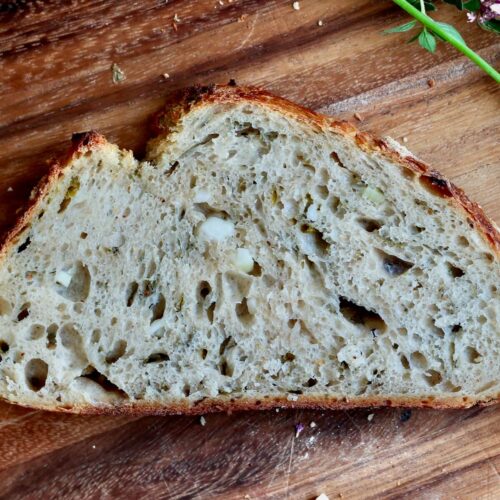
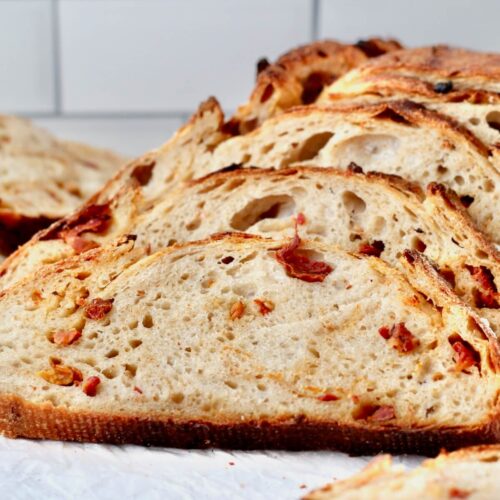
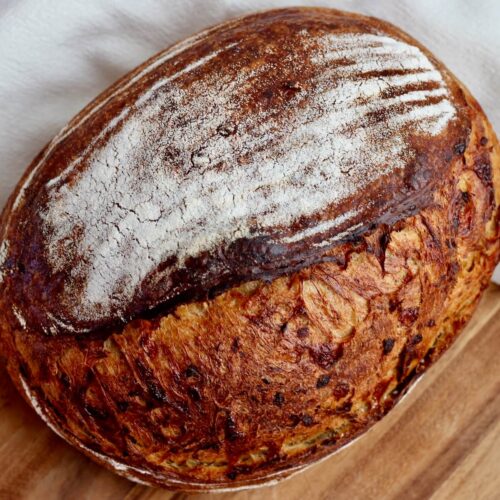
This Parmesan Rosemary Sourdough Bread is a savory, cheesy loaf infused with fresh rosemary and garlic. It has a soft crumb and golden crust and is perfect for sandwiches, dipping in olive oil, or enjoying warm.
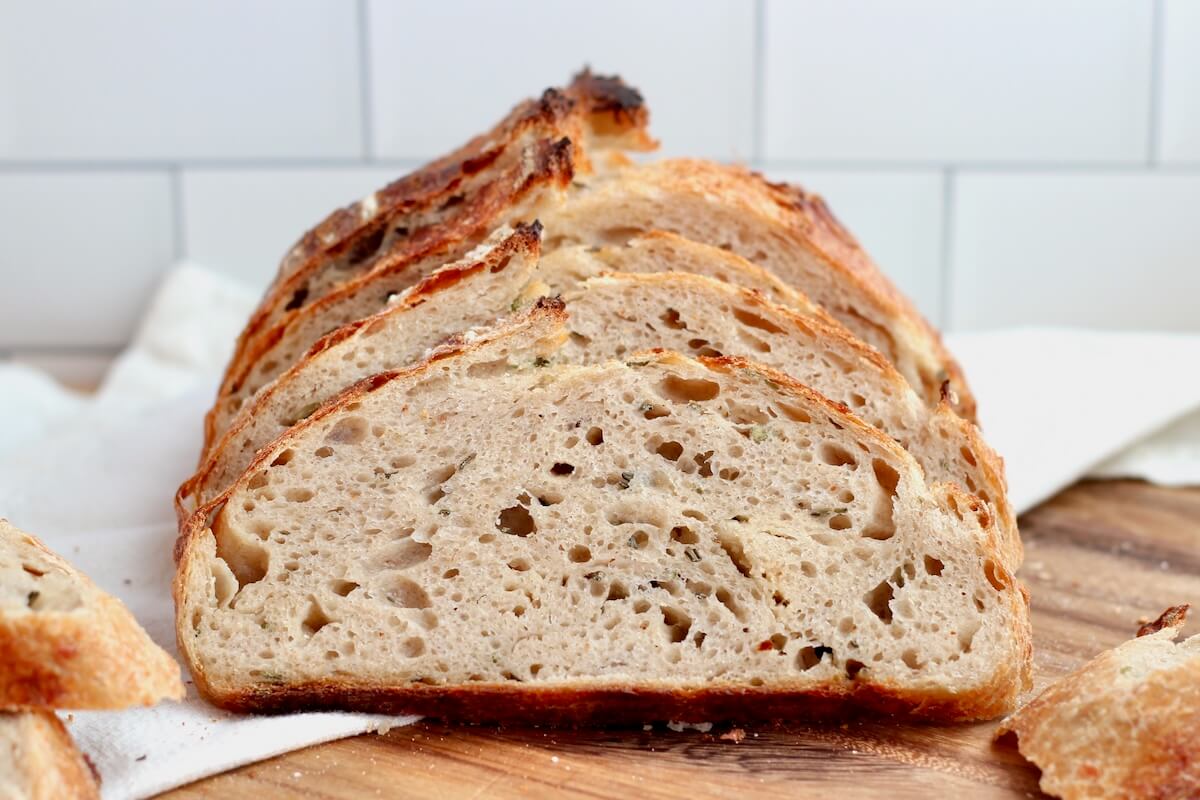
There I was, staring at my oven while my test loaf of this parmesan rosemary sourdough bread baked away. And I suddenly noticed the temperature read 375°F instead of 450°F.
Oops. Let’s just say sometimes I do silly things like preheat my oven wrong and don’t realize until it’s too late.
So yes, my first attempt came out a little flat. But it wasn’t a total loss! I turned it into delicious croutons and all was well.
Round two, though, was exactly what I wanted. It needed a little more parmesan and garlic powder anyway. So really, it all worked out perfectly.
I love this savory loaf because it’s beginner-friendly and super versatile. You can use it for sandwiches, dip it in olive oil or soup, or just enjoy it warm with butter. It’s definitely one of those sourdough bread recipes you’ll want to keep in your back pocket.
I hope you give it a try and love it as much as I do!
Disclaimer: Some links throughout this post are affiliate links. As an Amazon Associate, I earn from qualifying purchases. You can learn more by visiting my Affiliate Disclosure Page.
Ingredients & Substitutions
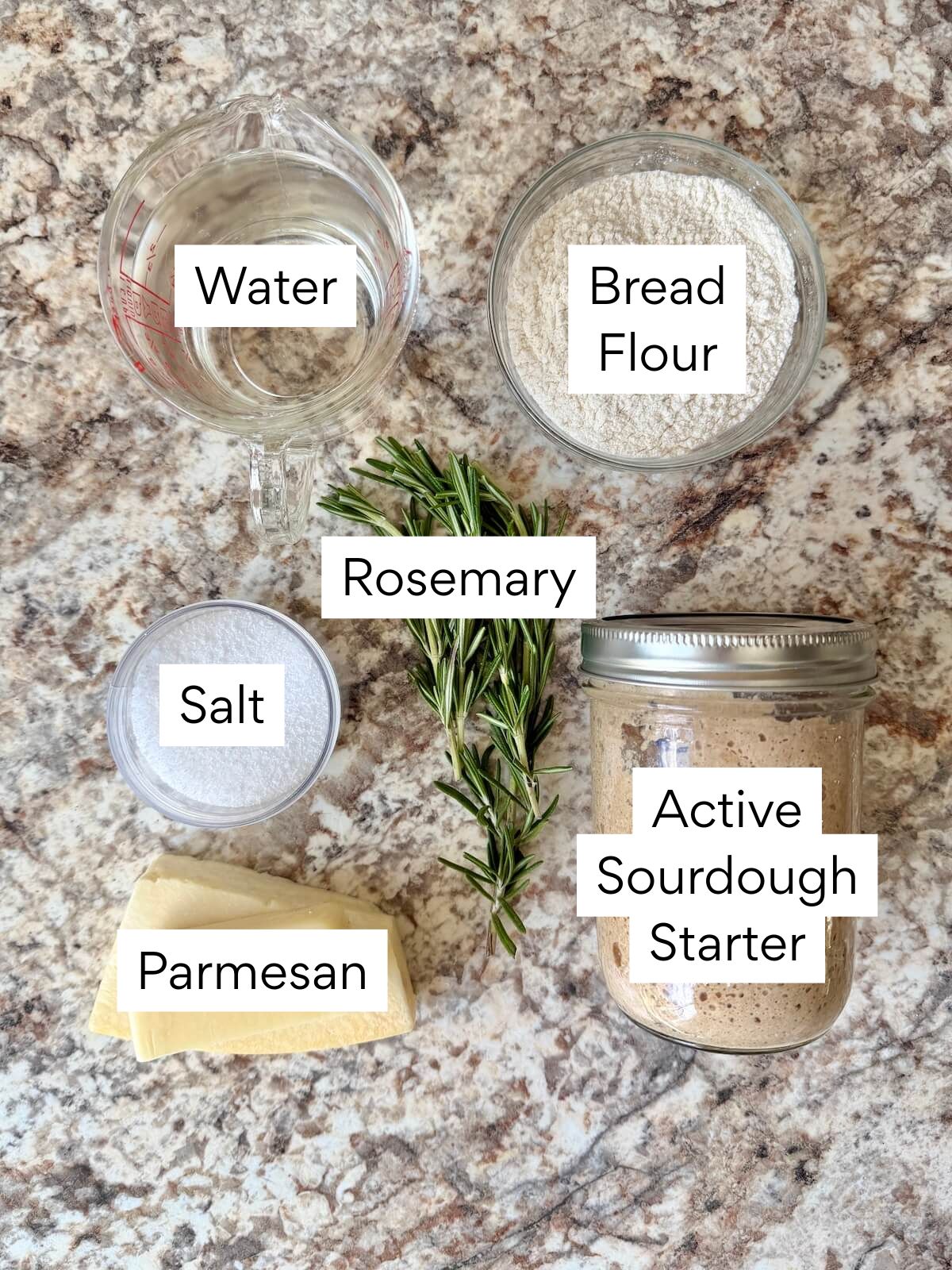
Here are some notes on key ingredients. For a full list of ingredients, check out the recipe card below.
- Active Sourdough Starter- Use a bubbly, recently fed starter for the best rise. You can also use 1–2 day old discard, but fermentation may take slightly longer.
- Parmesan Cheese- Freshly grated parmesan melts more evenly into the dough and adds the best flavor throughout the loaf. You can substitute with pecorino romano or asiago for a similar flavor.
- Rosemary- Fresh rosemary gives the best flavor, but dried can be used in a pinch (use about 1–2 teaspoons and crush slightly to release flavor).
- Garlic Powder- Adds a subtle garlic flavor throughout the bread. You can substitute with roasted garlic for a stronger, more savory flavor.
- Bread Flour- Provides structure, chew, and height. All-purpose flour can be used but loaf may be slightly flatter and more dense.
- Water- Use warm water (80-90°F) to encourage fermentation.
- Kosher Salt- Enhances flavor and strengthens the dough. I use Diamond Crystal Kosher Salt (2.8 grams per teaspoon). If using Morton’s or table salt, use about half as much by volume or weigh for accuracy.
Tips for Success
- Weigh your ingredients. Using a kitchen scale ensures accurate hydration and consistent results every time.
- Start with an active starter. It should be bubbly and recently fed so your dough rises well. You can use 1–2 day old discard, but expect a longer fermentation.
- Use freshly grated parmesan. It melts more evenly and adds a richer, more pronounced flavor to the bread.
- Watch the dough, not the clock. Let it bulk ferment until it’s puffy and roughly doubled. Timing will vary based on your kitchen temperature and starter strength.
- Let it cool before slicing. Allow the bread to cool for at least 2 hours so the crumb sets properly. Cutting too early can make it gummy.
How to Make Parmesan Rosemary Sourdough Bread
Follow these step-by-step photos to make your own garlic rosemary parmesan sourdough bread. Full details are in the recipe card below.
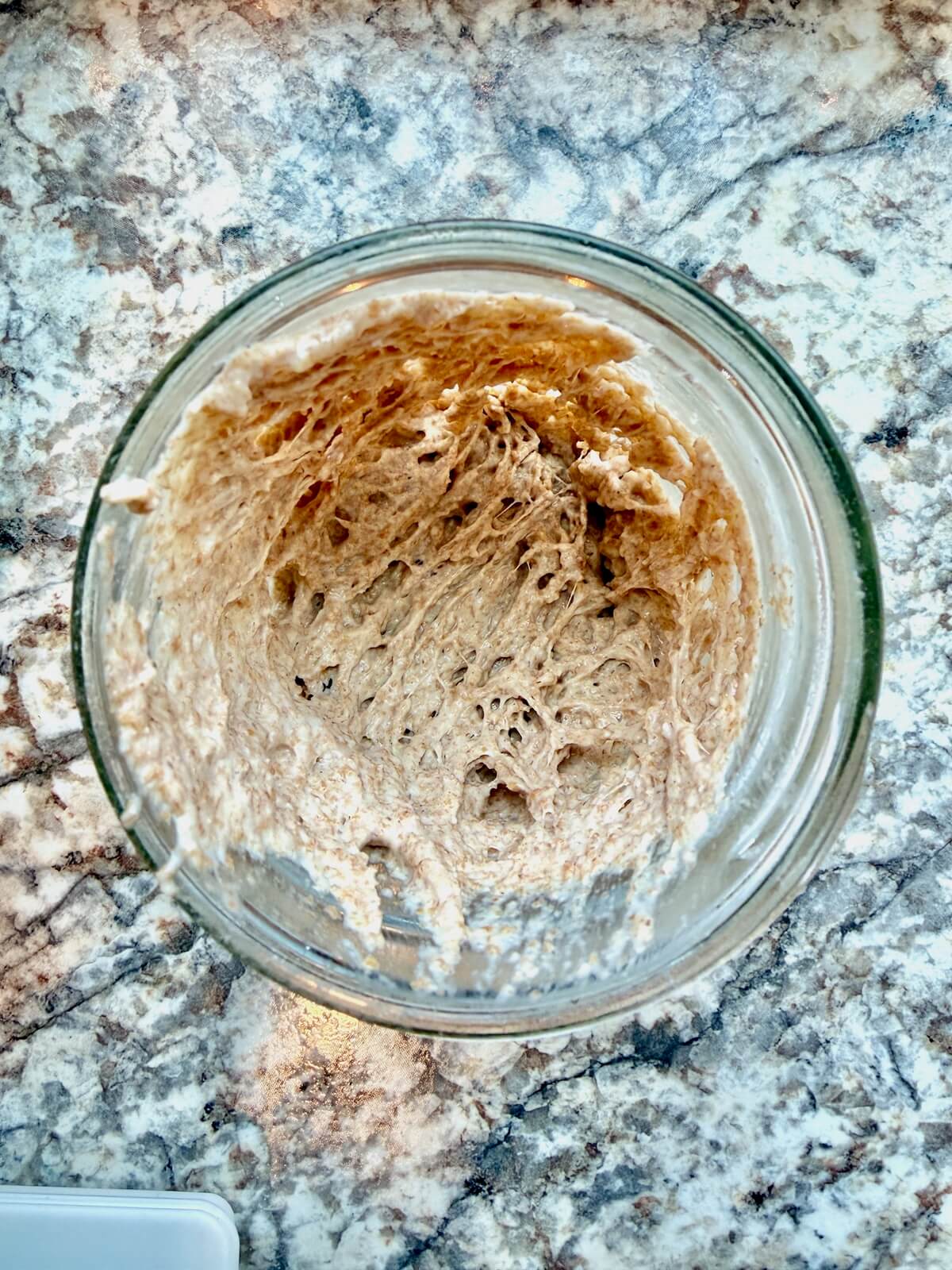
Step 1: Feed starter. Make sure it’s bubbly and active before mixing the dough.
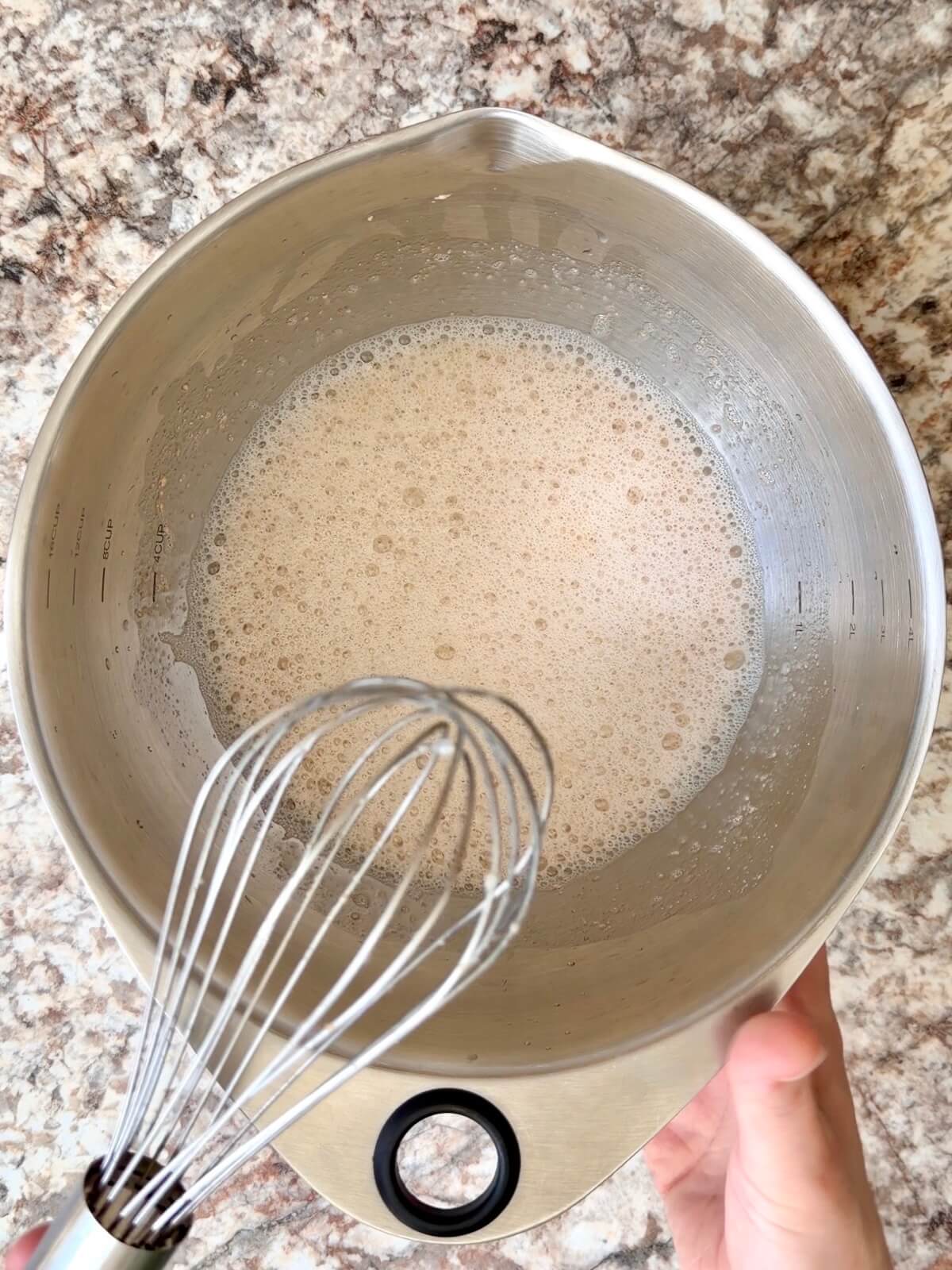
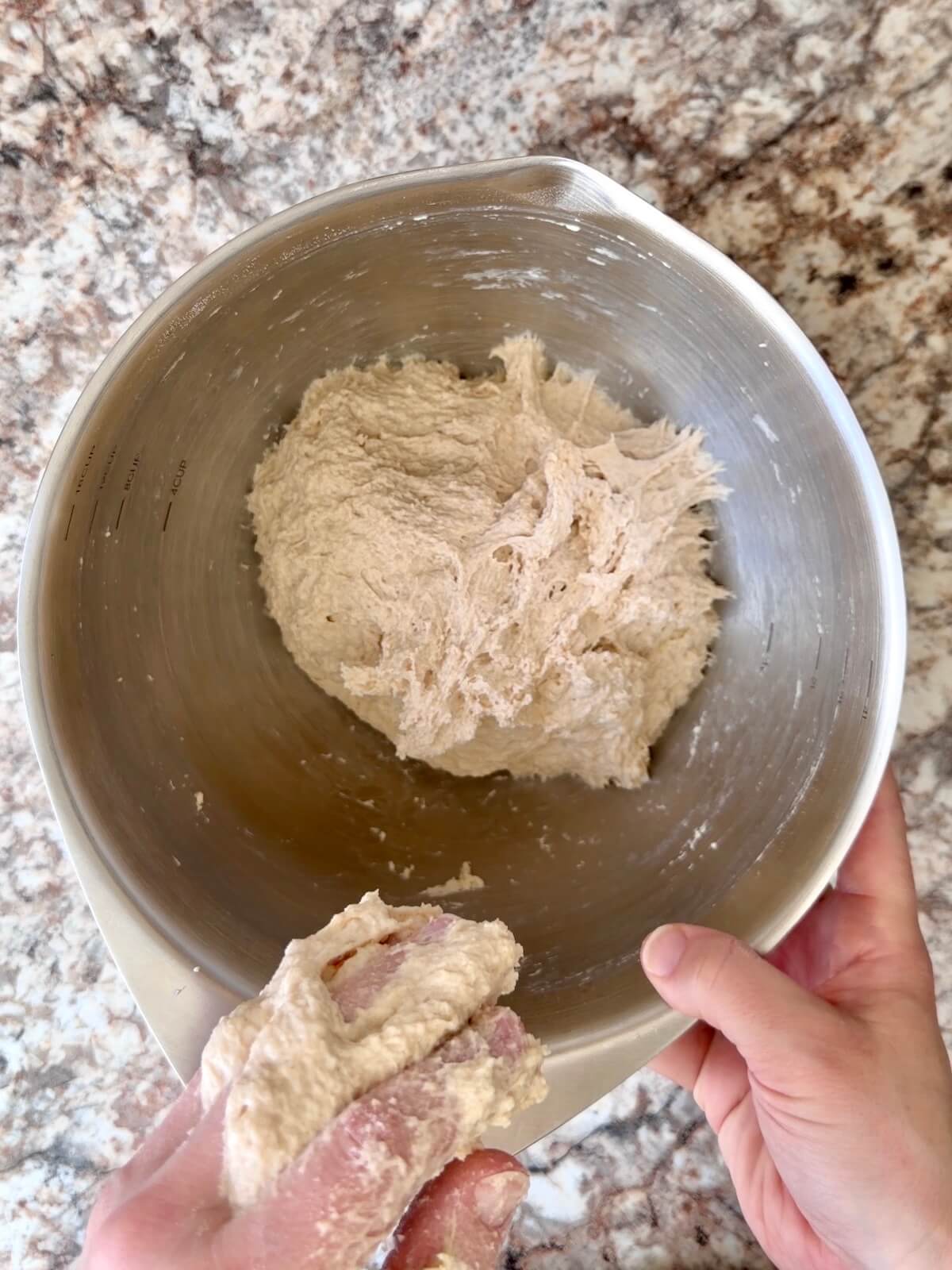
Step 2: Mix dough. Whisk warm water, active starter, and vanilla. Add flour and salt, then mix into a sticky dough. Rest 20 minutes.
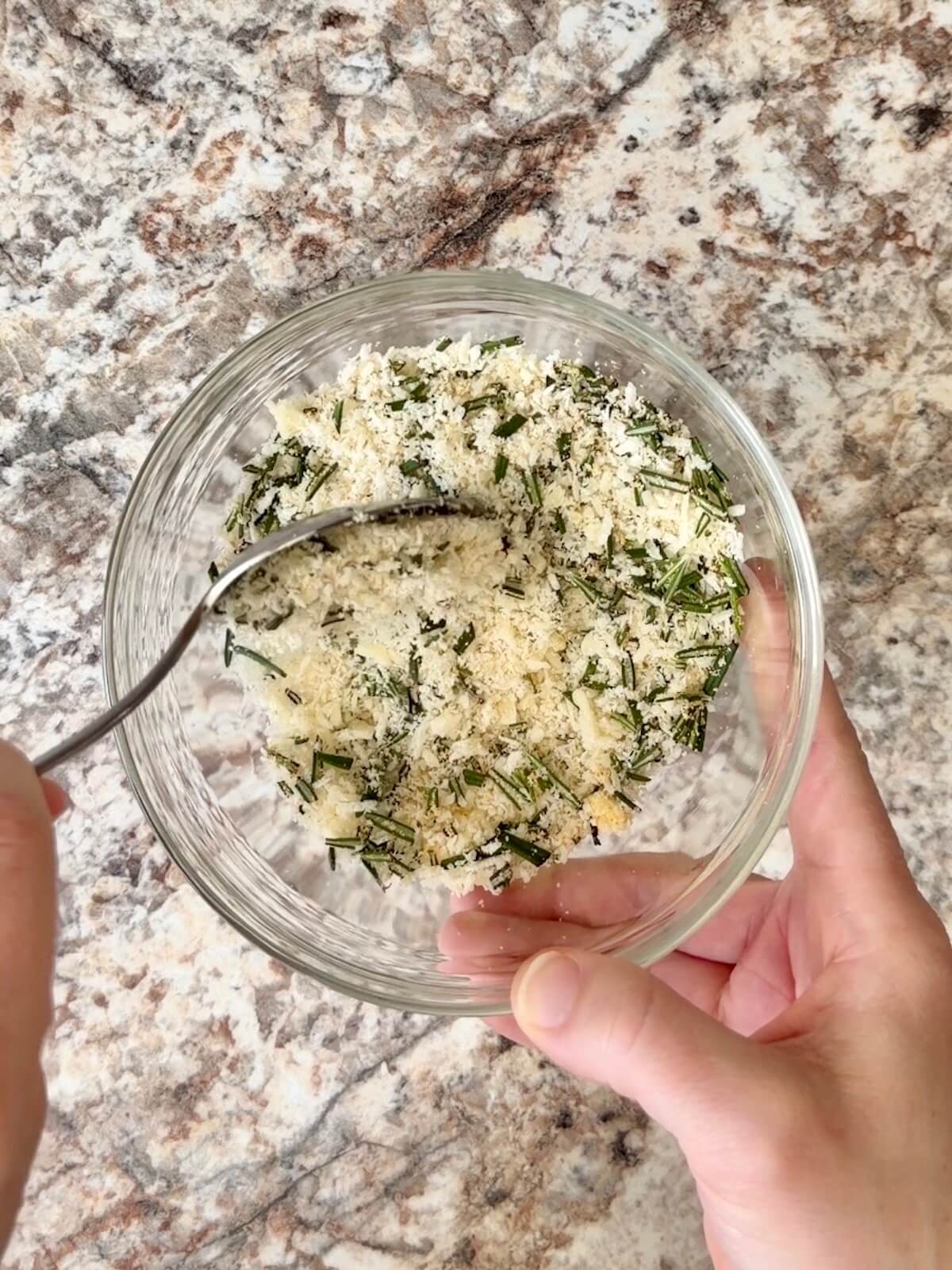
Step 3: Prepare mix-ins. Mix parmesan, rosemary, and garlic powder in a small bowl.
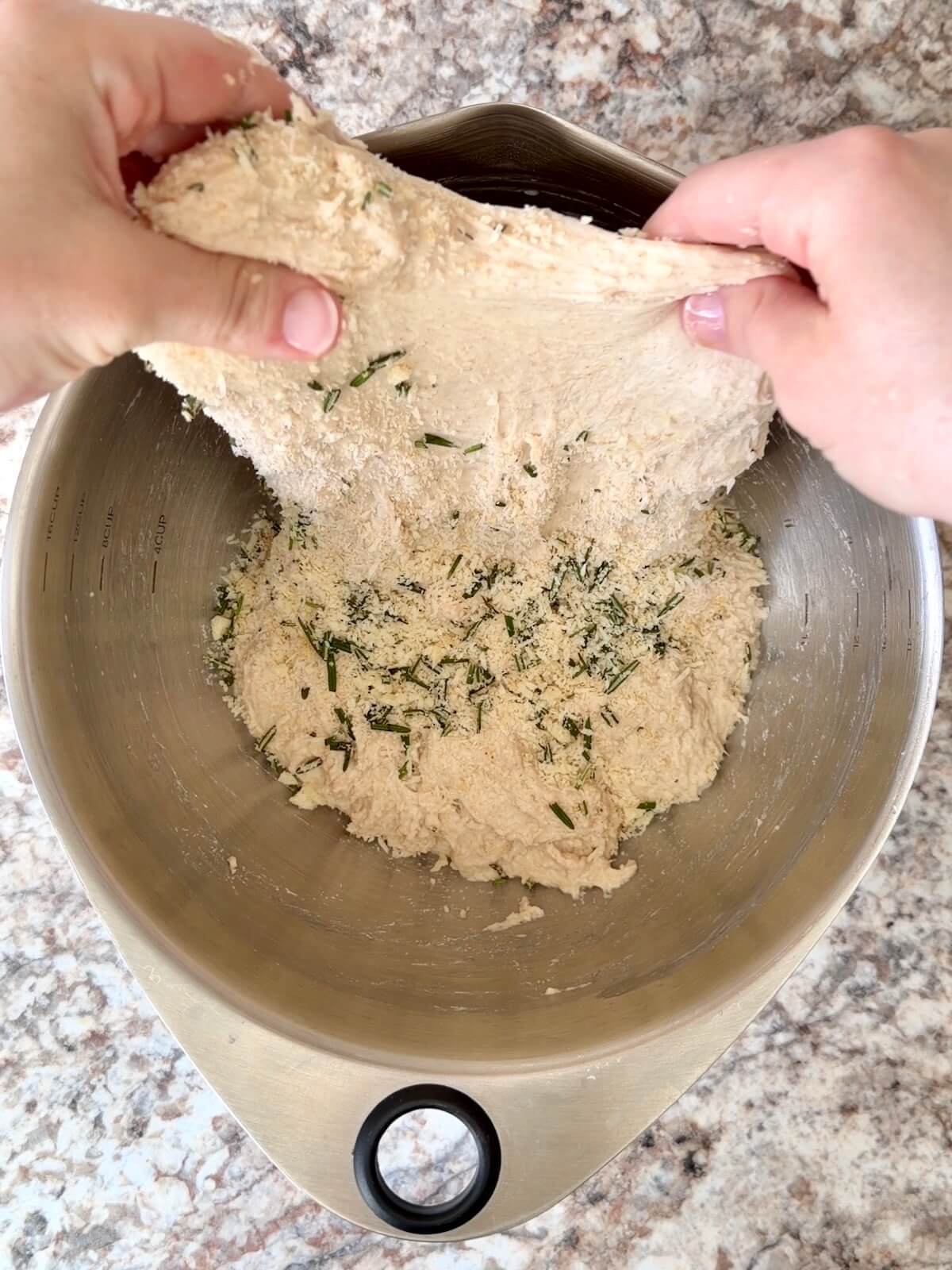
Step 4: Stretch and fold. Incorporate the mix-ins during your first round of stretch and folds. Complete 4 rounds total, resting 15 minutes between each.
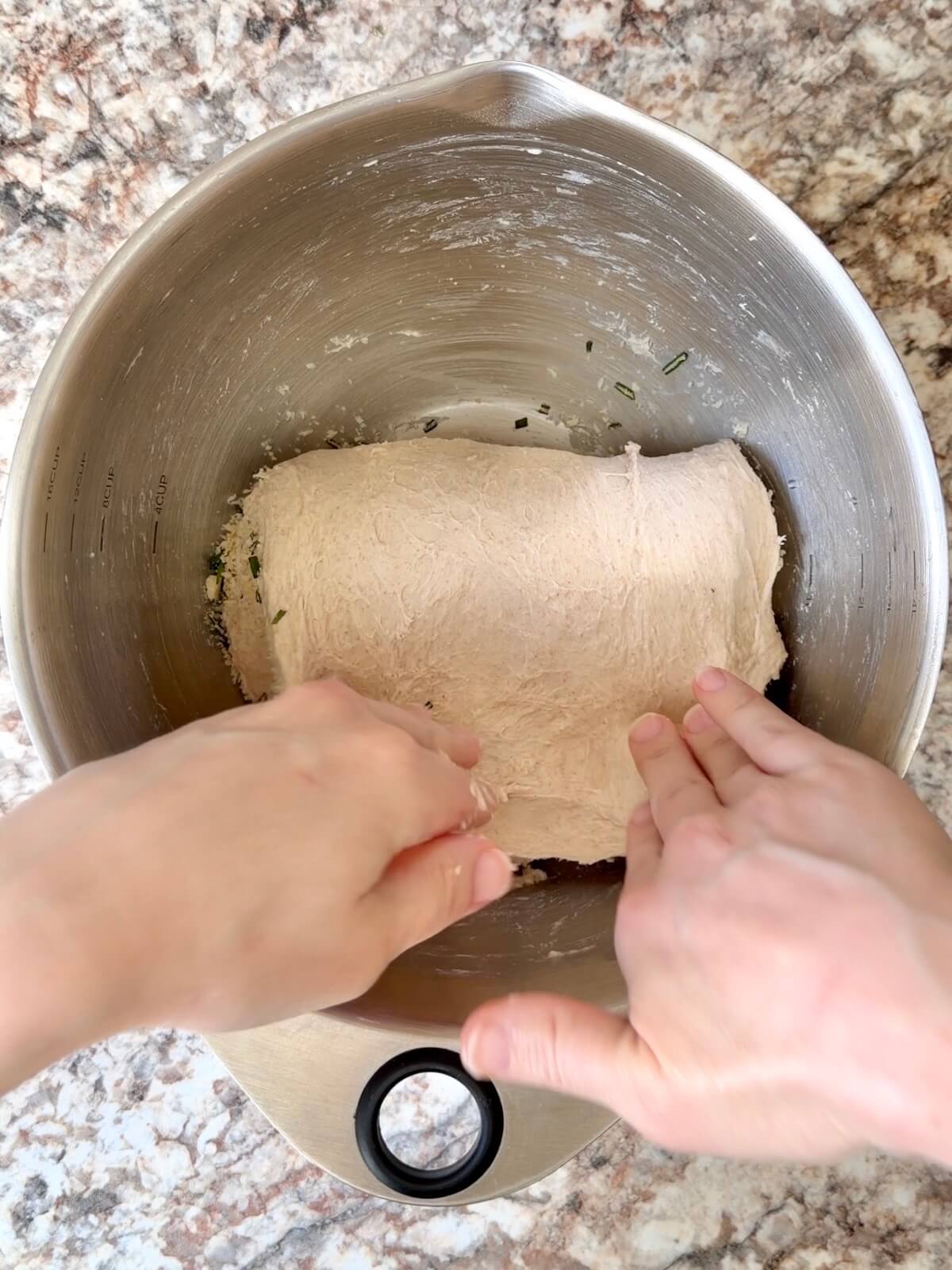
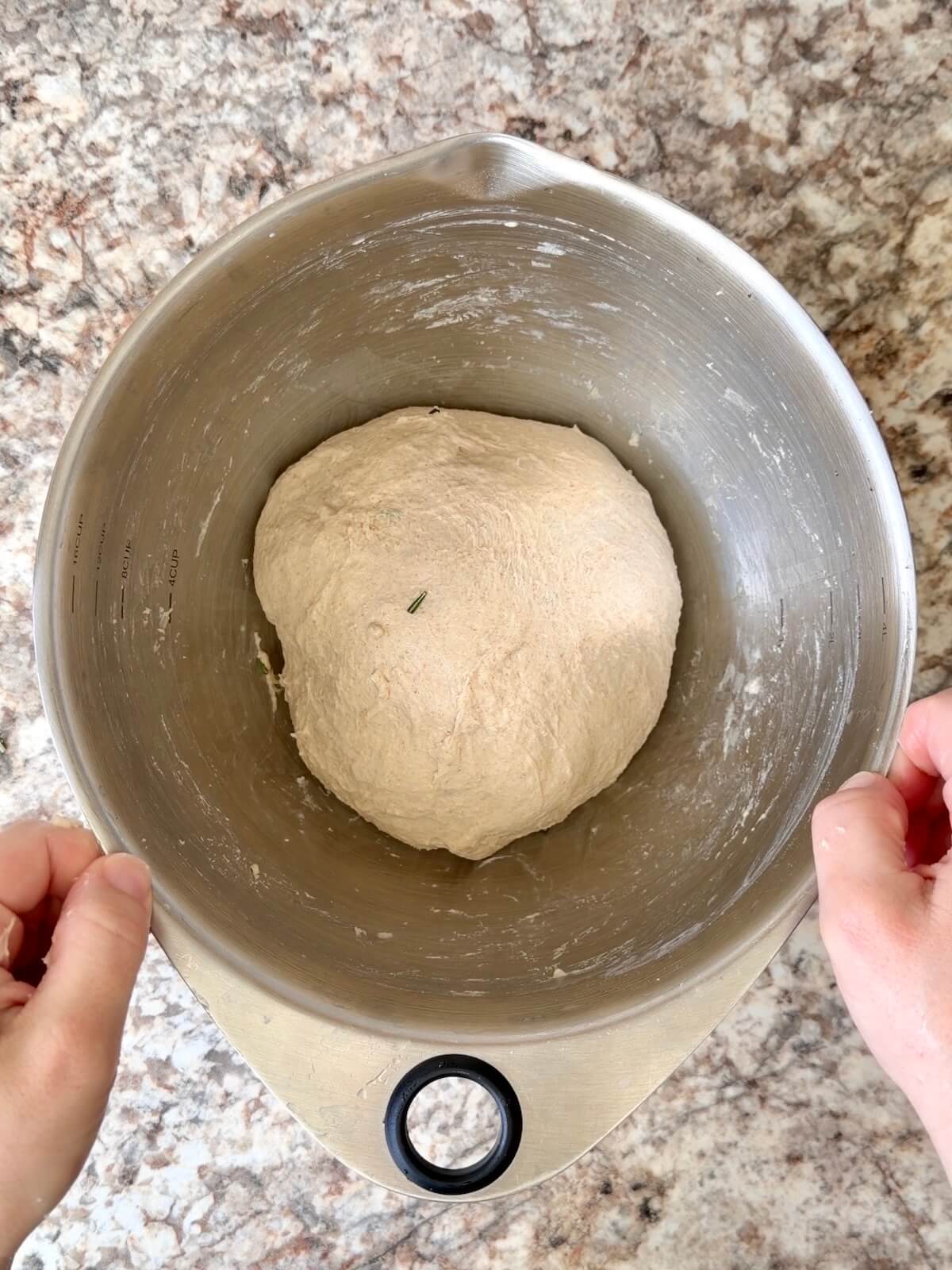
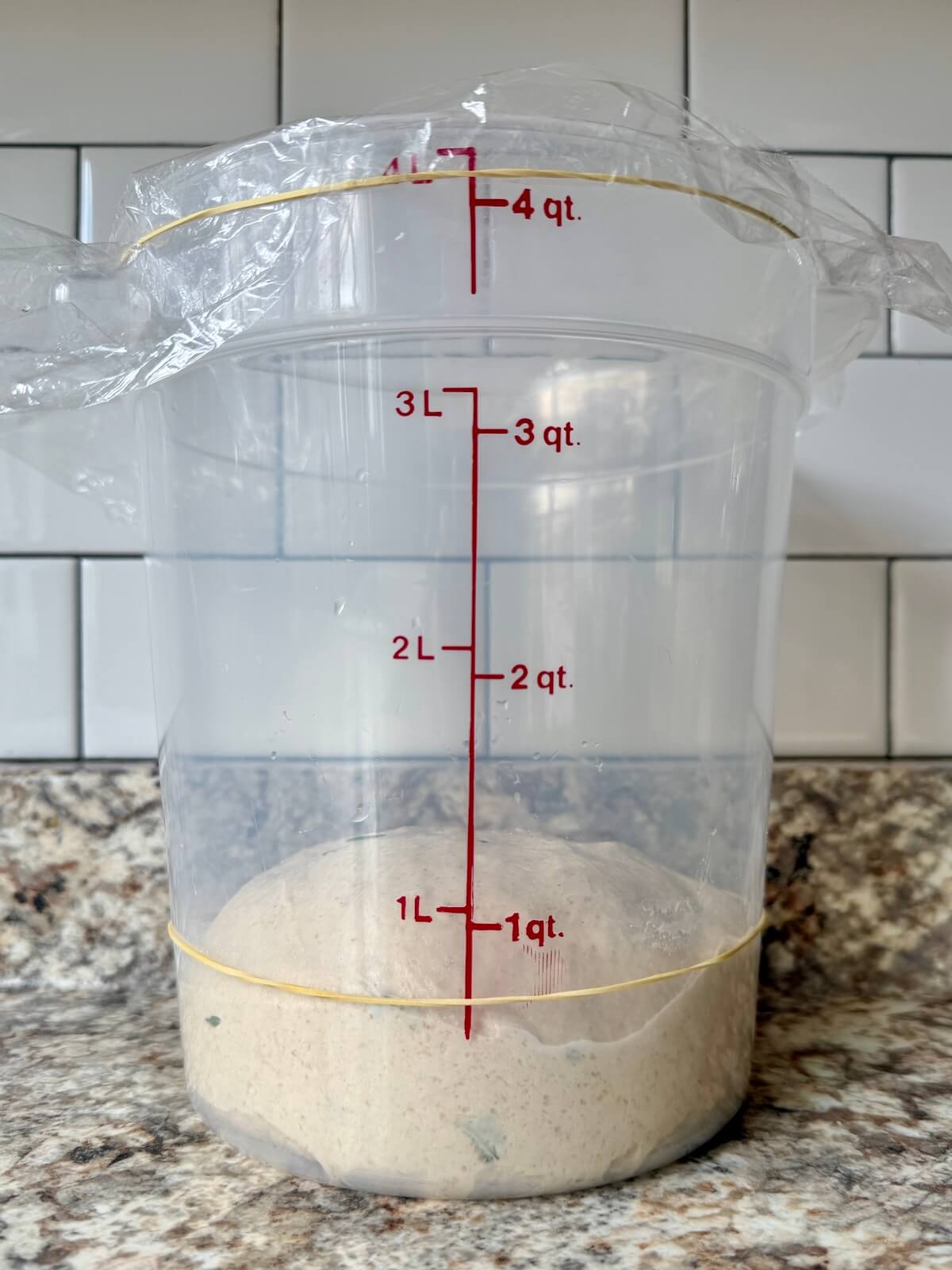
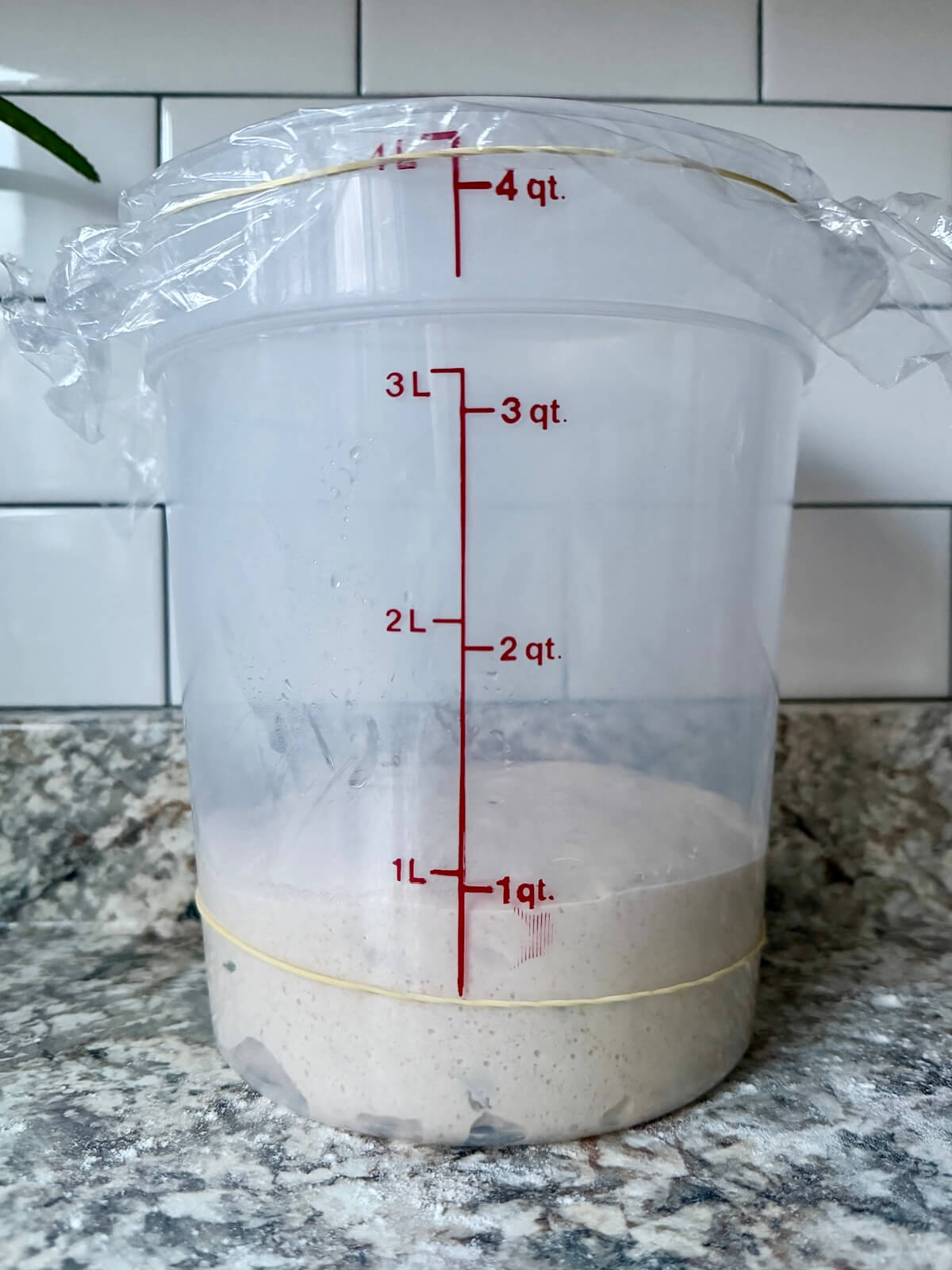
Step 5: Bulk fermentation. Cover and let the dough rise until nearly doubled and bubbly, about 4–12 hours.
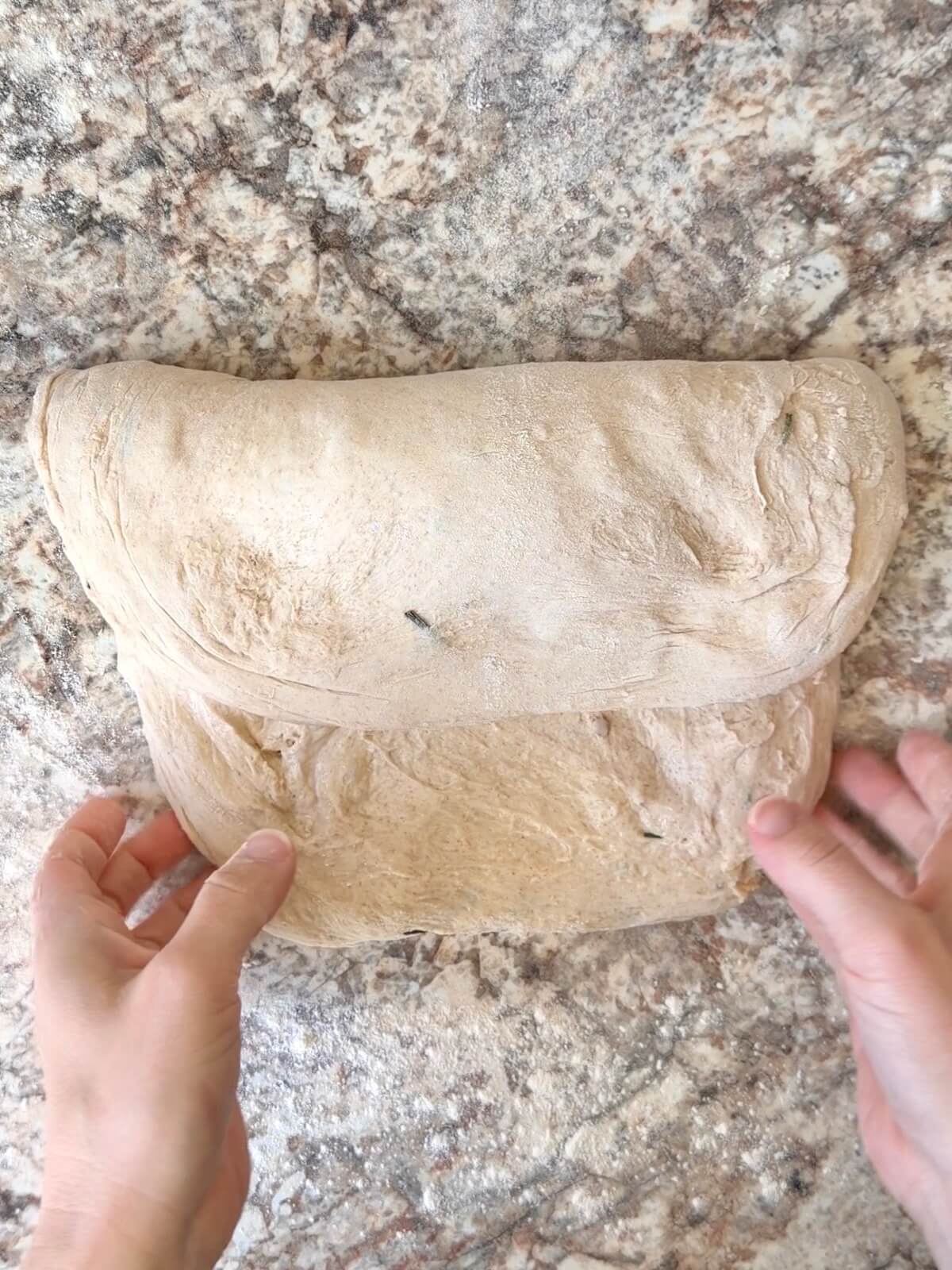
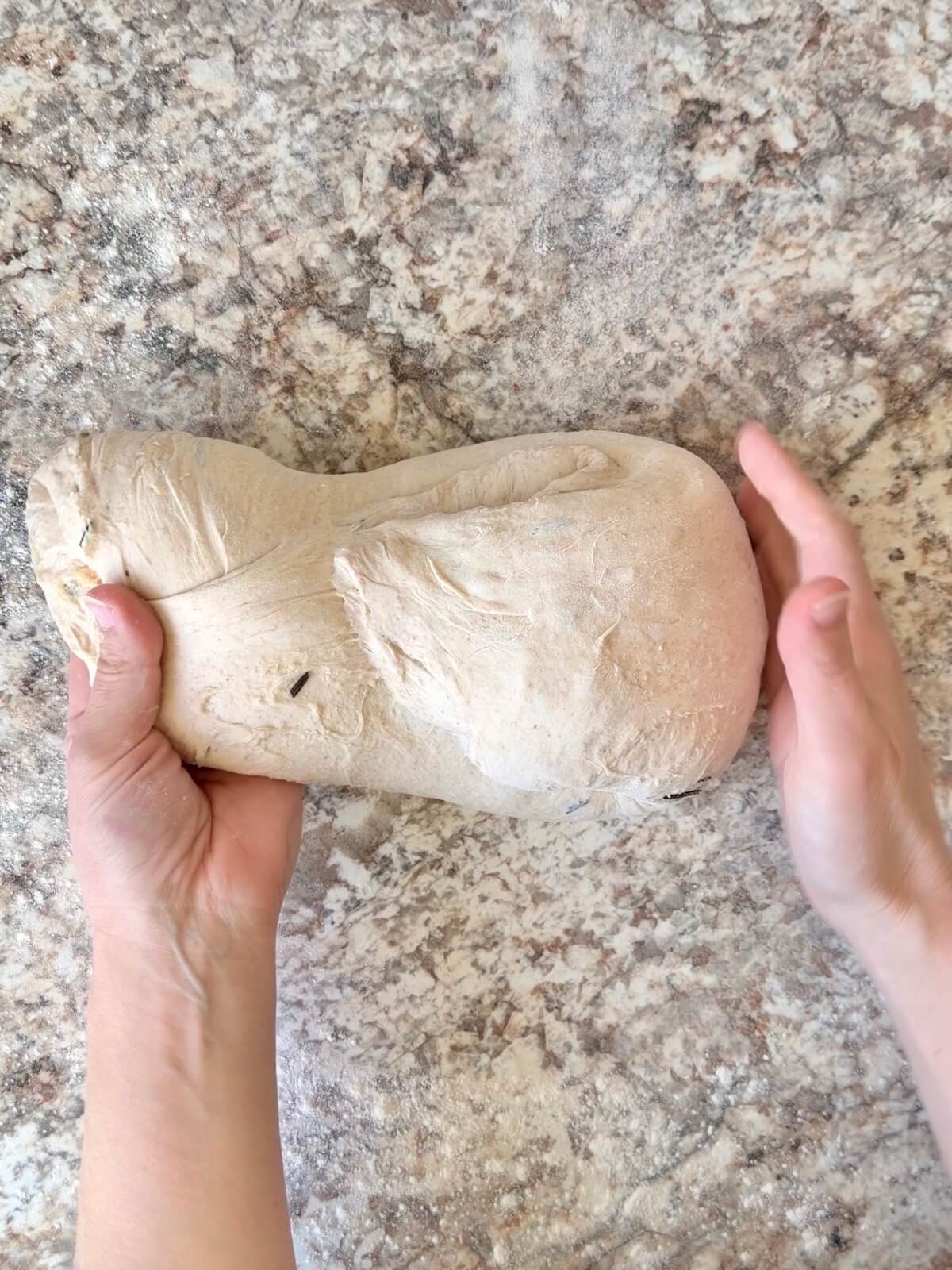
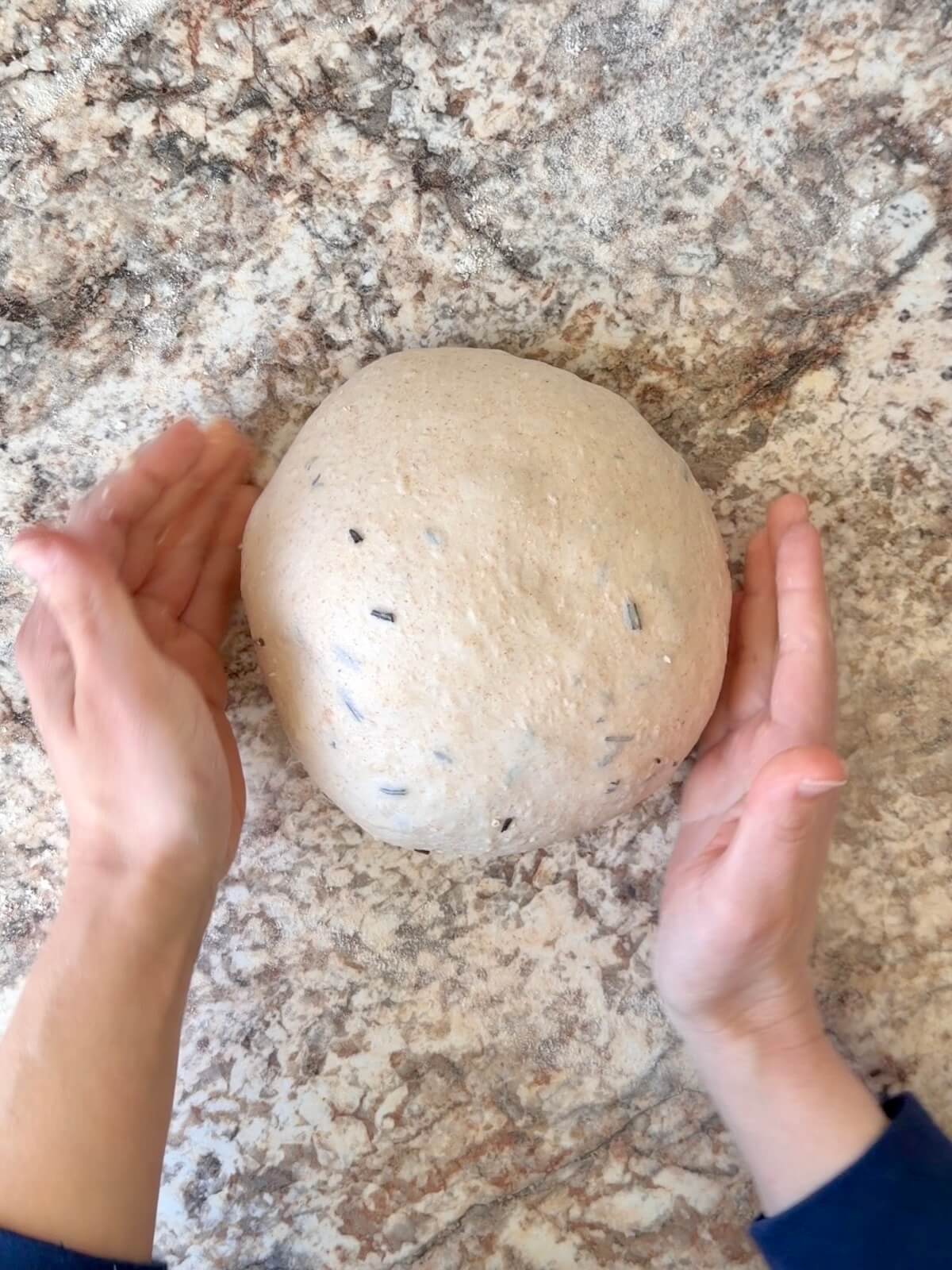
Step 6: Shape. Gently shape the dough into a tight round.
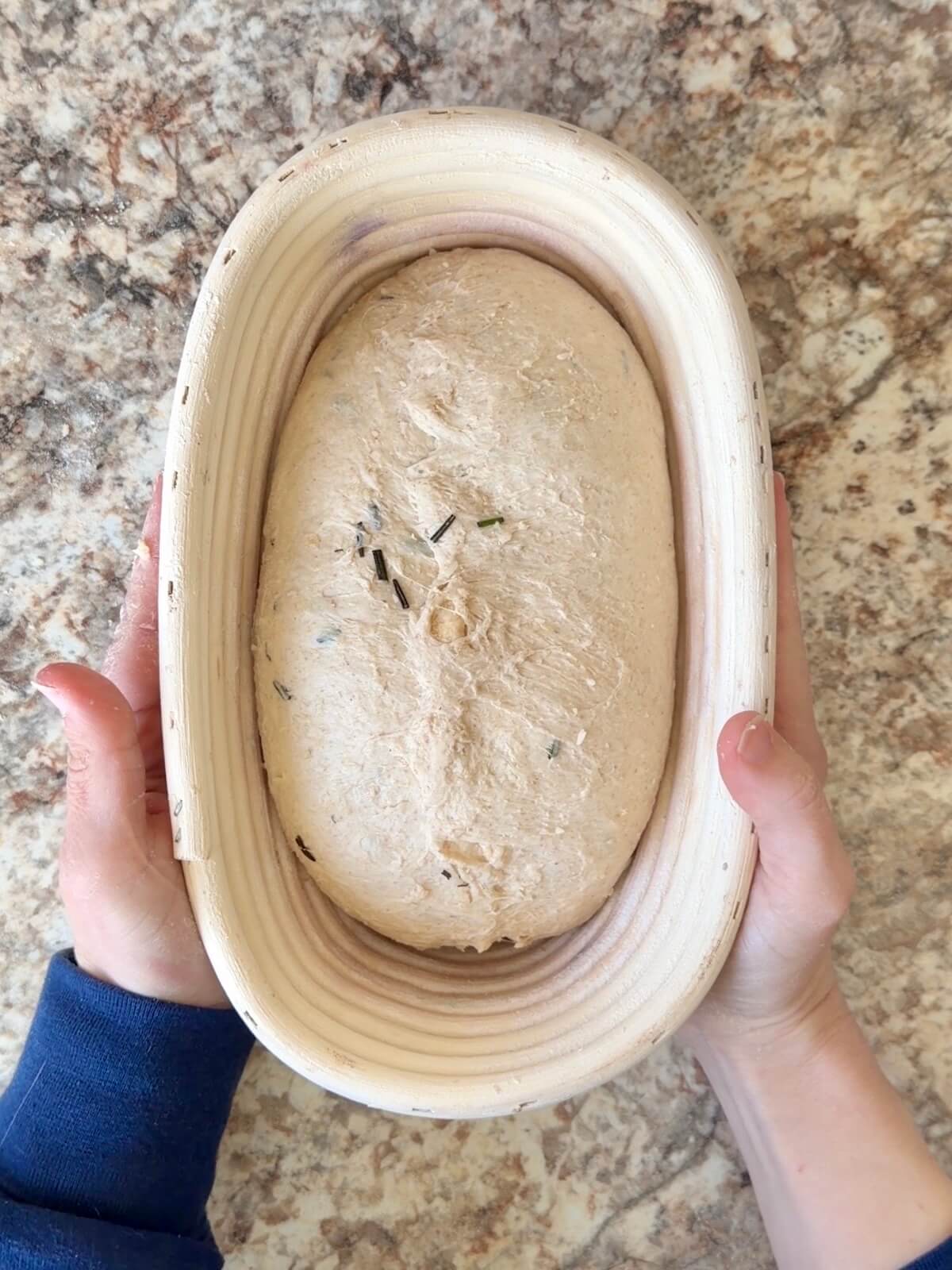
Step 7: Proof.Transfer to a floured proofing basket, cover, and refrigerate overnight.
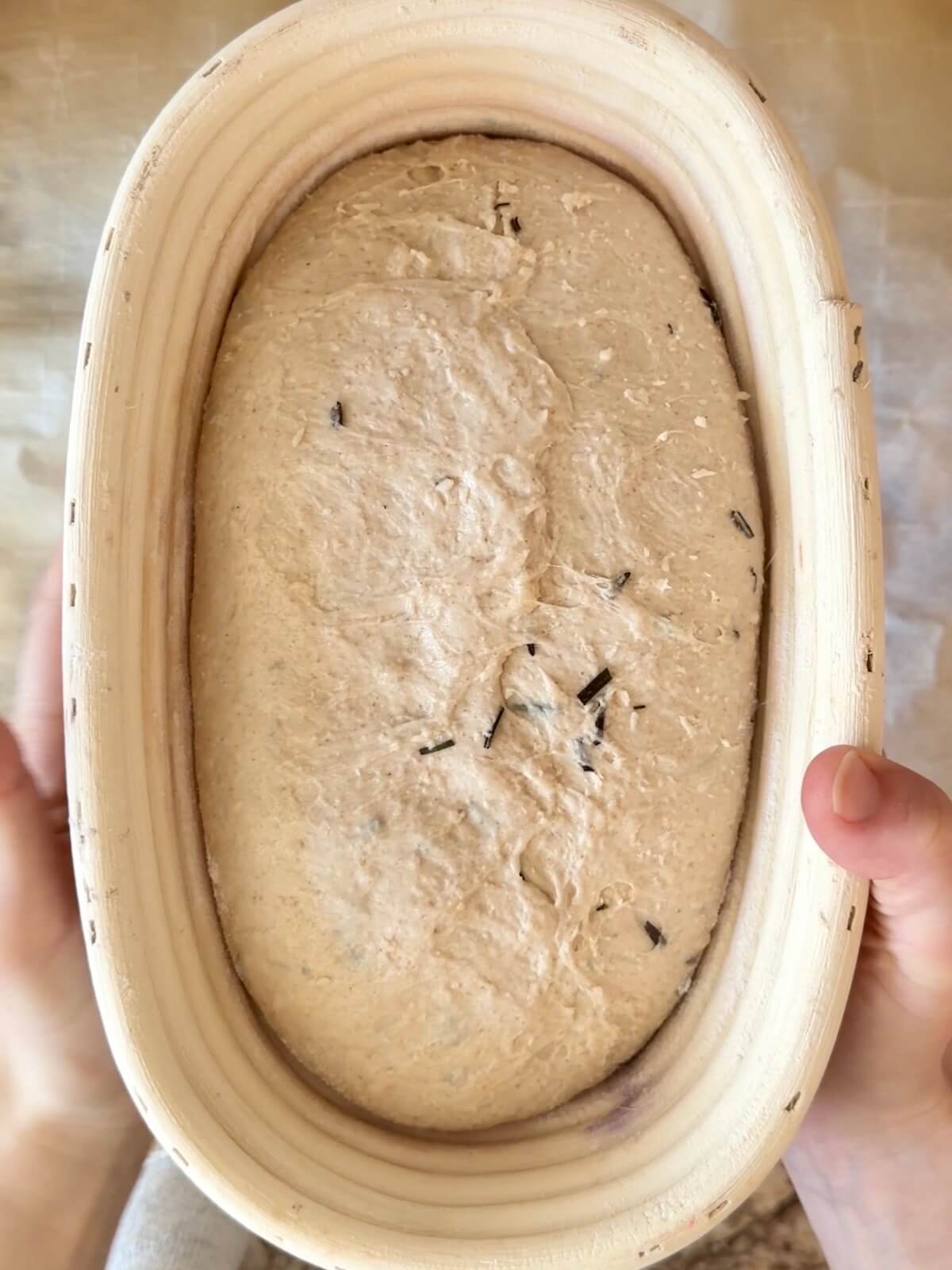
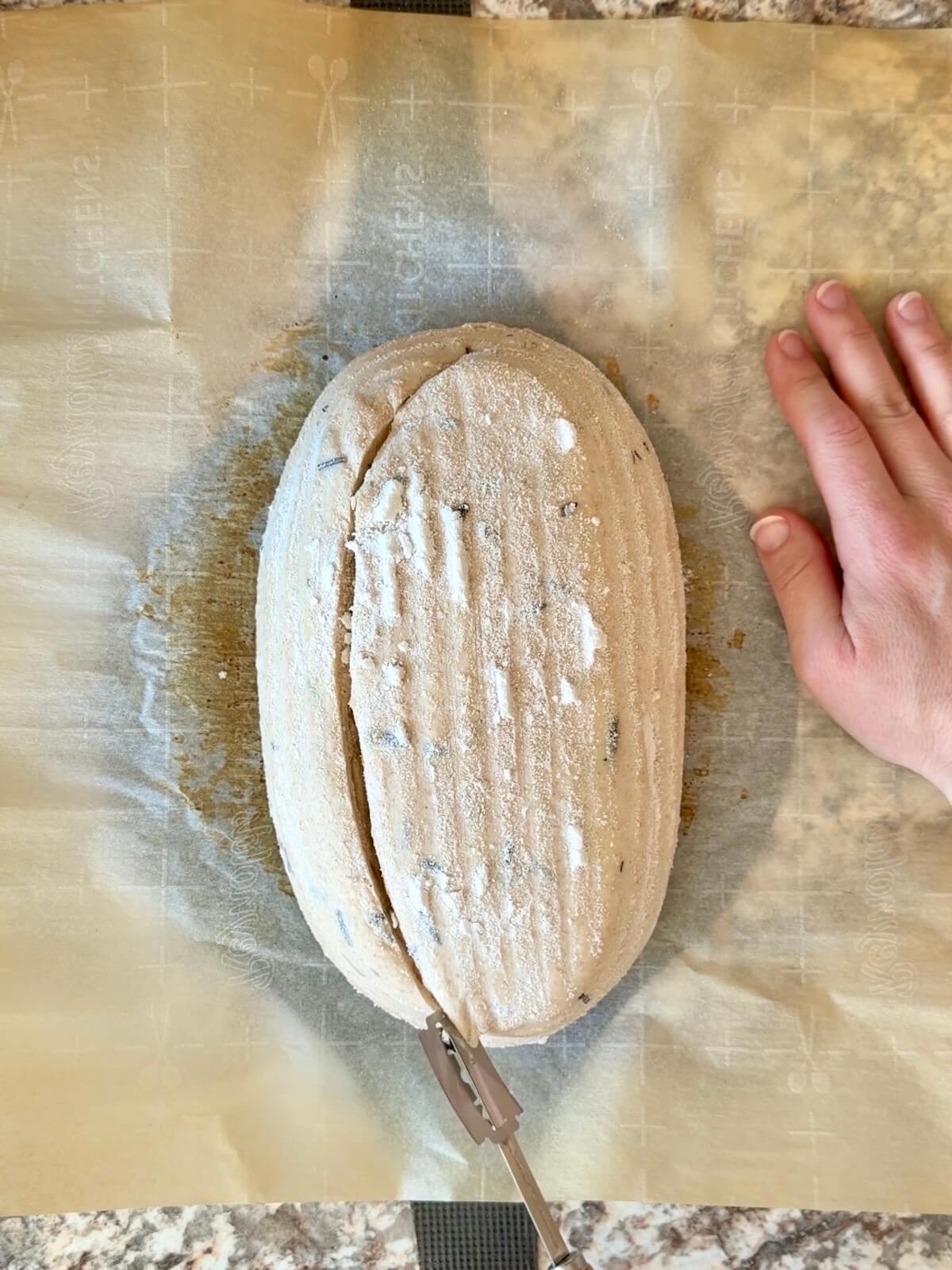
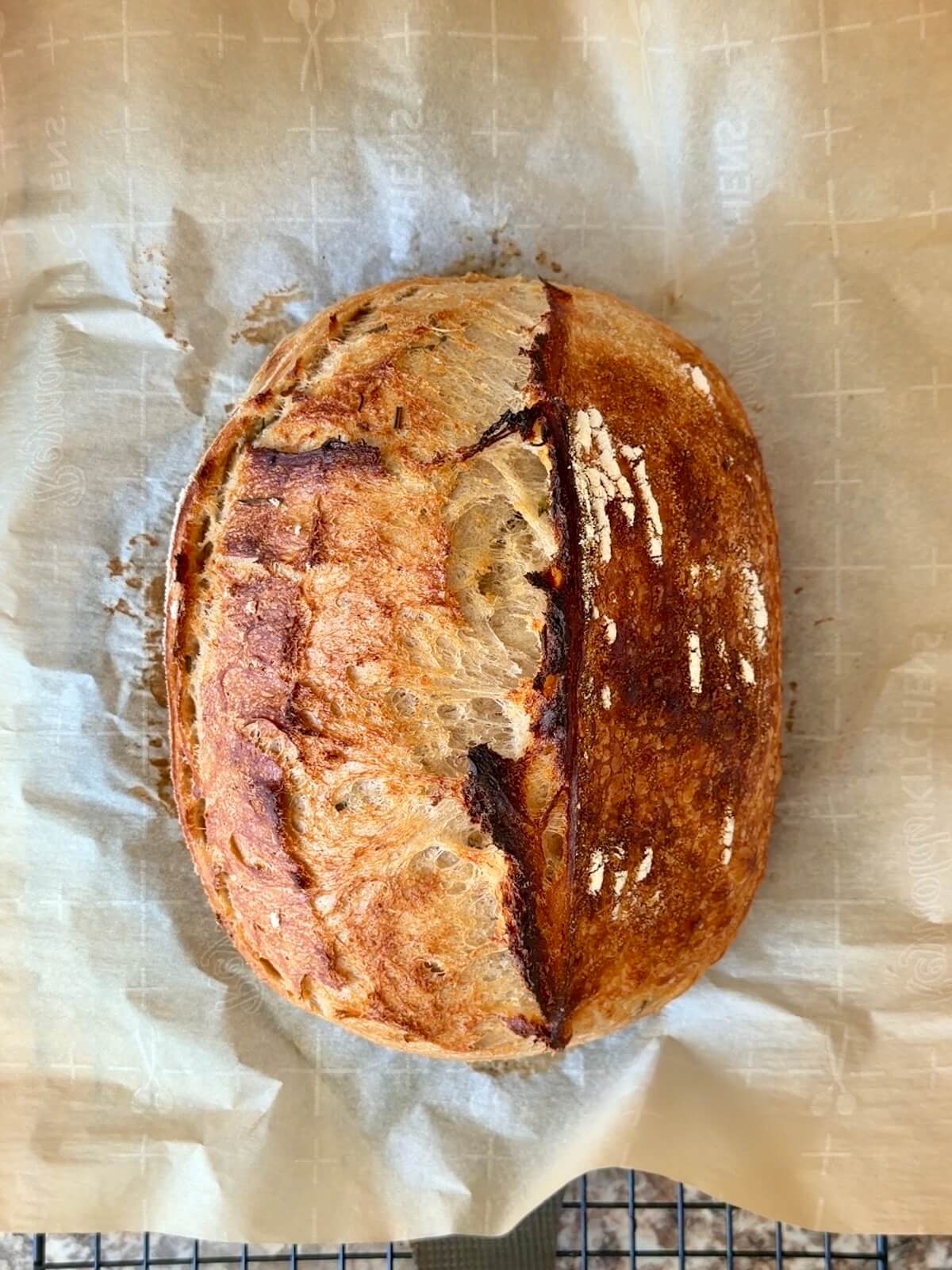
Step 8: Bake. Preheat oven to 450°F with a Dutch oven inside. Score the dough, add 2 ice cubes to the pot for steam, and bake 40 minutes covered, then 5 minutes uncovered. Let cool at least 2 hours before slicing.
Baker's Timeline
Here’s a sample timeline to help you plan your parmesan rosemary sourdough bread.
- 8:00 PM (Night Before): Feed your starter.
- 8:00–8:30 AM: Mix the dough and let it rest for 20 minutes.
- 8:30–9:30 AM: Perform stretch and folds; add mix-ins.
- 9:30 AM–5:30 PM (varies): Bulk fermentation (until nearly doubled in size).
- 5:30–6:00 PM: Shape the dough.
- 6:00 PM–6:00 AM (Next Day): Cold proof in the fridge overnight.
- 6:00–6:45 AM: Bake at 450°F.
- 6:45–8:45 AM: Cool completely before slicing.
Note: Rise times can vary depending on the strength of your starter and the temperature of your kitchen. Always use visual cues—like a dough that has doubled and looks airy—rather than relying strictly on the clock.
How to Store
Store rosemary parmesan sourdough bread (whole or sliced) in a bread box or airtight container at room temperature for up to 3 days.
For longer storage, slice the loaf and freeze it in a freezer-safe bag for up to 3 months. Thaw slices at room temperature or pop them straight into the toaster or oven to warm through.

Are you tired of watching your sourdough discard go to waste?
It’s time to turn excess discard into something delicious with my new ebook - Everyday Sourdough!
Inside, you’ll find 27 tried-and-true sourdough discard recipes that will transform your leftover starter into mouthwatering creations your family and friends will love.
No more guilt about wasting your discard - with Everyday Sourdough, you have endless options to quickly make something amazing anytime.
Let's Connect!
Be sure to leave a comment below if you have any questions. You can also connect with me on Instagram, Facebook, Pinterest, or via email at [email protected].
📖 Recipe
Garlic Parmesan Rosemary Sourdough Bread
Equipment
- Straight-sided container (optional)
- Proofing basket or bowl lined with tea towel
- Bread sling or parchment paper
- Lame or sharp knife
Ingredients
- 1 ½ cups (360 grams) warm water 80-90℉
- ½ cup (100 grams) active sourdough starter
- 4 cups (480 grams) bread flour
- 3 ½ teaspoons (10 grams) Diamond Crystal Kosher Salt reduce to 1 ¾ teaspoons if using Morton's kosher or table salt, or measure by weight
- ¾ cup (60 grams) parmesan cheese freshly grated
- 2 tablespoons fresh rosemary removed from stem, roughly chopped
- 2 teaspoons garlic powder
- Rice flour for proofing basket
- 2 ice cubes for steam
Instructions
- Feed your sourdough starter 6–12 hours before mixing the dough so that it’s bubbly and active. In cooler kitchens (60–65°F), this may take closer to 12 hours; in warmer kitchens (around 75°F), about 6 hours.
- In a large bowl, whisk together the warm water and active starter. Add the bread flour and salt, mixing until a rough, sticky dough forms and no dry flour remains. Cover and let rest for 20 minutes.1 ½ cups (360 grams) warm water, ½ cup (100 grams) active sourdough starter, 4 cups (480 grams) bread flour, 3 ½ teaspoons (10 grams) Diamond Crystal Kosher Salt
- In a small bowl, combine the grated parmesan, chopped rosemary, and garlic powder.¾ cup (60 grams) parmesan cheese, 2 tablespoons fresh rosemary, 2 teaspoons garlic powder
- Lightly wet your hands. Gently flatten the dough and sprinkle ¼ of the parmesan mixture over the top. Stretch one side of the dough up and fold it over itself. Rotate the bowl 90° and repeat, adding another ¼ of the mixture each time, until all is incorporated. Gather the dough into a loose ball and place it seam-side-down in the bowl. Cover and rest for 15 minutes. Repeat this stretch-and-fold process 3 more times (4 total rounds), resting 15 minutes between each round.
- Cover the dough and let it rise until nearly doubled and bubbly, about 4–12 hours depending on your kitchen temperature and starter strength. A straight-sided container can help you see the rise more clearly.
- Turn the dough gently onto a lightly floured surface and stretch it into a large rectangle. Fold one short end toward the center, then fold the other short end over it, like you're folding a letter. Fold the remaining two sides toward the center in the same manner. Flip the dough seam side down and shape it into a tight ball by gently pushing and pulling it toward you against the counter.
- Lightly dust a proofing basket (or a bowl lined with a tea towel) with rice flour. Place the dough seam side up in the basket and pinch the seam closed if needed. Cover and refrigerate overnight, or for about 12–16 hours.Rice flour
- Preheat your oven to 450°F with a lidded Dutch oven inside. Once the oven reaches temperature, let the Dutch oven heat for an additional 30 minutes.
- Flip the dough onto parchment paper or a bread sling. Score the top with a lame or sharp knife. Carefully remove the hot Dutch oven, add 2 ice cubes for steam, then lower the dough inside. Cover and bake for 40 minutes. Remove the lid and bake an additional 5–10 minutes, until the crust reaches your desired color.2 ice cubes
- Transfer to a wire rack and let cool for at least 2 hours before slicing.
Notes
- Storage: Store in an airtight container or bread box at room temperature for up to 3 days or freeze for up to 3 months.


Comments
No Comments