
These Whole Wheat Sourdough English Muffins use 100% whole wheat flour and sourdough starter for a hearty, wholesome breakfast staple. Soft, flavorful, and packed with nooks and crannies.
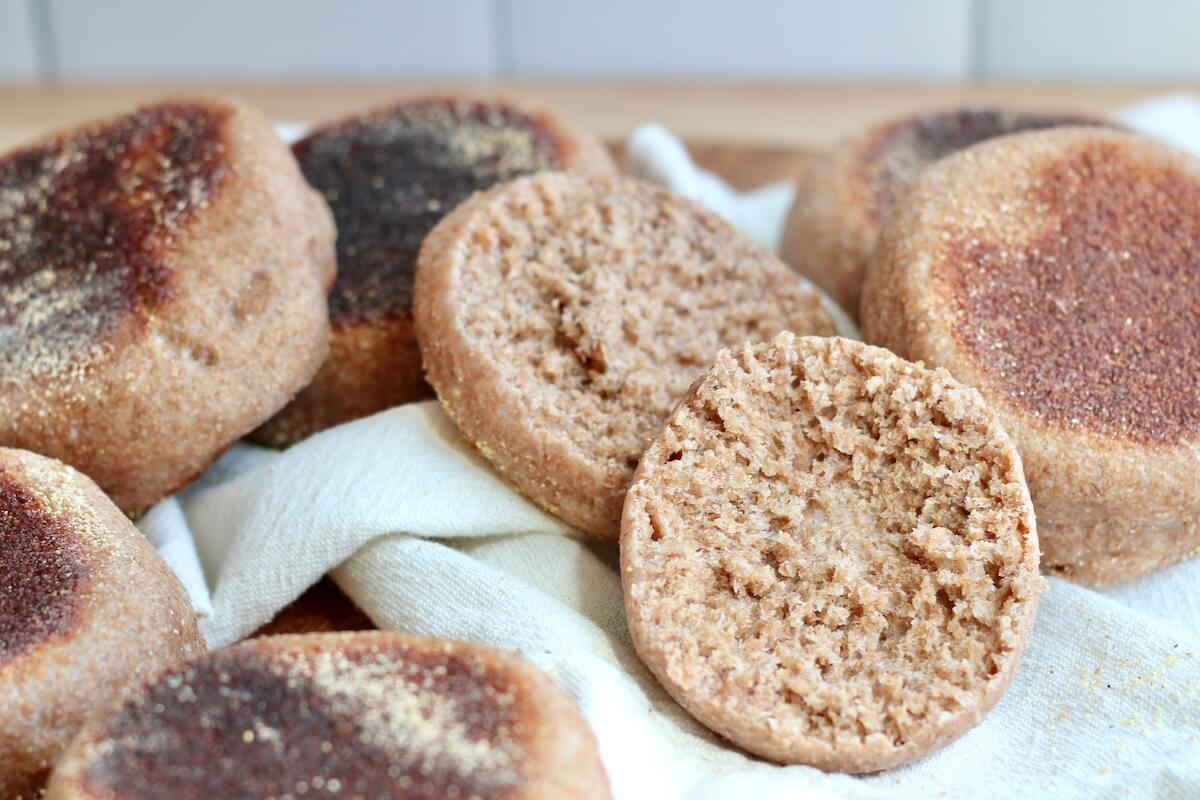
When I was developing my recipe for classic sourdough English muffins, I knew I had to make a 100% whole wheat version too.
As a registered dietitian, I love the extra fiber and nutrients whole wheat flour brings to the table. On the blog, I already have several 100% whole wheat sourdough recipes, including bread, pizza dough, focaccia, pita bread, pancakes, and more.
And as a sourdough baker, I truly enjoy the challenge of working with whole wheat.
One of my favorite tricks is soaking the flour in liquid first (a step called autolyse). This softens the bran and germ so they’re less likely to tear gluten strands. It also lets the flour fully hydrate, giving gluten development a head start.
The result? Whole wheat sourdough English muffins that are soft, pillowy, and full of those signature nooks and crannies. The flavor is tangy, nutty, and slightly sweet - perfect for breakfast sandwiches or simply toasted with butter and jam.
If you love whole wheat sourdough recipes as much as I do, these are a must try. You’ll never want to go back to store-bought English muffins again!
Disclaimer: Some links throughout this post are affiliate links. As an Amazon Associate, I earn from qualifying purchases. You can learn more by visiting my Affiliate Disclosure Page.
Ingredients & Substitutions
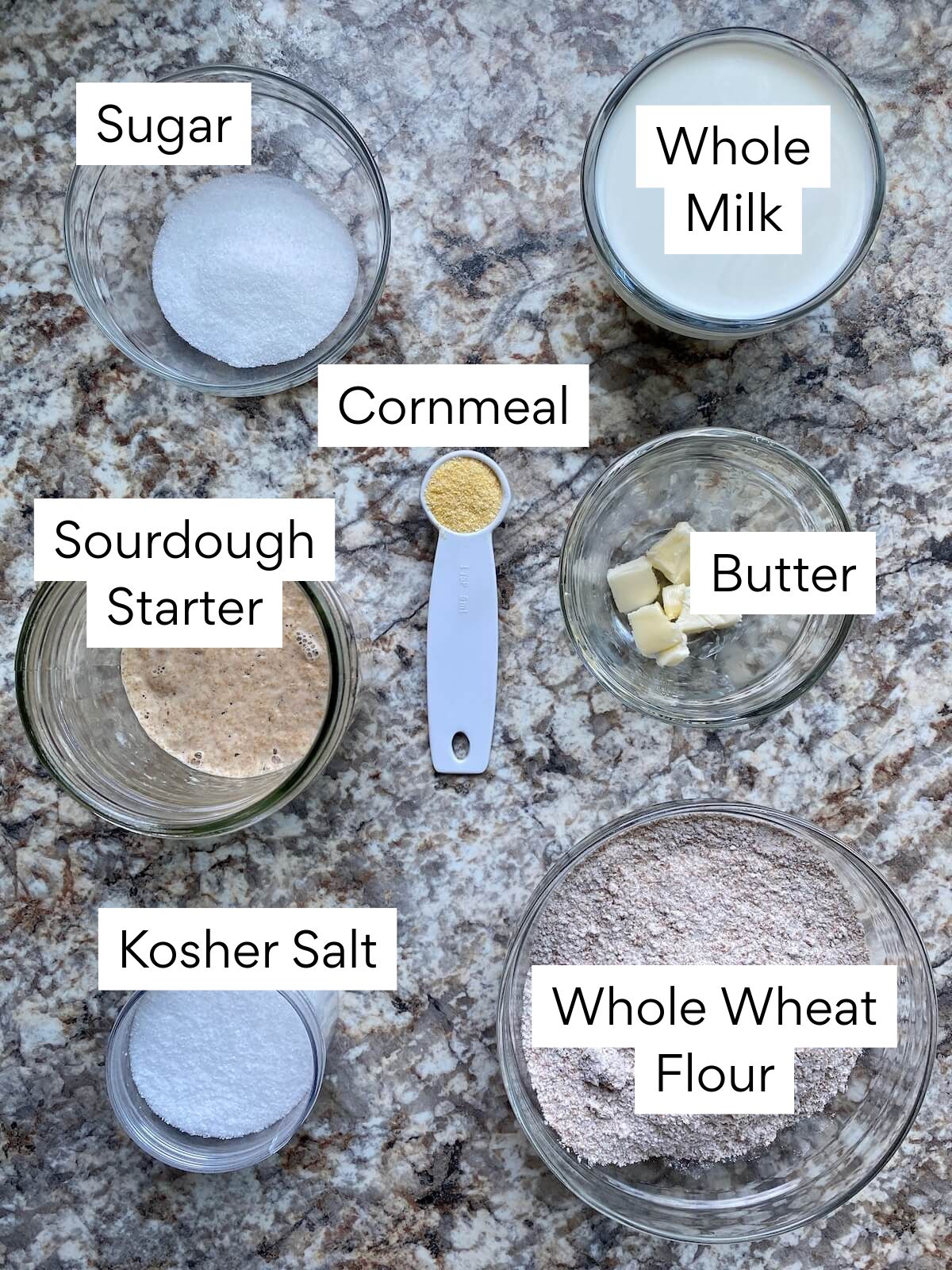
Here are some notes on key ingredients. For a full list of ingredients, check out the recipe card below.
- Active Sourdough Starter- Use a bubbly, active starter for best rise and flavor. You can also use fresh sourdough discard (less than a week old), but the dough may take longer to ferment.
- Whole Wheat Flour- Using 100% whole wheat flour creates a hearty English muffin with a nutty, wholesome flavor. Allowing the dough to autolyse (rest after mixing the flour and liquid) helps soften the bran, improve gluten development, and make the dough easier to work with.
- Cornmeal- Sprinkled on the pan and skillet, cornmeal creates that classic crunchy bottom and prevents sticking.
- Whole Milk- Slightly warmed (80–90°F) to encourage fermentation and create a soft, workable dough.
- Granulated Sugar- Adds a subtle sweetness and helps with browning and fermentation.
- Butter- Adds richness and flavor, keeping the English muffins soft and tender.
- Kosher Salt- Enhances flavor. I use Diamond Crystal Kosher Salt (2.8 grams per teaspoon). If you’re using Morton’s or table salt, use half as much or weigh it out for best results.
Tips for Success
- Use a kitchen scale. Weighing your ingredients ensures accuracy and helps you achieve the perfect dough texture every time.
- Don’t skip the autolyse. Let the flour and liquid rest before kneading to soften the bran and improve dough structure.
- Start with an active starter. A well-fed, bubbly starter gives your dough the rise and flavor it needs. You can use discard, but expect a longer fermentation time.
- Cook low and slow. Keep the skillet at low or medium-low heat, adjusting as needed, so the English muffins cook through without burning.
- Let them cool completely. Let English muffins cool completely to set their crumb and make cutting easier (use a fork to split for maximum nooks and crannies).
How to Make Whole Wheat Sourdough English Muffins
Here’s a quick step-by-step guide (with pictures) to help you make your own sourdough whole wheat English muffins.
Step 1: Feed starter. Feed your starter so it’s active and bubbly before mixing.

Step 2: Autolyse. Mix whole wheat flour and milk. Rest 1 hour to hydrate.

Step 3: Mix dough. Add starter, sugar, butter, and salt. Knead into a cohesive dough. Rest 20 minutes.

Step 4: Stretch and folds. Perform four sets of stretch and folds, resting 20 minutes between each.

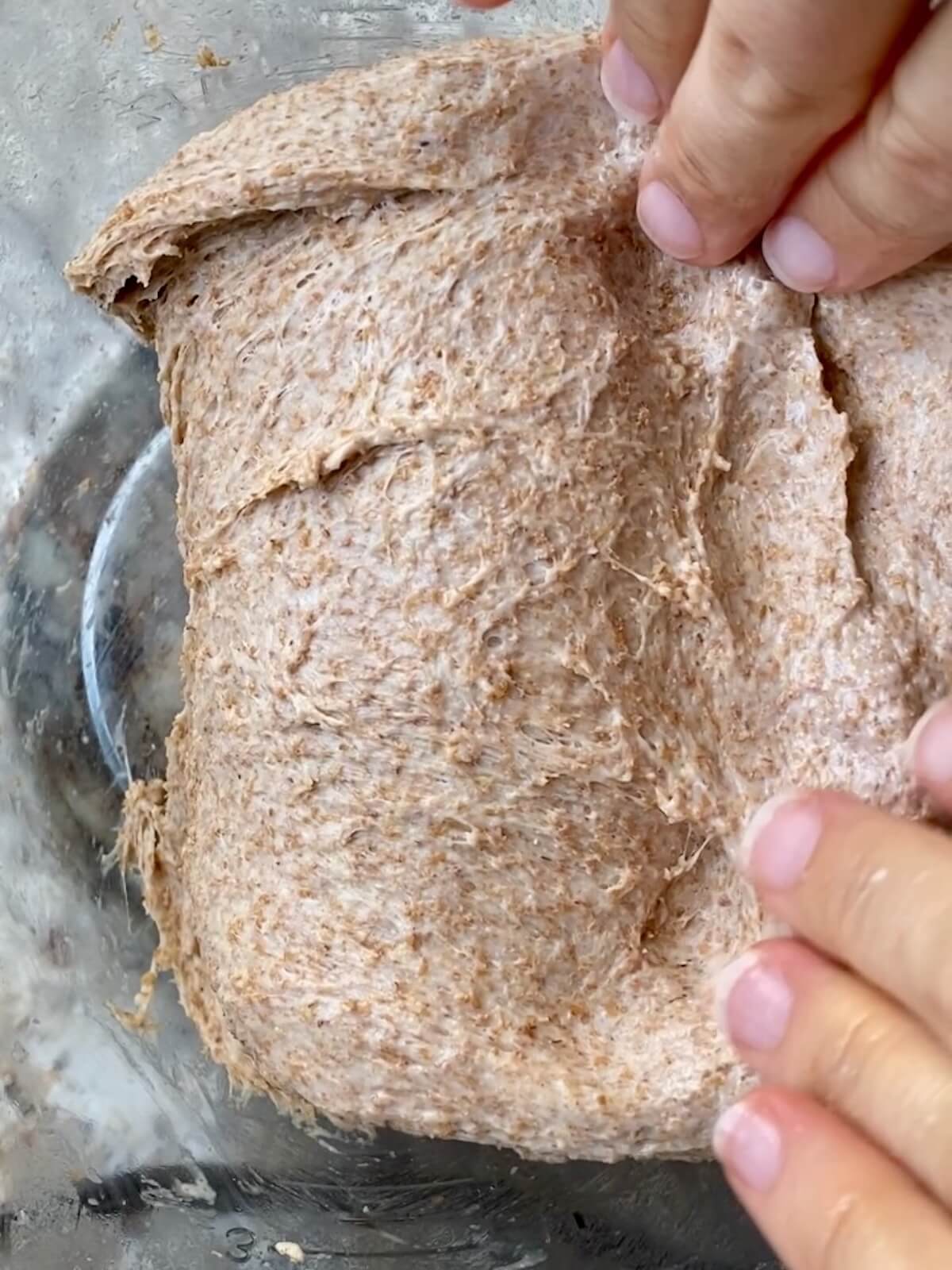

Step 5: Bulk fermentation. Let dough rise until doubled, about 4–12 hours.


Step 6: Shape. Shape dough to 1-inch thick. Cut rounds with a 3-inch cutter and place on cornmeal-dusted parchment.

Step 7: Proof. Let English muffins rise until puffy, 2–4 hours.


Step 8: Cook. Cook in a cornmeal-dusted cast iron skillet over low heat, 5–6 minutes per side until golden.


Step 9: Cool and serve. Cool completely, then split open with a fork before serving.

Baker's Timeline
Here’s a sample schedule to help you plan your whole wheat sourdough English muffins from start to finish:
- 8:00 PM (Night Before): Feed your starter.
- 8:00–9:00 AM: Autolyse.
- 9:00–9:30 AM: Mix dough and rest 20 minutes.
- 9:30-10:30 AM: Do 4 sets of stretch and folds, 20 minutes apart.
- 10:30 AM–4:30 PM (varies): Bulk fermentation (until doubled in size).
- 4:30–5:00 PM: Cut the dough into rounds.
- 5:00 PM–7:00 PM: Proof until puffy.
- 7:00–7:30 PM: Cook on stovetop.
- 7:30–8:30 PM: Cool completely before fork-splitting.
Note: Rise times can vary depending on the strength of your starter and the temperature of your kitchen and dough. Use visual cues—like when your dough has doubled in size—rather than the clock.
How to Store
Store cooled English muffins in an airtight container or bag at room temperature for 3–4 days.
For longer storage, freeze in a freezer-safe bag or container for up to 3 months. For best results, split them before freezing so they’re easy to toast straight from frozen.
Whole wheat English muffins should not be refrigerated because it tends to dry them out and make them stale faster.
Serving Suggestions
These whole wheat sourdough English muffins are irresistible toasted with butter. Top with homemade cranberry, blueberry, or strawberry jam for a touch of sweetness.
They’re also perfect for breakfast sandwiches, turkey sandwiches, or even mini English muffin pizzas.


Are you tired of watching your sourdough discard go to waste?
It’s time to turn excess discard into something delicious with my new ebook - Everyday Sourdough!
Inside, you’ll find 27 tried-and-true sourdough discard recipes that will transform your leftover starter into mouthwatering creations your family and friends will love.
No more guilt about wasting your discard - with Everyday Sourdough, you have endless options to quickly make something amazing anytime.
Let's Connect!
Be sure to leave a comment below if you have any questions. You can also connect with me on Instagram, Facebook, Pinterest, or via email at [email protected].




📖 Recipe

Whole Wheat Sourdough English Muffins
Equipment
Ingredients
- 3 cups (360 grams) whole wheat flour
- 1 ¼ cups (300 grams) whole milk warmed to 80-90℉
- ½ cup (100 grams) active sourdough starter
- 2 tablespoons (25 grams) granulated sugar
- 1 tablespoon (14 grams) unsalted butter melted
- 2 ½ teaspoons (7 grams) Diamond Crystal Kosher Salt if using Morton's brand or table salt, reduce volume to 1 ¼ teaspoon or measure in grams
- Cornmeal for sprinkling on baking sheet and skillet
Instructions
- Feed your sourdough starter 6–12 hours before starting to ensure it’s active and bubbly.
- In a large bowl, combine the whole wheat flour and milk, mixing until no dry flour remains. Cover and let rest for 60 minutes to allow the bran and germ to soften and fully hydrate the flour.3 cups (360 grams) whole wheat flour, 1 ¼ cups (300 grams) whole milk
- Add the active starter, sugar, melted butter, and salt to the bowl. Knead thoroughly until the dough comes together into a cohesive ball. Cover and rest for 20 minutes.½ cup (100 grams) active sourdough starter, 2 tablespoons (25 grams) granulated sugar, 1 tablespoon (14 grams) unsalted butter, 2 ½ teaspoons (7 grams) Diamond Crystal Kosher Salt
- Lightly wet your hands and perform a set of stretch and folds. To do this, gently lift one edge of the dough, stretch it upward without tearing, and fold it over the center. Rotate the bowl 90° and repeat on all four sides. Gather the dough into a ball and place it seam side down. Cover and rest for 20 minutes. Repeat this stretch-and-fold process three more times, for a total of four sets.
- Cover the bowl and let the dough rise until doubled in size, about 4–12 hours or longer depending on your kitchen temperature. Using a straight-sided container can help you track the rise more easily.
- Line a baking sheet with parchment paper and generously sprinkle with cornmeal. Turn the dough onto a lightly floured surface and gently press it into a 1-inch thick rectangle. Using a 3-inch round cutter, cut out as many muffins as possible. Gather any scraps, gently press them back together, and cut out more rounds. You should have 9–10 muffins total.Cornmeal
- Cover the muffins loosely and let them rise until puffy, about 2–4 hours depending on room temperature.
- Preheat a cast iron skillet over medium-low heat and sprinkle with cornmeal. Reduce heat to low and cook 3–4 muffins at a time for 5–6 minutes per side. Adjust the heat as needed to get a deep golden crust without burning while ensuring the muffins cook through.Cornmeal
- Transfer the muffins to a wire rack and cool completely. Split them open with a fork before serving.
Notes
- Cut muffins firmly. Press down firmly with your round cutter to create clean edges and help the muffins rise evenly during cooking. Avoid twisting the cutter, which can seal the edges and prevent a good rise.
- Adjust burner temperature as needed. Cook over low to medium-low heat to develop a deep golden crust without burning, while allowing the inside to cook through fully.
- Storage: Store muffins in an airtight container for up to 4 days at room temperature or freeze for up to 3 months.




Comments
No Comments