
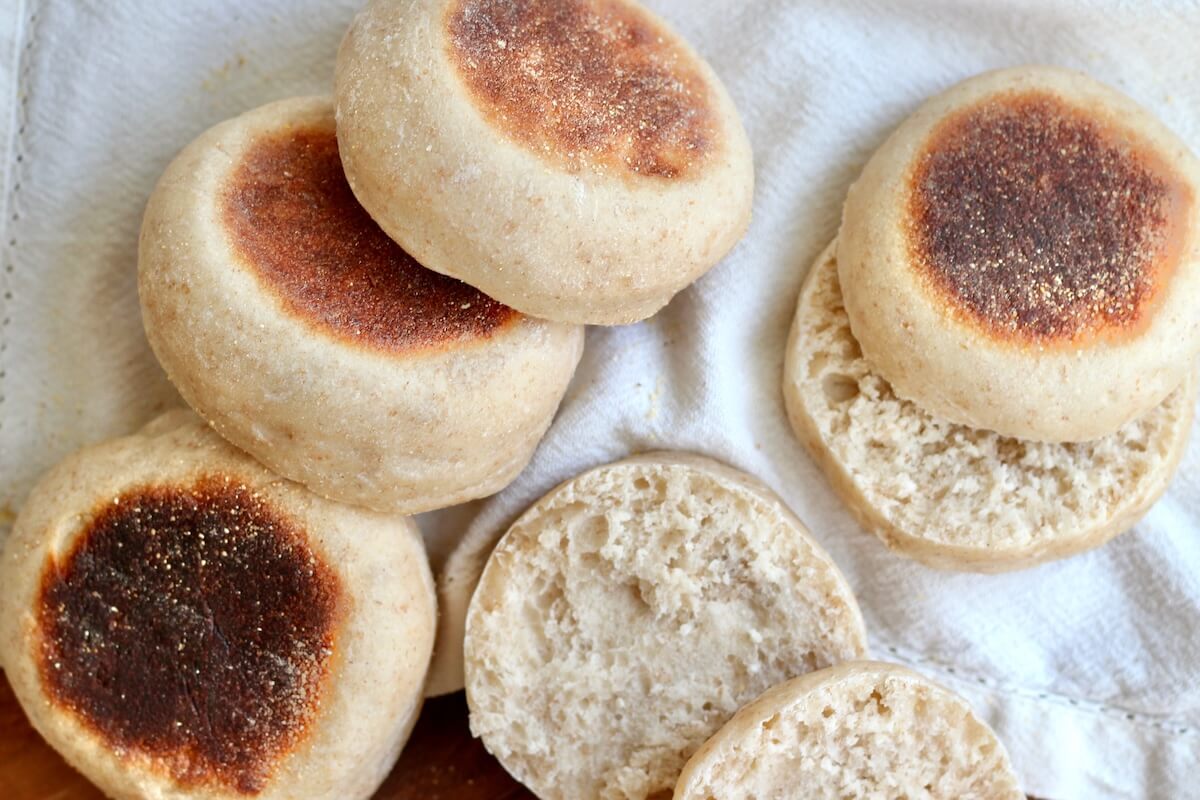
These Sourdough English Muffins are a classic breakfast favorite with plenty of nooks and crannies. With active sourdough starter or discard, they’re easy to make in one day or ferment overnight for flexibility.
I love getting creative with sourdough, and this year I’ve added all kinds of fun recipes to the blog. From ice cream and apple crisp made with discard to unique sourdough bread inclusions like dill pickles, chocolate cherry, and pepperoni pizza.
But as a registered dietitian and home cook, I also know how important it is to have some reliable staple recipes on hand. That’s why this year I’ve been focusing on the basics too, like these sourdough English muffins.
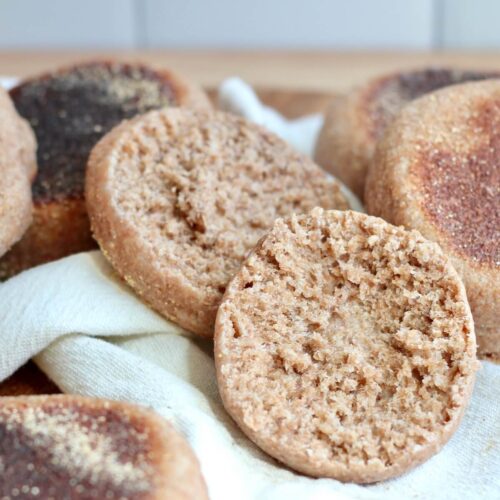
These English muffins are pillowy soft, full of sourdough tang, and packed with those perfect nooks and crannies we all love. And the crunchy cornmeal bottom? Truly irresistible.
I usually use active starter for this recipe, but if you have fresh discard (less than a week old), that works too. You might just need to be a little more patient while it rises. The dough is super easy to handle, and you can make them same day or let them ferment overnight for extra flavor and convenience.
And the best part? They freeze really well, so you can always have homemade sourdough English muffins ready to toast for breakfast.
Trust me, once you try these, you’ll never want to buy store-bought again!
Disclaimer: Some links throughout this post are affiliate links. As an Amazon Associate, I earn from qualifying purchases. You can learn more by visiting my Affiliate Disclosure Page.
Ingredients & Substitutions
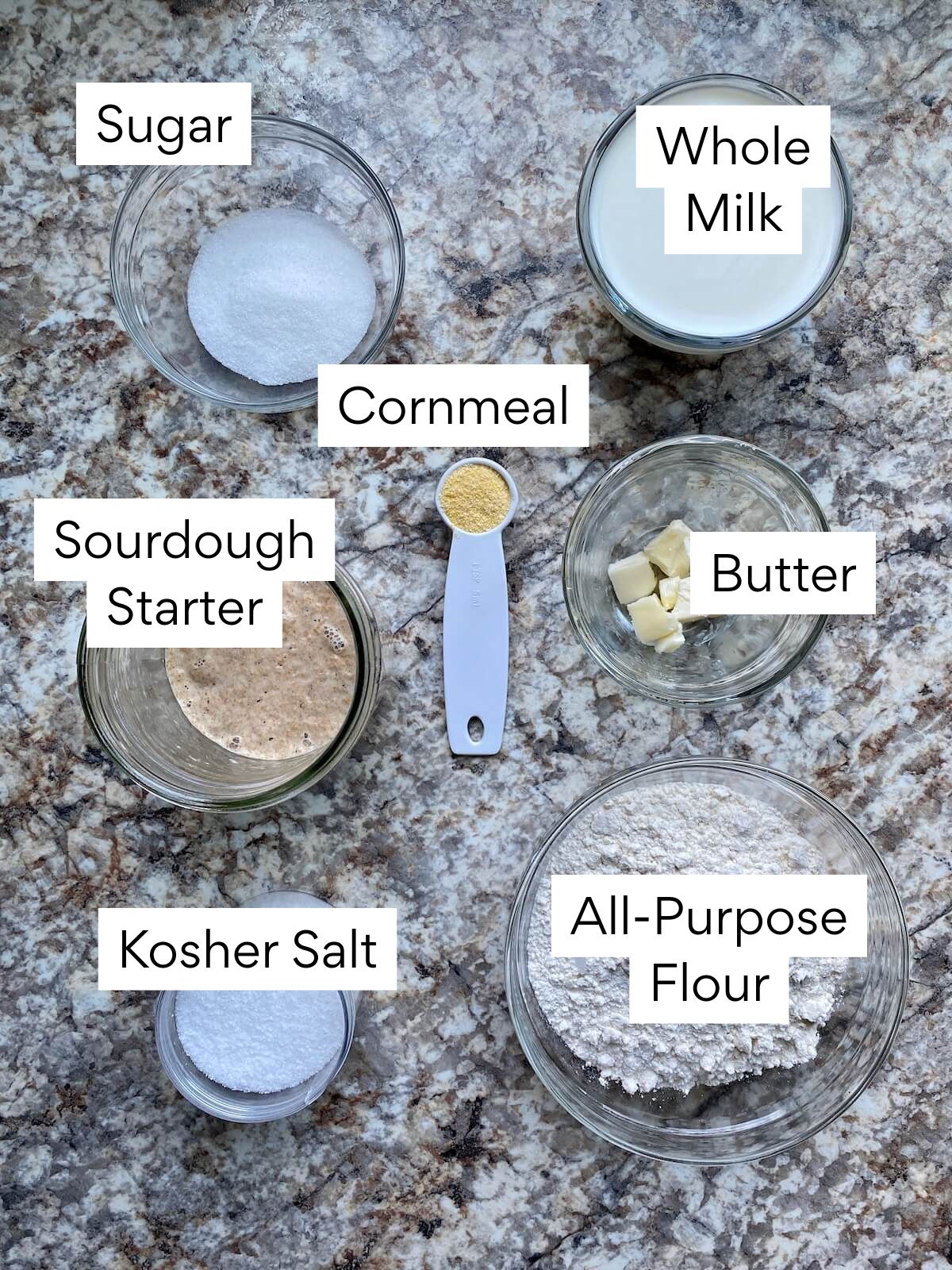
Here are some notes on key ingredients. For a full list of ingredients, check out the recipe card below.
- Active Sourdough Starter- Use a bubbly, active starter for best rise and flavor. You can also use fresh sourdough discard (less than a week old), but the dough may take longer to ferment.
- Cornmeal- Sprinkled on the pan and skillet, it gives the English muffins their signature crunchy bottom.
- All-Purpose Flour- Provides a soft, tender crumb with a chewy texture. You can substitute bread flour for a slightly chewier English muffin or swap up to ⅓ of the flour for whole wheat (you may need a bit more milk or water to keep the dough consistency right). Or check out my 100% whole wheat sourdough English muffin recipe.
- Whole Milk- Slightly warmed (80–90°F) to encourage fermentation and create a soft dough.
- Granulated Sugar- Adds a touch of sweetness and helps with browning and fermentation.
- Butter- Brings richness and flavor while keeping the English muffins soft and tender.
- Kosher Salt- Enhances flavor. I use Diamond Crystal Kosher Salt (2.8 grams per teaspoon). If you’re using Morton’s or table salt, use half as much or weigh it out for best results.
Tips for Success
- Use a kitchen scale. Weighing your ingredients ensures accuracy and helps you achieve the perfect dough texture every time.
- Start with an active starter. A well-fed, bubbly starter gives your dough the rise and flavor it needs. You can use discard, but expect a longer fermentation time.
- Don’t rush the bulk rise. Let the dough become puffy and nearly doubled in size. This step is essential for developing flavor and those classic nooks and crannies.
- Cut muffins firmly. Press down firmly with your round cutter to create clean edges and help the English muffins rise evenly during cooking. Avoid twisting the cutter, which can seal the edges and prevent a good rise.
- Adjust burner temperature as needed. Cook over low to medium-low heat to develop a deep golden crust without burning, while allowing the inside to cook through fully.
- Let them cool completely. It’s tempting to eat them right away, but cooling fully lets the crumb set properly and prevents a gummy texture inside.
How to Make Sourdough English Muffins
Follow these step-by-step instructions with photos to see exactly how to make English muffins with sourdough starter.
Step 1: Feed starter. Make sure your sourdough starter is active and bubbly before you begin. If using discard, you can skip this step.

Step 2: Mix dough. Whisk together warm milk, starter, and sugar. Add flour, melted butter, and salt; mix into a cohesive dough. Rest 20 minutes.
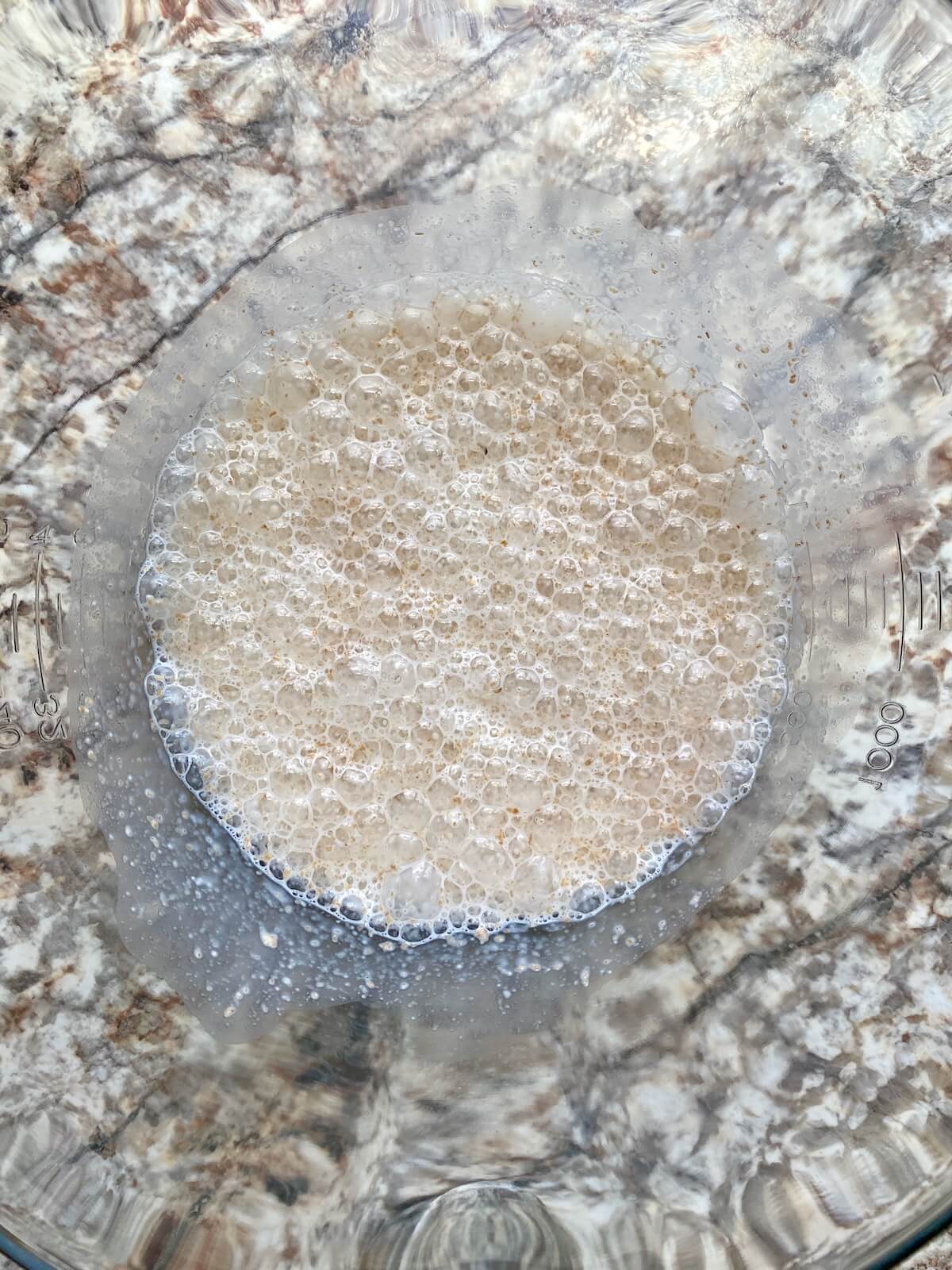

Step 3: Stretch and fold. Do 4 sets of stretch and folds, resting 20 minutes between each.

Step 4: Bulk fermentation. Cover and rise until doubled, 4–12+ hours.


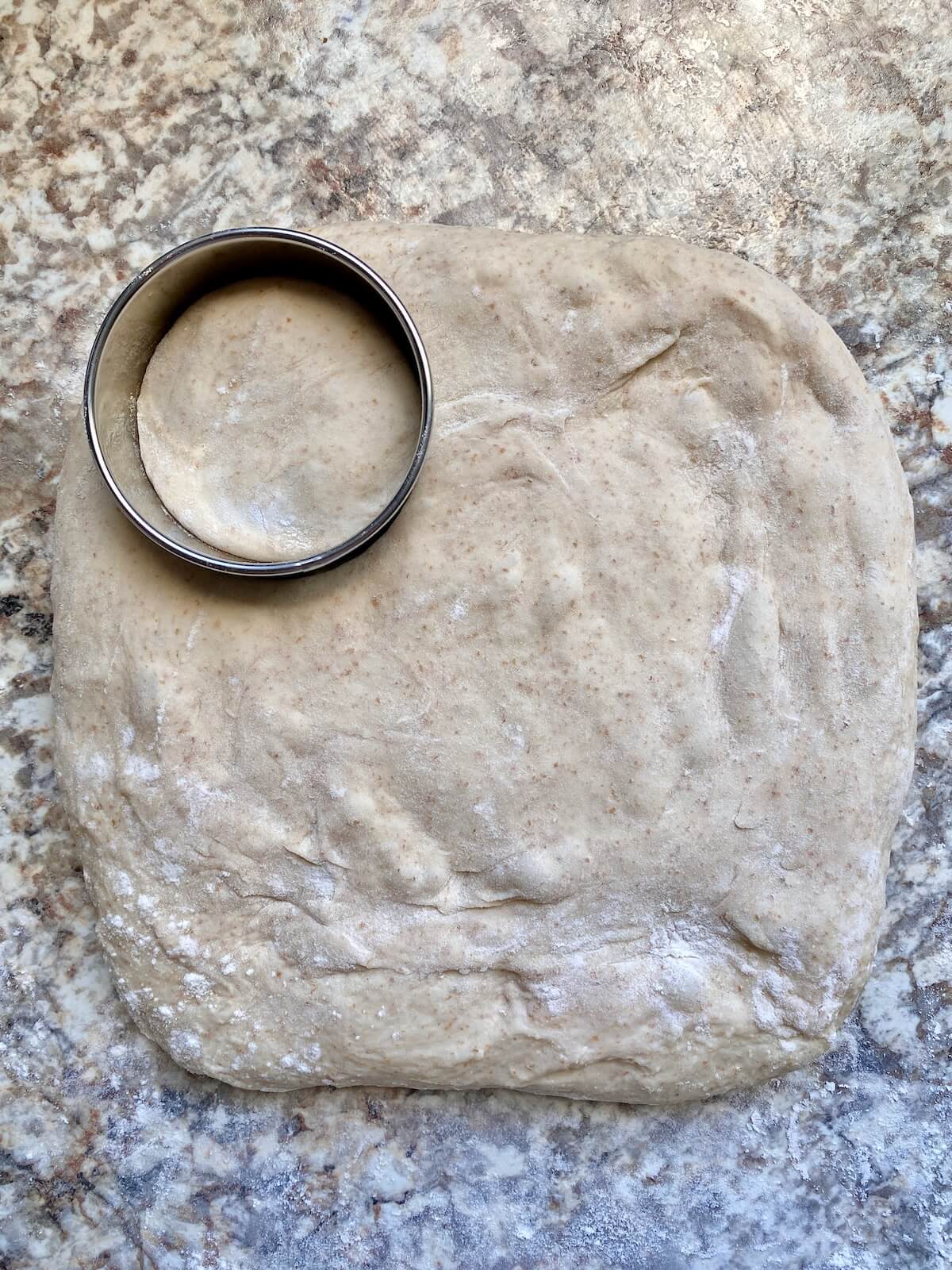
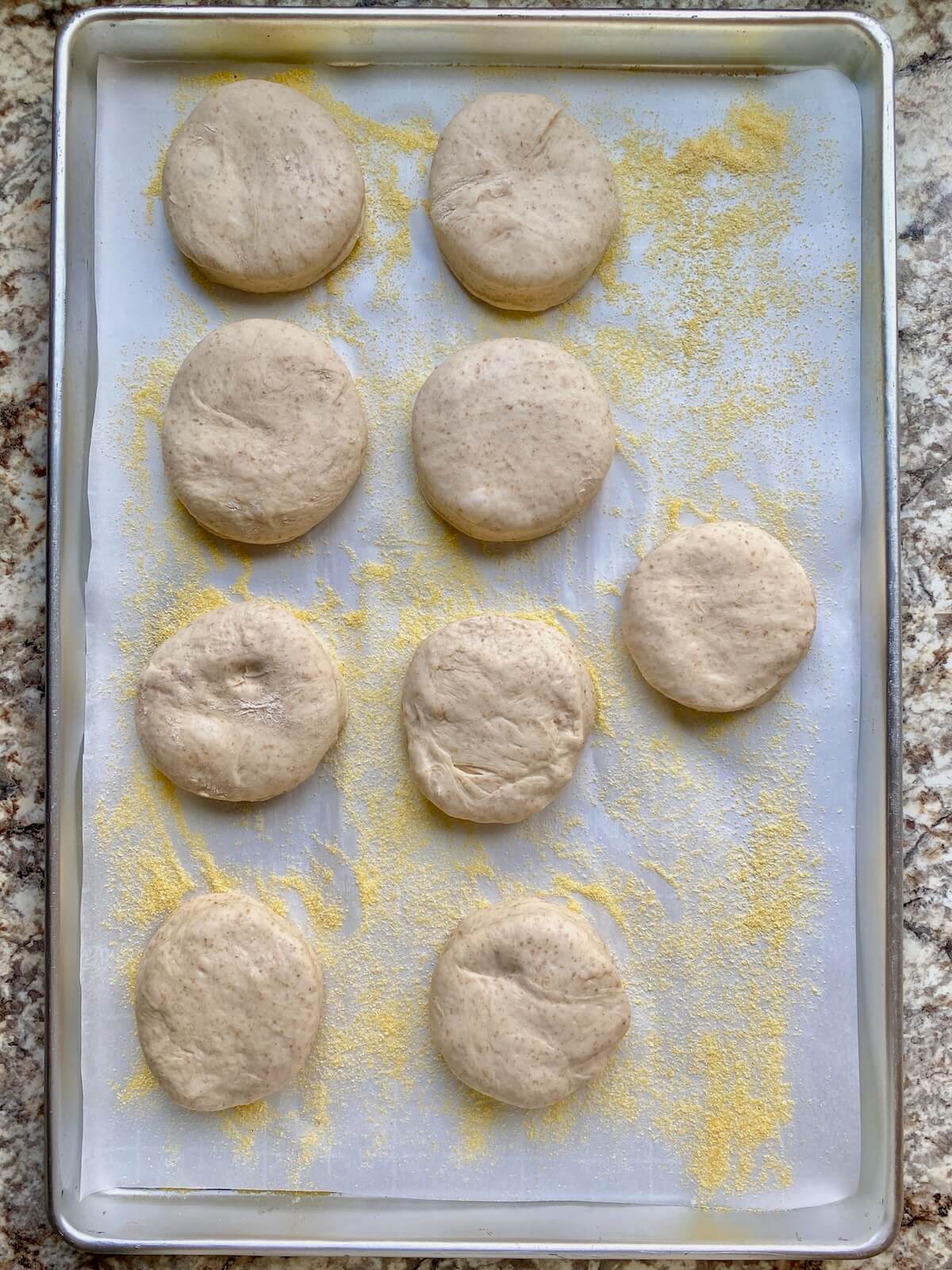
Step 5: Shape. Press into a 1-inch thick rectangle; cut 3-inch rounds. Place on a cornmeal-dusted, parchment-lined baking sheet.
Step 6: Proof. Cover and rise until puffy, 2–4 hours.

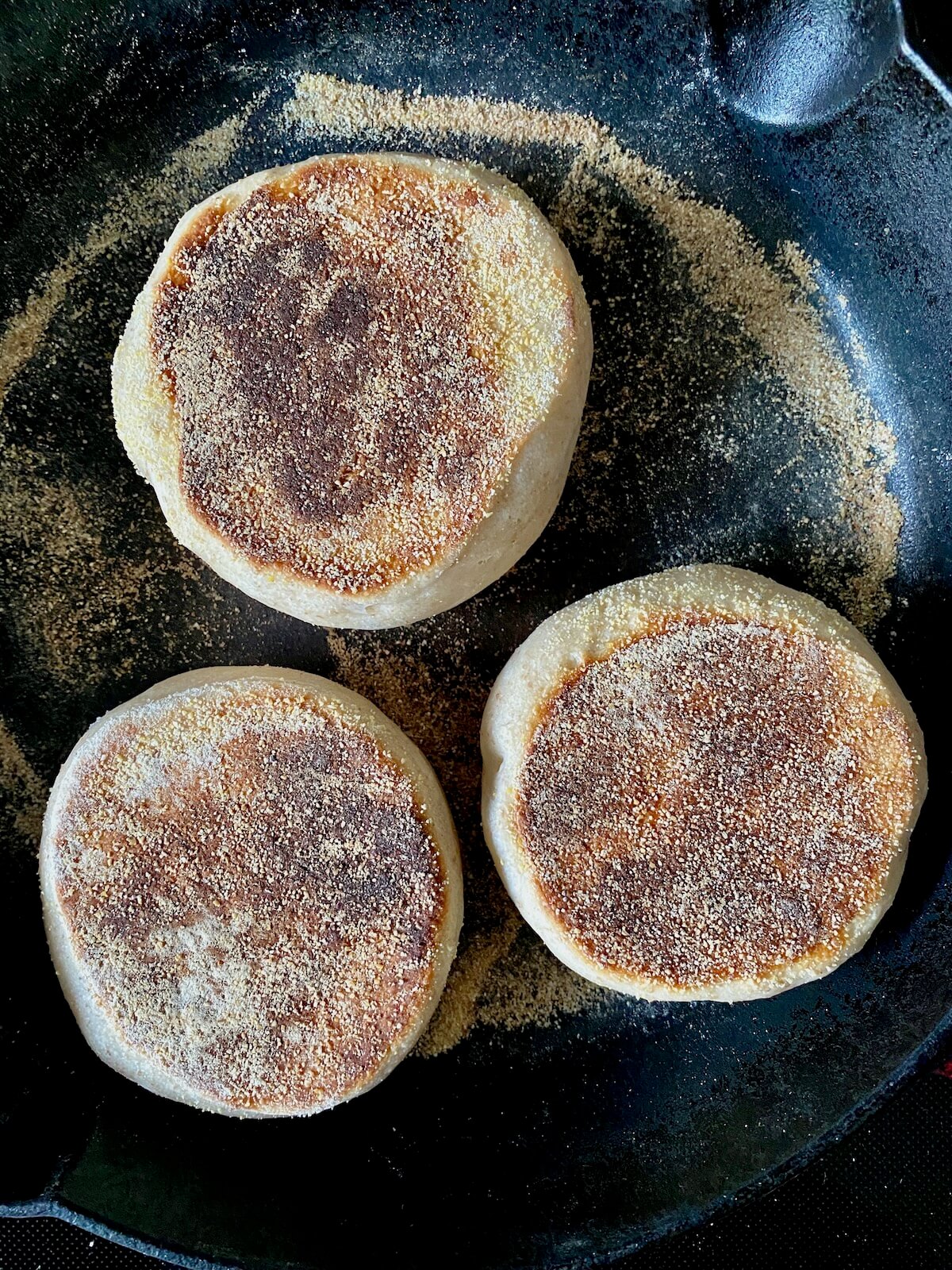
Step 7: Cook. Preheat cast iron skillet over medium-low, sprinkle with cornmeal, and cook English muffins 5–6 minutes per side on low heat.

Step 8: Cool and split. Cool on a wire rack; split with a fork before serving.


Baker's Timeline
Here’s a sample schedule to help you plan your sourdough English muffins from start to finish:
- 8:00 PM (Night Before): Feed your starter.
- 8:00–8:30 AM: Mix dough and rest 20 minutes.
- 8:30–9:30 AM: Do 4 sets of stretch and folds, 20 minutes apart.
- 9:30 AM–3:30 PM (varies): Bulk fermentation (until doubled in size).
- 3:30–4:00 PM: Cut the dough into rounds.
- 4:00 PM–6:00 PM: Proof until puffy.
- 6:00–6:30 PM: Cook on stovetop.
- 6:30–7:30 PM: Cool completely before fork-splitting.
Note: Rise times can vary depending on the strength of your starter and the temperature of your kitchen and dough. Use visual cues—like when your dough has doubled in size—rather than the clock.
How to Store
Store cooled sourdough English muffins in an airtight container or bag at room temperature for 3–4 days.
For longer storage, freeze cooled muffins in a freezer-safe bag or container for up to 3 months. For best results, split them before freezing so they’re easy to toast straight from frozen.
English muffins shouldn’t be refrigerated because it tends to dry them out and make them stale faster.
Serving Suggestions
These sourdough English muffins are delicious toasted with butter melting into all their signature nooks and crannies. Then add some homemade cranberry, blueberry, or strawberry jam for a bit of sweetness.
They also make a great base for breakfast sandwiches, turkey sandwiches, and mini English muffin pizzas.


Are you tired of watching your sourdough discard go to waste?
It’s time to turn excess discard into something delicious with my new ebook - Everyday Sourdough!
Inside, you’ll find 27 tried-and-true sourdough discard recipes that will transform your leftover starter into mouthwatering creations your family and friends will love.
No more guilt about wasting your discard - with Everyday Sourdough, you have endless options to quickly make something amazing anytime.
Let's Connect!
Be sure to leave a comment below if you have any questions. You can also connect with me on Instagram, Facebook, Pinterest, or via email at [email protected].



📖 Recipe

Sourdough English Muffins
Equipment
Ingredients
- 1 cup (240 grams) whole milk warmed to 80-90℉
- ½ cup (100 grams) active sourdough starter or "fresh" discard less than one week old
- 2 tablespoons (25 grams) granulated sugar
- 3 cups (360 grams) all-purpose flour
- 1 tablespoon (14 grams) unsalted butter melted
- 2 ½ teaspoons (7 grams) Diamond Crystal Kosher Salt use 1 ¼ teaspoons if using Morton's brand or table salt
- Cornmeal for dusting the baking sheet and cast iron skillet
Instructions
- Feed your sourdough starter about 6-12 hours before mixing the dough so that it's bubbly and active. Alternatively, use "fresh" sourdough discard that's less than one week old (dough may take longer to rise).
- In a large mixing bowl, whisk together the warm milk (80–90°F), active sourdough starter, and sugar until combined. Add the flour, melted butter, and salt. Knead until a cohesive dough forms. Cover and rest for 20 minutes.1 cup (240 grams) whole milk, ½ cup (100 grams) active sourdough starter, 2 tablespoons (25 grams) granulated sugar, 3 cups (360 grams) all-purpose flour, 1 tablespoon (14 grams) unsalted butter, 2 ½ teaspoons (7 grams) Diamond Crystal Kosher Salt
- Lightly wet your hands, then perform one set of stretch and folds: gently lift one edge of the dough, stretch it up without tearing, and fold it over the center. Rotate the bowl a quarter turn (90°) and repeat. Continue until all four sides have been stretched and folded. Gather the dough into a ball and place it seam side down in the bowl. Cover and rest for 20 minutes. Repeat this process three more times for a total of four sets.
- Cover and let the dough rise until doubled in size, about 4–12 hours (or more) depending on the temperature of your kitchen. A straight-sided container makes it easy to see when it’s fully risen.
- Line a baking sheet with parchment paper and generously sprinkle it with cornmeal.Cornmeal
- Transfer the dough to a lightly floured surface and gently press it into a rectangle about 1 inch thick. Use a 3-inch round cutter to cut as many circles as possible, placing them close together to minimize scraps. Transfer each round to the prepared baking sheet. Gather and gently press any scraps back together to cut more muffins (you should have 8–9 total).
- Cover the muffins loosely and let them rise until puffy, about 2–4 hours depending on room temperature.
- Preheat a cast iron skillet over medium-low heat, then sprinkle with cornmeal. Reduce heat to low and add 3–4 muffins at a time. Cook for 5–6 minutes per side, adjusting heat as needed so the outside is deeply golden while the inside cooks through.Cornmeal
- Transfer muffins to a wire rack to cool completely. Use a fork to split them open for serving.
Notes
- Cut muffins firmly. Press down firmly with your round cutter to create clean edges and help the muffins rise evenly during cooking. Avoid twisting the cutter, which can seal the edges and prevent a good rise.
- Adjust burner temperature as needed. Cook over low to medium-low heat to develop a deep golden crust without burning, while allowing the inside to cook through fully.
- Storage: Store muffins in an airtight container for up to 4 days at room temperature or freeze for up to 3 months.



Barbara says
Love making English Muffins using my starter! I find it quicker to divide my dough into equal amounts by weighing it and roll them into balls. Flatten them and let them raise. Since they are "fried" on both sides, they flatten and still look like English Muffins.
Ashley Petrie, RDN, LDN says
Thanks, Barbara! So glad you enjoyed. I love hearing different ways people shape them — your method sounds super simple and efficient. I might have to give that a try sometime! 🙂
Dena vojd says
Can this be made with a nondairy alternative? Any specific suggestions you have tried?
Ashley Petrie, RDN, LDN says
Hi Dena! I haven't tested these with non-dairy alternatives so I can't say for sure how they'd turn out, but I think it's worth a shot. If you do try it with non-dairy milk and butter, I'd love to hear how it goes! 🙂
Marylu says
I used almond milk for this recipe and the muffins came out great.
Ashley Petrie, RDN, LDN says
Good to know — thanks for sharing, Marylu! That’s super helpful for anyone wanting to use almond milk instead. 🙂
Marylu says
I tried making these and loved the end product! I’ve tried a couple of other recipes, but this produced the best muffins. Cooking them in our cast iron skillet was a bit tricky timing wise (I ended up covering the skillet while they cooked and checked internal temp to make sure it was at least 200F), but they came out great. I have another batch rising as I type!
Ashley Petrie, RDN, LDN says
That’s awesome to hear, Marylu! I’m so glad you loved how they turned out. Cooking in a cast iron skillet can definitely take a little trial and error with timing, but it sounds like you handled it perfectly — covering the skillet and checking the internal temp was a great call. Hope batch number two turns out just as good (if not better)! 🙂
Suzanne Addington says
This was my first try at English Muffins. Everything looked good but when I cut them - it seemed like a combination of a biscuit and sourdough - not too many holes that I'm used to seeing in English Muffins. Any suggestions as to what I may have done wrong?
Ashley Petrie, RDN, LDN says
Hi Suzanne! That’s super common on a first try! The nooks and crannies usually come from a well-fermented dough and gentle handling. If it’s slightly underproofed or pressed/rolled too much when shaping, it can turn out more dense like that. Next time, try letting the dough get a bit more puffy and handle it lightly when cutting/shaping. 🙂
Eileen says
Can you use oil instead of butter?
Ashley Petrie, RDN, LDN says
Hi Eileen! Yes, you can use oil instead of butter 🙂