
This Sourdough Monkey Bread is made with soft, fluffy sourdough coated in cinnamon sugar and baked in a buttery brown sugar glaze. It’s an easy, pull-apart sourdough bread everyone will love!
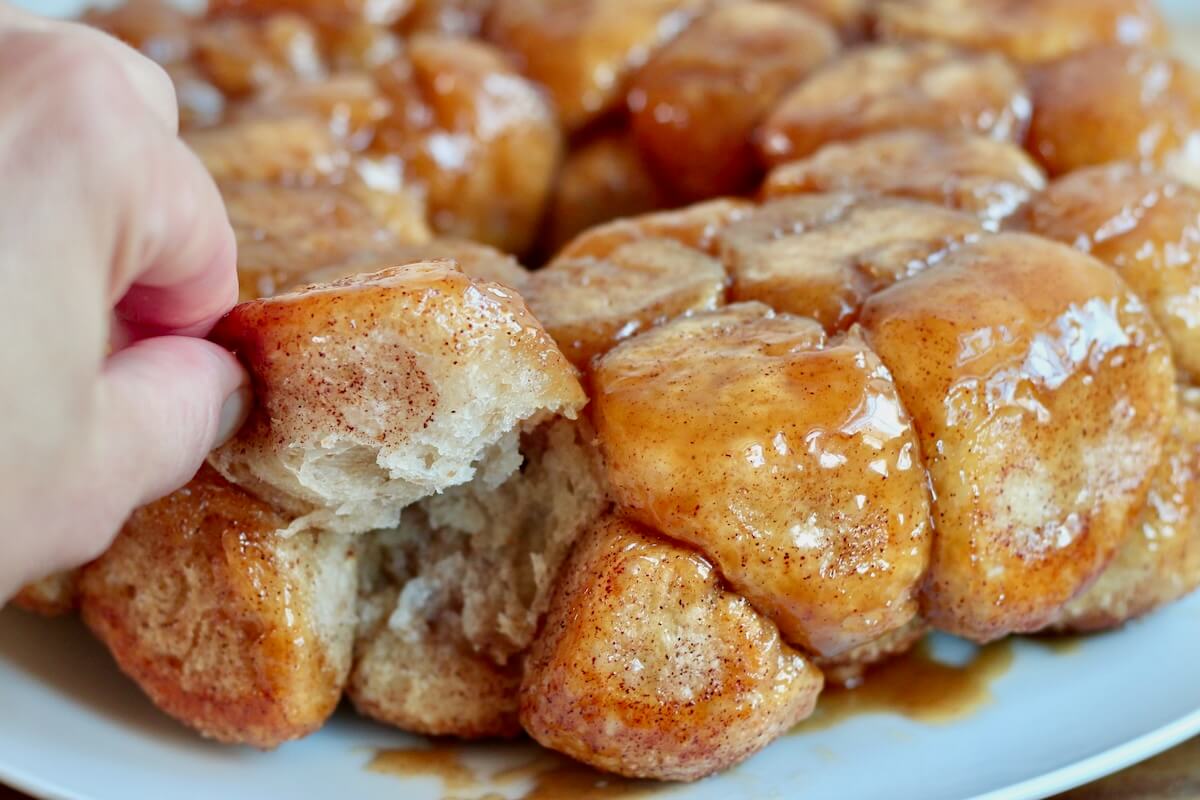
Monkey bread is one of those nostalgic treats that’s usually made with canned biscuits. I remember it being really popular when I was growing up, but it was never something my family made.
Lately, I’ve been on a pull-apart sourdough bread kick with my starter (garlic version coming soon!). So, of course, I couldn’t resist trying my hand at a homemade sourdough monkey bread.
After a few test batches, I decided to keep it as simple as possible: an easy, 4-ingredient, low-hydration sourdough made with all-purpose flour for a softer bite.
Each ball is rolled in cinnamon sugar, then baked in a buttery brown sugar glaze for that classic gooey, sticky pull-apart goodness.
This recipe is flexible, too. You can prep the dough ahead and refrigerate it. Then, just proof for a few hours before baking for warm sourdough monkey bread anytime—perfect for breakfast, brunch, or dessert.
Since it’s just me and my cats, I didn’t need a whole loaf for myself—so I gave it to my sister and her husband. They absolutely LOVED it!
I hope you give it a try and enjoy it just as much as we all did.
Prefer something savory? Give my sourdough pull apart garlic bread a try!
Disclaimer: Some links throughout this post are affiliate links. As an Amazon Associate, I earn from qualifying purchases. You can learn more by visiting my Affiliate Disclosure Page.
Ingredients & Substitutions
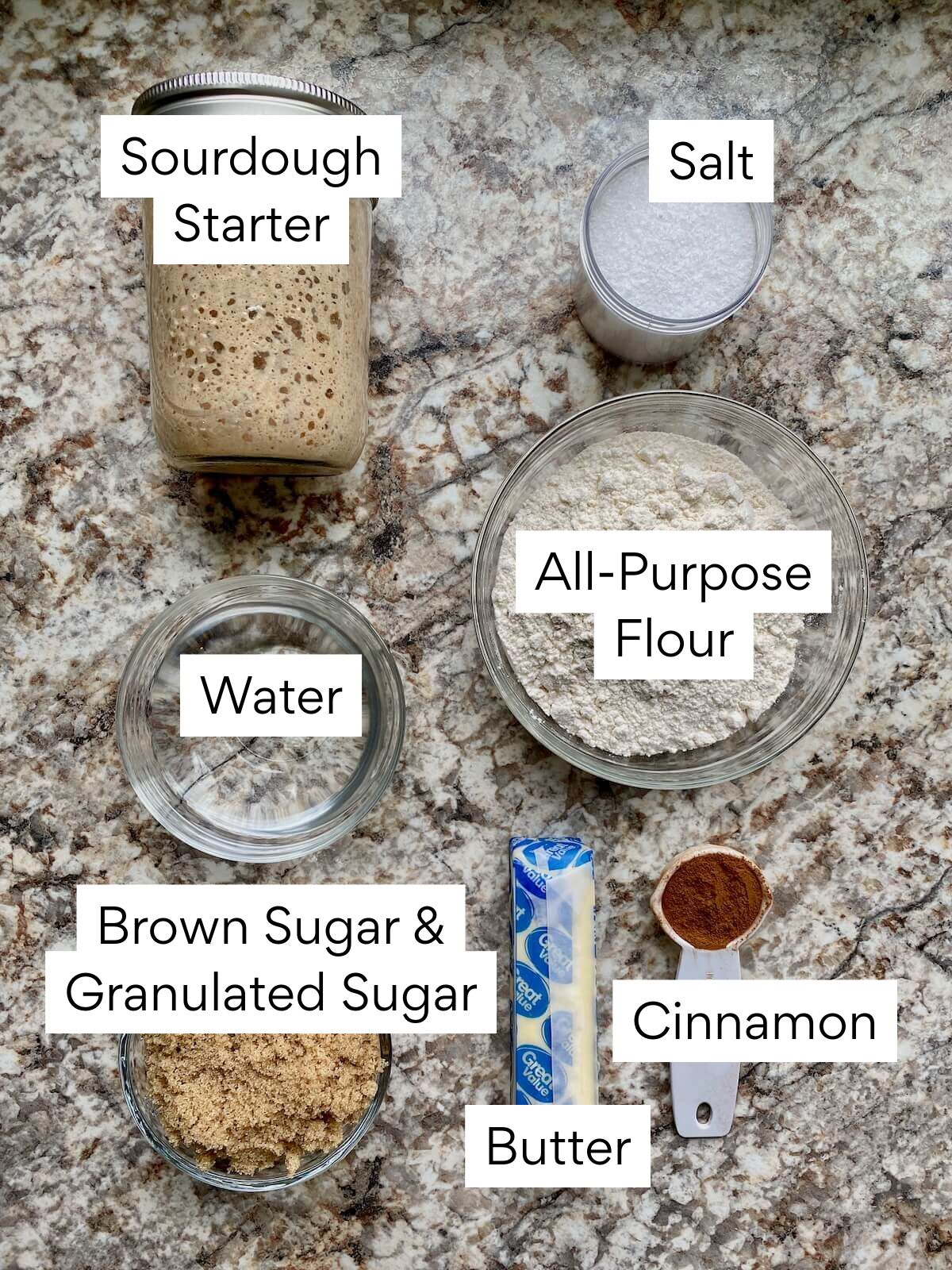
Here are some notes on key ingredients. For a full list of ingredients, check out the recipe card below.
- Active Sourdough Starter- Your starter should be bubbly and active before mixing the dough. If you only have fresh sourdough discard (1–2 days old), you can use it, but the dough may take longer to rise.
- All-Purpose Flour- Gives the bread a soft, fluffy texture with a slight chew. You can swap in bread flour for a slightly chewier loaf.
- Water- Use lukewarm or room-temp water to help the dough ferment. Adjust as needed depending on your preferred dough hydration or your kitchen’s humidity.
- Butter- Adds rich, buttery flavor and helps create that caramel-like glaze.
- Brown Sugar- Sweet and sticky, it pairs perfectly with cinnamon. Light or dark brown sugar both work.
- Granulated Sugar- Used in the cinnamon-sugar coating for sweetness.
- Cinnamon- For that classic monkey bread flavor. Pumpkin pie spice could be used as a variation.
- Kosher Salt- Enhances flavor. I use Diamond Crystal Kosher Salt (2.8 grams per teaspoon). If you’re using Morton’s or table salt, use half as much or weigh it for best results.
Tips for Success
- Use an active starter. A bubbly, well-fed starter gives the dough strength for a good rise and soft, airy texture. You can also use “fresh” discard that’s less than 3 days old.
- Weigh your ingredients. A kitchen scale ensures accuracy and helps you get the dough’s hydration and texture just right.
- Be patient during bulk fermentation. Wait until the dough is puffy and nearly doubled—this step is what makes your monkey bread soft and fluffy.
- Use a straight-sided container. It’s much easier to see when your dough has doubled if the container has straight sides and a marked starting point.
- Place Bundt pan on a rimmed baking sheet. This catches any drips from the glaze and keeps your oven clean.
- Invert with confidence. Flip the monkey bread out in one smooth motion so it lands neatly on your serving platter.
- Serve warm. Monkey bread is best enjoyed straight from the oven while the glaze is still gooey and melty.
How to Make Sourdough Monkey Bread
Follow these step-by-step instructions with photos to see exactly how to make monkey bread with sourdough starter.
Step 1: Feed starter. Make sure your sourdough starter is bubbly and active by feeding it 6–12 hours before mixing the dough. If using discard, skip this step.

Step 2: Mix the dough. Whisk warm water and starter until dissolved. Add flour and salt; mix until no dry flour remains. Cover and rest 20 minutes.

Step 3: Stretch and fold. Do 4 sets of stretch and folds every 15 minutes until the dough is smooth and elastic.
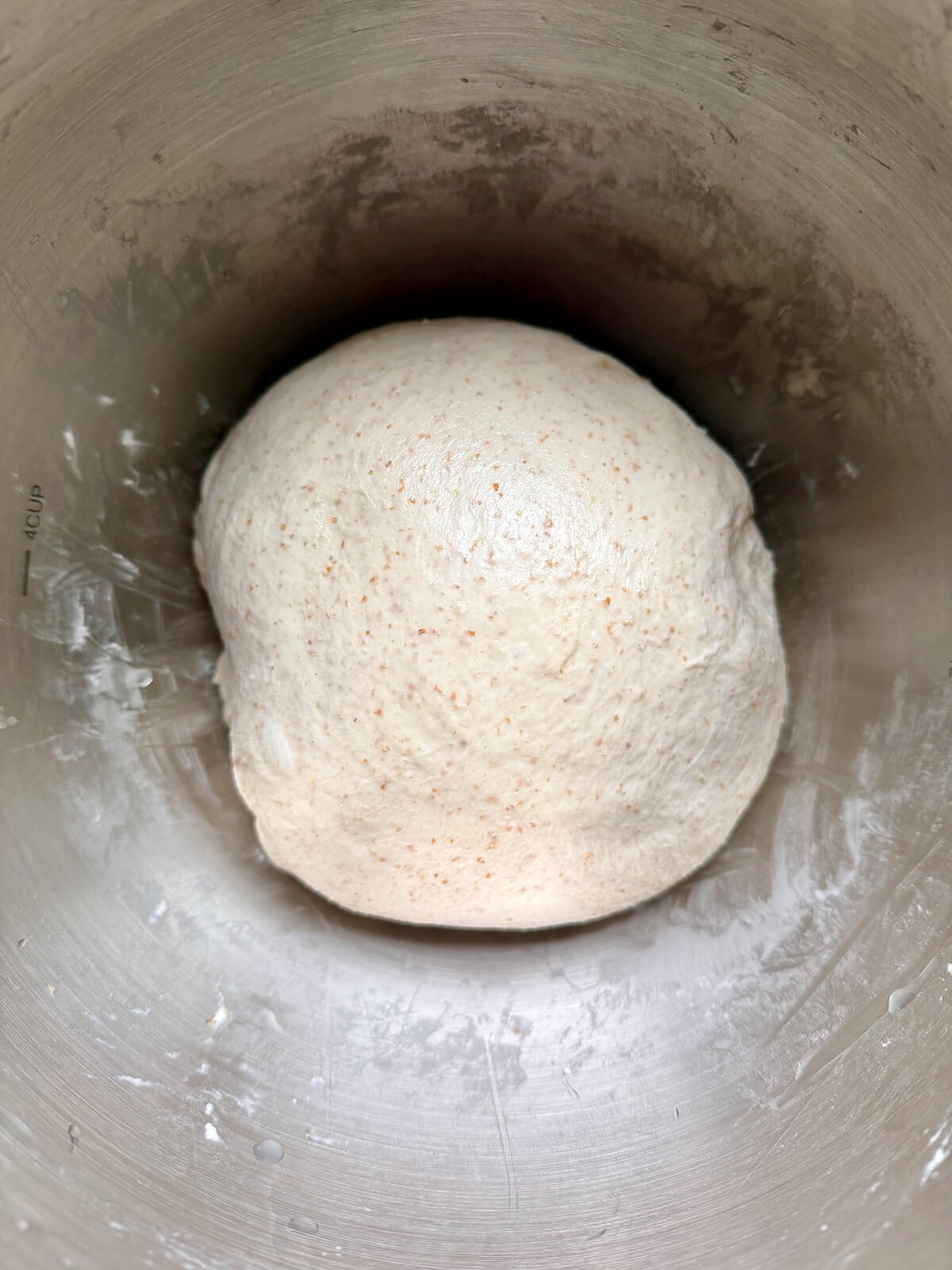
Step 4: Bulk fermentation. Cover and let dough double in size. This can take 4–12+ hours.

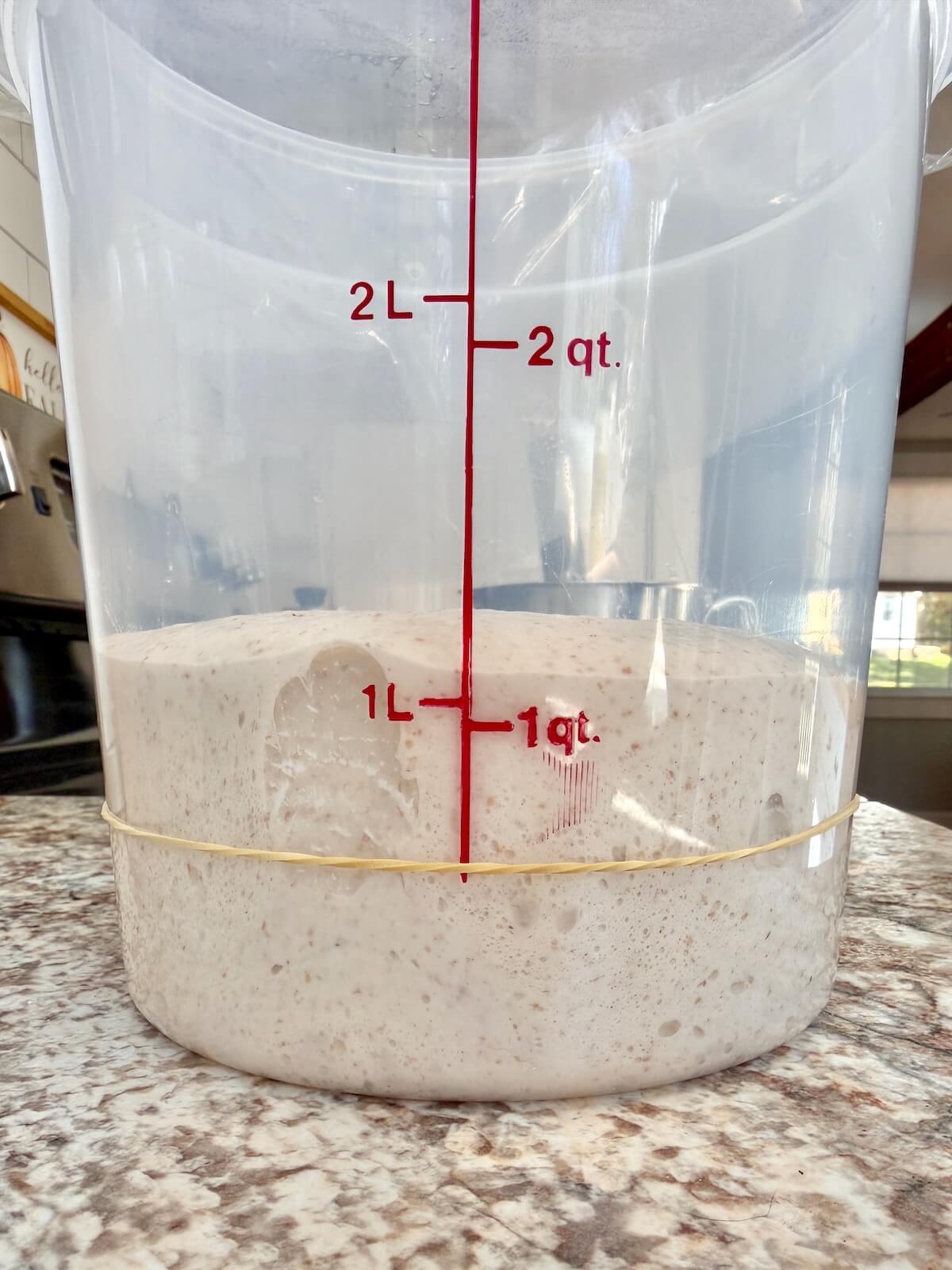
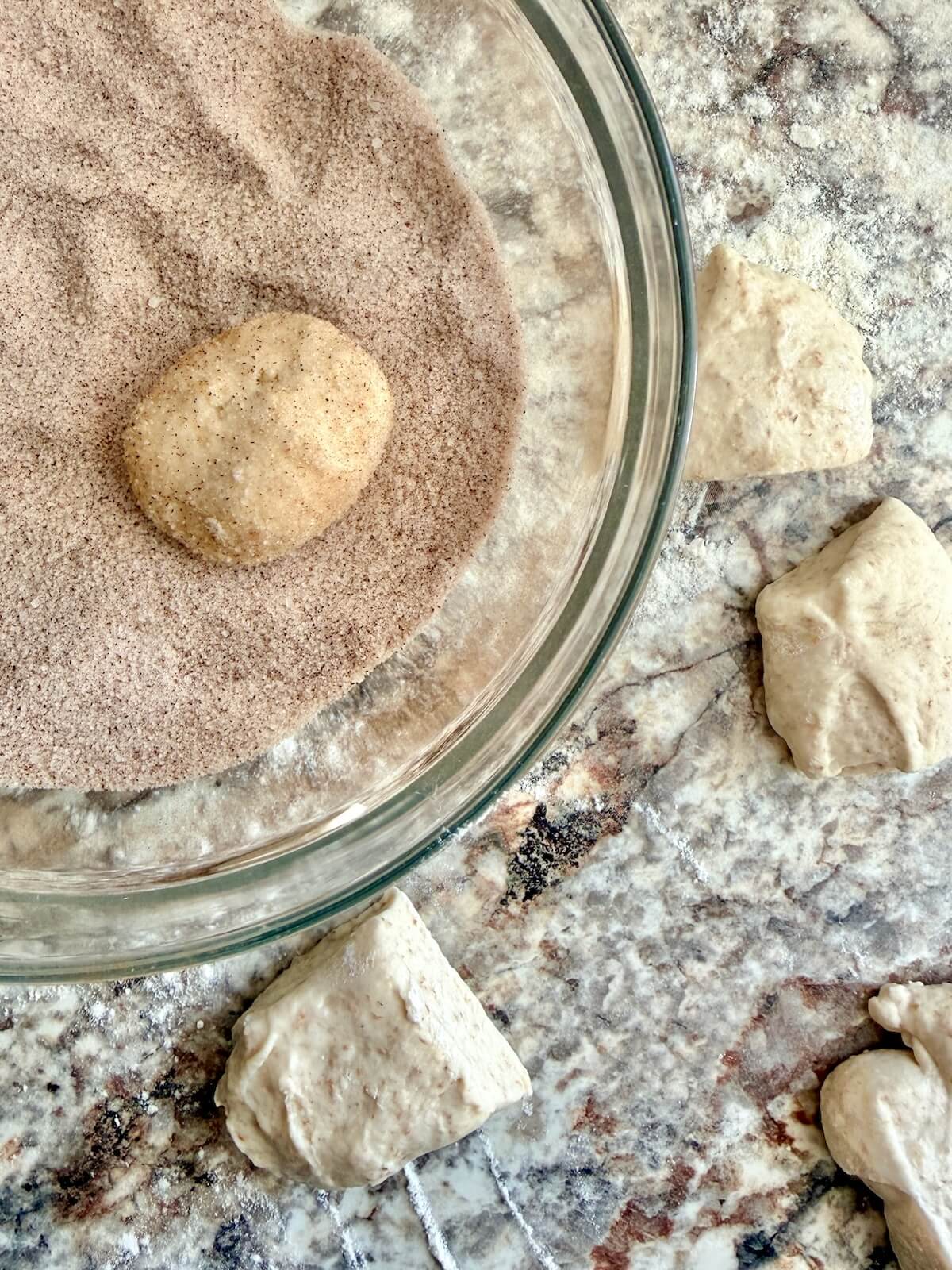
Step 5: Shape + roll in cinnamon sugar. Turn the dough onto a floured surface and divide into about 40 pieces. Pinch edges together, flip seam-side down, and roll into balls. Mix sugar and cinnamon. Roll each ball in the mixture and layer evenly in buttered Bundt pan.
Step 6: Proof. Cover and proof until puffy, about 1–3 hours.


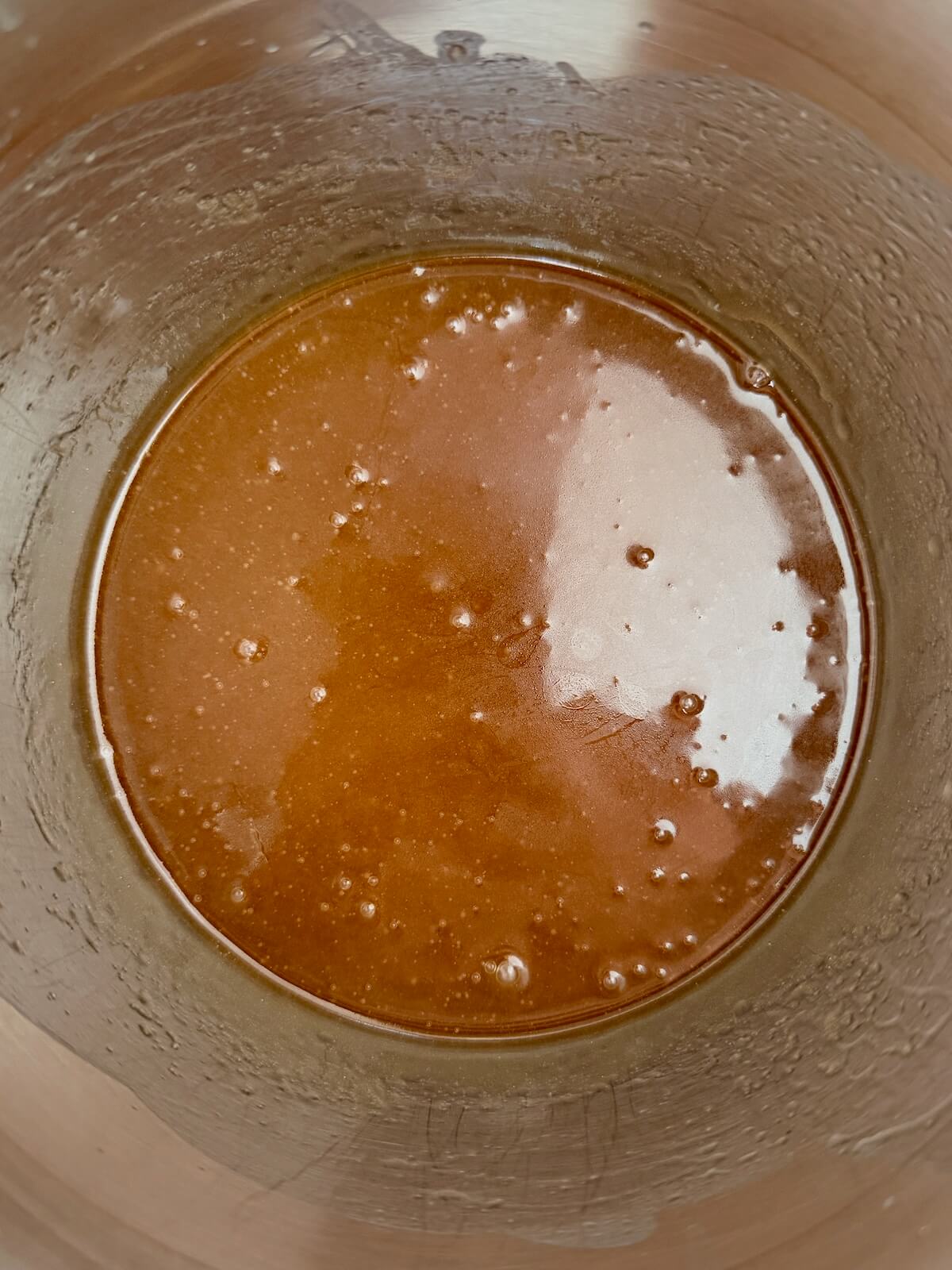
Step 7: Make glaze. Preheat oven to 350°F. In a saucepan, melt butter. Then, whisk in brown sugar and salt until smooth.
Step 8: Bake. Pour glaze evenly over dough. Bake 45 minutes, or until golden and puffed.


Step 9: Serve. Cool 10 minutes in the pan, then invert onto a plate. Cool another 20 minutes before pulling apart and enjoying warm.

Baker's Timeline
Use this sample timeline to help plan your sourdough discard monkey bread:
- 8:00 PM (Night Before): Feed your starter (if not using discard).
- 6:00–6:30 AM: Mix the dough, then rest 20 minutes.
- 6:30–7:30 AM: Complete stretch and folds.
- 7:30 AM–2:30 PM (varies): Bulk fermentation (until doubled in size).
- 2:30–3:00 PM: Shape the dough + roll in cinnamon sugar.
- 3:00–5:00 PM (varies): Proof.
- 5:00–5:45 PM: Glaze, then bake at 350°F.
- 5:45–6:15 PM: Cool before serving.
Note: Rise times can vary depending on the strength of your starter and the temperature of your kitchen and dough. Use visual cues—like when your dough has doubled in size—rather than the clock.
How to Store
Wrap any leftover monkey bread tightly in foil or keep it in an airtight container—it’ll stay fresh at room temperature for up to 2 days.
For longer storage, freeze in a freezer-safe bag for up to 3 months and thaw at room temperature.
To Reheat: Wrap in foil and warm in a 300°F oven for 10–15 minutes until soft and gooey again.
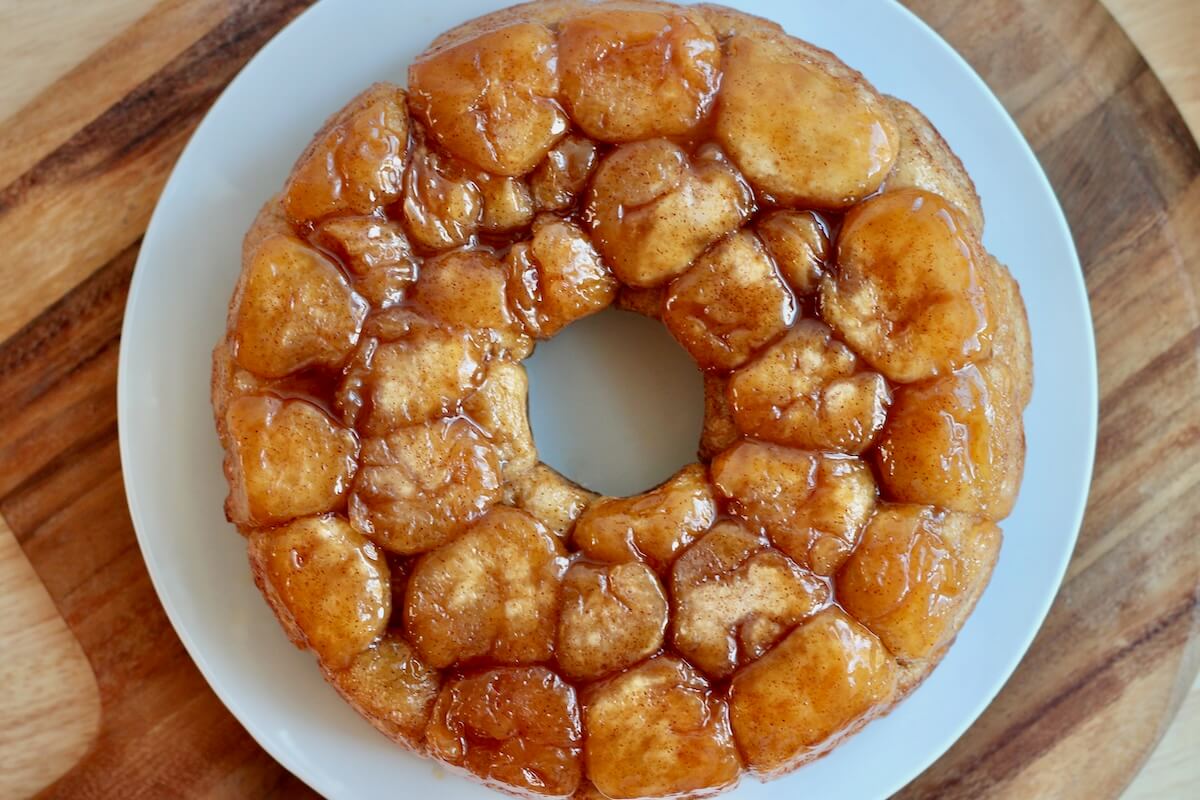

Are you tired of watching your sourdough discard go to waste?
It’s time to turn excess discard into something delicious with my new ebook - Everyday Sourdough!
Inside, you’ll find 27 tried-and-true sourdough discard recipes that will transform your leftover starter into mouthwatering creations your family and friends will love.
No more guilt about wasting your discard - with Everyday Sourdough, you have endless options to quickly make something amazing anytime.
Let's Connect!
Be sure to leave a comment below if you have any questions. You can also connect with me on Instagram, Facebook, Pinterest, or via email at [email protected].
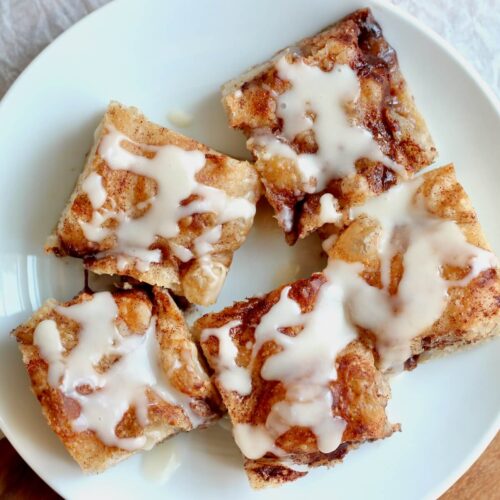

📖 Recipe
Sourdough Monkey Bread
Equipment
- Straight-sided container (optional, for bulk fermentation)
- Rimmed baking sheet (optional)
Ingredients
Dough
- 1 ⅓ cups (320 grams) warm water 80-90℉
- ½ cup (100 grams) active sourdough starter or "fresh" discard (less than 3 days old)
- 4 ¼ cups (510 grams) all-purpose flour
- 4 ¼ teaspoons (12 grams) Diamond Crystal Kosher Salt if using Morton's Kosher Salt or table salt, measure in grams or use 2 ⅛ teaspoons
Cinnamon-Sugar Coating
- ½ cup granulated sugar
- 2 teaspoons ground cinnamon
Brown Sugar Glaze
- 12 tablespoons (170 grams; 1 ½ sticks) unsalted butter
- 6 tablespoons (75 grams) brown sugar packed
- ¼ teaspoon Diamond Crystal Kosher Salt if using Morton's Kosher Salt or table salt, use ⅛ teaspoons
Instructions
- About 6–12 hours before mixing, feed your sourdough starter so it’s bubbly and active. If using discard (less than 3 days old), you can skip this step.
- In a large bowl, whisk together warm water and starter until mostly dissolved. Add the flour and salt, then mix until no dry flour remains. Cover and let rest for 20 minutes.1 ⅓ cups (320 grams) warm water, ½ cup (100 grams) active sourdough starter, 4 ¼ cups (510 grams) all-purpose flour, 4 ¼ teaspoons (12 grams) Diamond Crystal Kosher Salt
- With lightly wet hands lift one side of the dough, stretch it up as far as it will go without tearing, and fold it across the top. Rotate the bowl 90° and repeat for all four sides. Rest 15 minutes. Repeat this whole set 3 more times (4 sets total) with a 15 minute rest between each.
- Cover and bulk ferment until doubled, bubbly and jiggly, about 4–12 hours depending on kitchen temp. For easier tracking, transfer the dough to a straight-sided container and mark its starting point.
- Butter a 12-cup Bundt pan and set aside. Turn the dough out onto a lightly floured surface and divide into 40 pieces. Shape each piece into a ball by pinching all of the edges together like a dumpling, then rolling seam side down on the counter to create surface tension.
- In a small bowl, mix together the granulated sugar and cinnamon. Roll each dough ball in the mixture, then layer the coated balls evenly in the prepared Bundt pan.½ cup granulated sugar, 2 teaspoons ground cinnamon
- Cover and proof until the dough balls are noticeably puffy, about 1-3 hours depending on the temperature of your kitchen.
- Preheat oven to 350°F. Melt butter in a small saucepan over medium-low heat. Whisk in brown sugar and salt until smooth. Remove from heat.12 tablespoons (170 grams; 1 ½ sticks) unsalted butter, 6 tablespoons (75 grams) brown sugar, ¼ teaspoon Diamond Crystal Kosher Salt
- Pour the glaze evenly over the proofed dough in the Bundt pan. Place the Bundt on a rimmed baking sheet (optional, but good for catching drips). Bake 45 minutes until golden brown and puffed.
- Let cool in the pan 10 minutes, then carefully invert onto a serving plate. Let cool another 20 minutes so the glaze sets a bit before pulling apart and serving warm.
Notes
- Storage: Store leftovers in an airtight container for up to 2 days at room temperature or freeze for up to 3 months. Reheat wrapped in foil in a 300°F oven for 10-15 minutes or until soft and sticky.


Comments
No Comments