
Is your sourdough starter slow, weak, or just not rising like it should? Feeding it whole wheat flour is an easy, beginner-friendly way to strengthen it and bring it back to life.

As a sourdough food blogger, one of the most common struggles I hear about is a weak starter. Either the starter itself just isn’t doing much, or it looks bubbly and active but your loaves keep coming out of the oven flat… like total frisbees.
When someone comes to me with either of these issues, my first recommendation is almost always the same: start feeding your sourdough starter whole wheat flour.
And honestly? I’ve yet to have someone come back and tell me it didn’t help.
Keep reading to learn how feeding whole wheat flour can help turn a weak sourdough starter into one that’s strong and reliable.
Disclaimer: Some links throughout this post are affiliate links. As an Amazon Associate, I earn from qualifying purchases. You can learn more by visiting my Affiliate Disclosure Page.
What Causes a Weak Sourdough Starter?
A weak starter can show up in a few different ways. Sometimes it barely rises or takes forever to peak. Other times it looks fine in the jar but doesn’t have enough strength to lift a loaf of bread.
Most of the time, a weak starter happens because it doesn’t have enough healthy yeast and bacteria, or it’s not getting enough nutrients, especially if you’re only feeding it refined white flour.
Starters can also struggle if they’re still young, have been living in the fridge for a while, aren’t being fed consistently, or are sitting in a cooler kitchen where fermentation naturally slows down.
The good news is that you don’t need to start over or do anything complicated. In many cases, simply switching to whole wheat flour (either temporarily or long-term) can make a noticeable difference fast.
Why Whole Wheat Flour Helps Strengthen Starter
Whole wheat flour can give your starter a boost because it contains the bran and germ—the outer parts of the grain where more wild yeast and bacteria naturally live. These are the same microorganisms we’re trying to cultivate in our starter.
Feeding with whole wheat isn’t so much about giving your starter more food as it is adding more helpers to the mix. It's kind of like inviting friends over to help build a house. The more helpers you have, the faster and stronger the starter can grow.
Because whole wheat flour is less processed than white flour, it often leads to a starter that’s more active, rises more predictably, and builds strength more easily.
White flour isn’t “bad” necessarily, and you absolutely can maintain a healthy starter with it. But if your starter is sluggish or your bread isn’t rising like you want, whole wheat flour is a simple way to give it extra support.
How Much Whole Wheat Flour Should You Feed Your Starter?
The good news is there’s no one “right” way to use whole wheat flour in your sourdough starter.
Personally, I feed my starter exclusively whole wheat flour. It keeps my starter strong, predictable, and ready to bake whenever I need it. That said, you don’t have to do what I do.
Here are a few easy ways to use whole wheat flour, based on the flavor you like and how you want to feed your starter:
- Occasional whole wheat feeds: Ideal if you like a mild, white sourdough bread and only want to use whole wheat flour when your starter seems sluggish or needs a little help.
- 100% whole wheat flour: Best if you like a more tangy sourdough and don’t want to think about juggling multiple flours. It keeps your starter strong and consistent with very little guesswork.
- 50/50 whole wheat + all-purpose or bread flour: A good option if you prefer a milder tang and want your bread to stay as close to white sourdough as possible, while still giving your starter a boost.
Does Whole Wheat Flour Change the Taste of Your Bread?
This is one of the biggest questions I hear, and the short answer is: probably not.
Even if you feed your starter with whole wheat flour, the amount of starter in a typical loaf is small compared to the total flour in the dough. That means the actual “whole wheat flavor” is very mild. Even if your starter is fed 100% whole wheat.
The one thing that can change slightly is the tanginess. Starters fed with whole wheat sometimes become more acidic or tangy, which can translate to a tangier loaf. But it’s usually subtle, and fermentation time still plays a big role in how sour your bread ends up.
So, feeding whole wheat is mainly about strengthening your starter, not changing the flavor of your bread. You can still bake mild, white sourdough loaves with a whole wheat–fed starter without worry.
Want to bake with whole wheat flour? Check out my whole wheat sourdough recipes for delicious ways to use your newly strengthened starter.
Do You Need to Adjust Hydration When Feeding Whole Wheat?
Nope! You don’t need to change the way you feed your starter. You should still use equal parts flour and water by weight, just like you normally do.
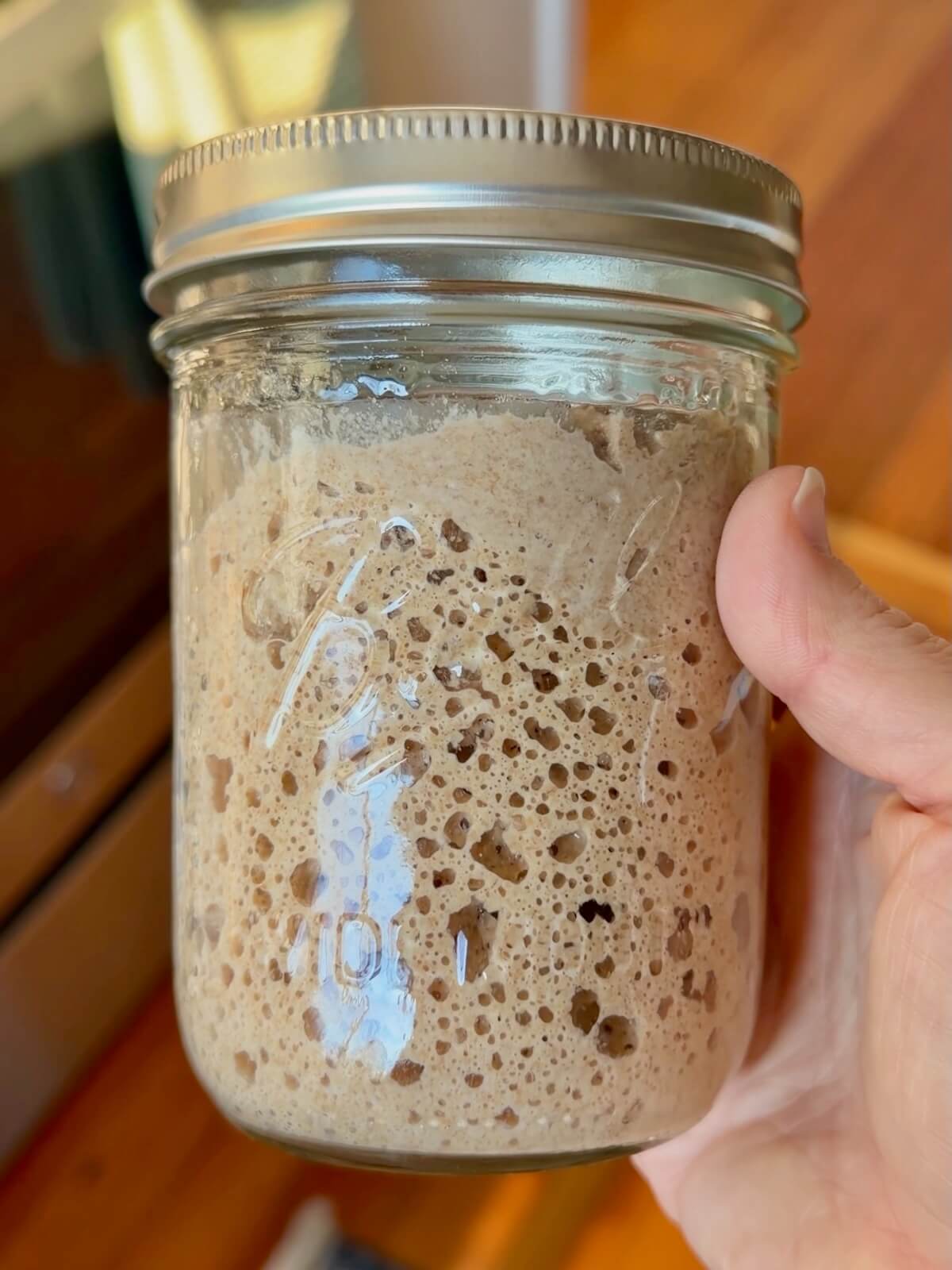
Whole wheat flour absorbs more water than white flour, so your starter might feel a little thicker or denser at first. That’s completely normal. Tt’s not a problem, and it won’t hurt the starter. It will still bubble, rise, and behave like a healthy starter should.
If you’re feeding using volume measurements instead of weight, just stick with the ratio you normally use (i.e. ½ cup flour to ¼ cup water). Your starter might look a bit drier than usual, but it will still work just fine.
Can You Use Other Whole Grains Like Rye Flour?
Yes! Rye flour works really well for giving your starter a boost.
Like whole wheat, it naturally contains more of the wild yeast and bacteria we’re trying to cultivate, so it can make your starter more active.
Rye tends to ferment a bit faster than whole wheat, so your starter may rise more quickly and smell tangier. Some bakers like to mix rye with other flours, while others feed 100% rye for a short period to revive a sluggish starter.
The good news is you don’t have to stick to one grain.
Whole wheat, rye, or even a mix can all help strengthen a starter. Whole wheat is usually easier to find and works consistently, which is why I recommend it most of the time.
But if you’re curious, experimenting with rye can be fun too. And if you want to try baking with it, check out my sourdough rye bread recipe.
How Quickly Will You See Results?
The good news is that feeding whole wheat flour can give your starter a noticeable boost pretty quickly.
Sometimes you’ll see activity the same day. For most, though, it usually takes 1–3 days of regular whole wheat feeding to notice a real difference.
Here are a few signs that your starter is bouncing back:
- Rises faster than it did before
- Has more bubbles throughout the jar
- Smells cleaner with a slightly sweet, pleasant aroma
Once you start seeing these changes, your starter should be ready to bake with.
Using a Whole Wheat-Fed Starter in Recipes
The great thing about feeding your starter whole wheat flour is that you don’t need to change your recipes. You can keep baking your favorite breads just like you normally would.
A whole wheat–fed starter works perfectly for:
- Classic sourdough
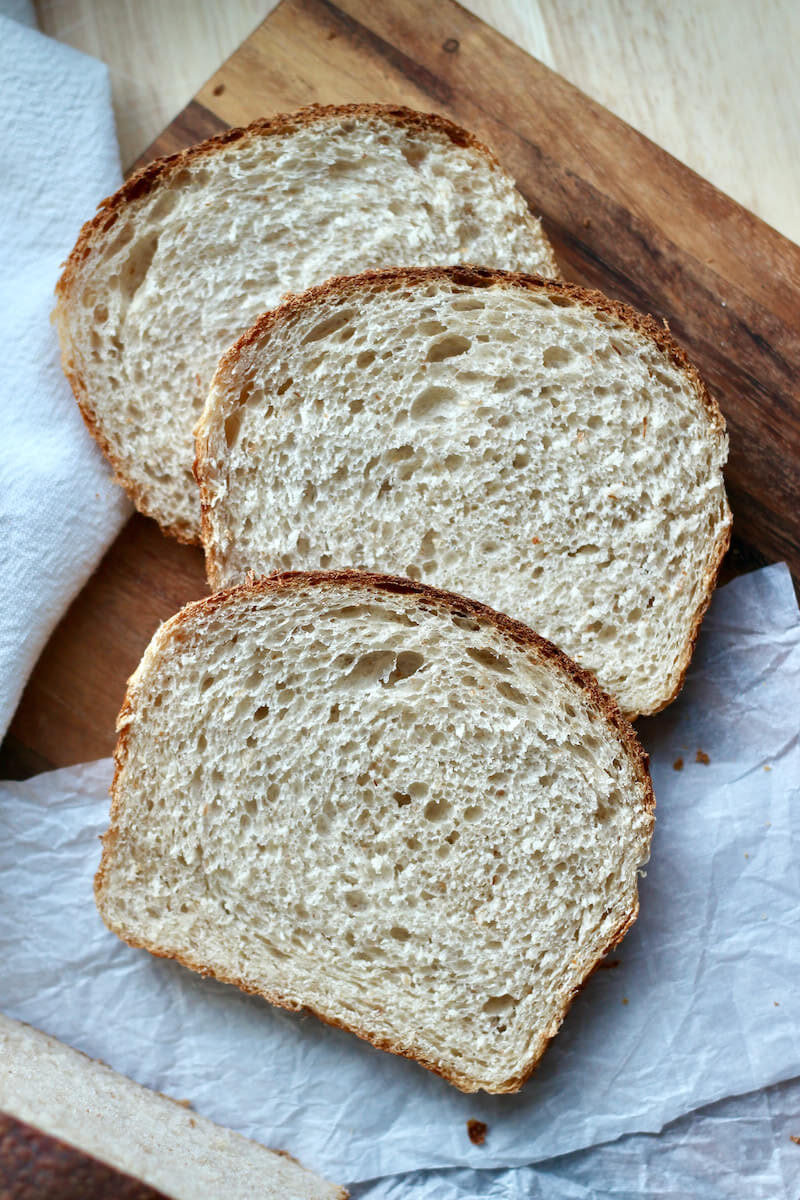
- Sourdough sandwich bread
- Discard recipes: cookies, brownies, pancakes, muffins, crackers, and more
Feeding whole wheat is really just about keeping your starter strong and active. It won’t change the style of bread you bake, so you can keep using your tried-and-true recipes without worry.
New to sourdough? My beginner’s guide will show you how to turn your whole wheat starter into a simple, delicious loaf of bread.
Conclusion
Feeding your starter whole wheat is a simple, low-stress way to give it a boost and get it happy, bubbly, and active.
You don’t have to commit to it forever. But if your starter has been struggling, I highly recommend trying it for a few feedings to see how it responds.
Before thinking about starting over, give whole wheat flour a try. It’s easy, effective, and often all it takes to help a sluggish starter bounce back and get your loaves rising beautifully.
Let's Connect!
Be sure to leave a comment below if you have any questions. You can also connect with me on Instagram, Facebook, Pinterest, or via email at [email protected].



Bo Behrens says
Hi, Ashley. Thoughts on using spelt flour to feed my starter?
Ashley Petrie, RDN, LDN says
Hi, Bo! Spelt is a great choice for sourdough starter as well 🙂
Shandy says
Hi Ashley
I’m trying to give my sourdough a boost, I’m not seeing bubbles throughout. I just fed my starter and proofed it. It did rise and has bubbles, should I leave it room temp project in fridge. I’m not using it right away.
Shandy
Ashley Petrie, RDN, LDN says
Hi Shandy! It sounds like feeding it helped make it more active if it rose/had bubbles. I'd feed it again, let it sit for an hour, then stick it in the fridge. When you want to use it, take it out a day earlier and feed it. Then feed it again to let it become active for your recipe. 🙂
Shandy says
Thank you