
This Gingerbread Sourdough Bread combines the cozy flavors of gingerbread with a tender, chewy sourdough loaf. Made with active starter, molasses, and warm spices, it’s perfect for the holiday season.
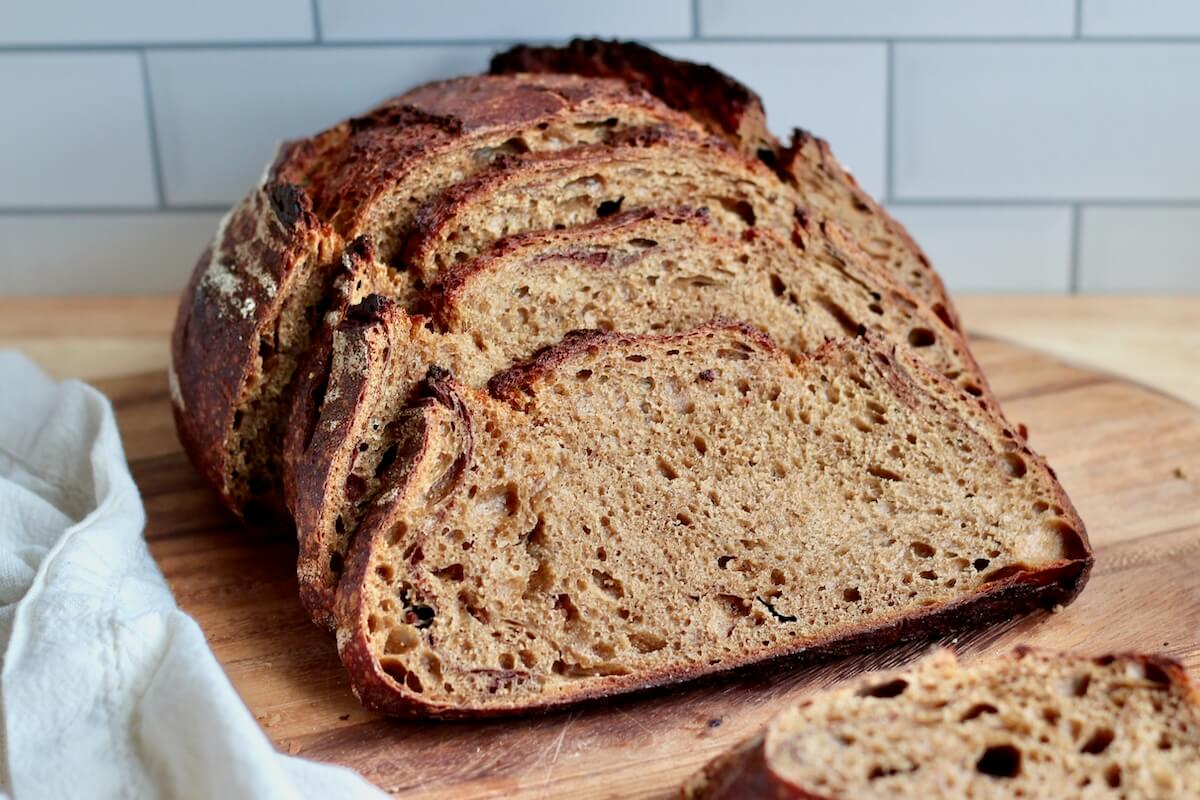
When I was brainstorming sourdough holiday recipes for the blog this year, I was a bit skeptical about turning gingerbread into a sourdough loaf. I wasn’t sure if the warm, sweet flavors would translate well into a yeasted bread. But the moment I took my first bite, I was convinced.
While not as sweet as classic gingerbread, this gingerbread sourdough bread has a lightly sweetened, warmly spiced flavor with rich molasses notes—you can definitely tell it’s gingerbread! And it's perfect for the Christmas season.
Plus, the dough for this recipe is fairly easy to work with, making it a great option for beginners.
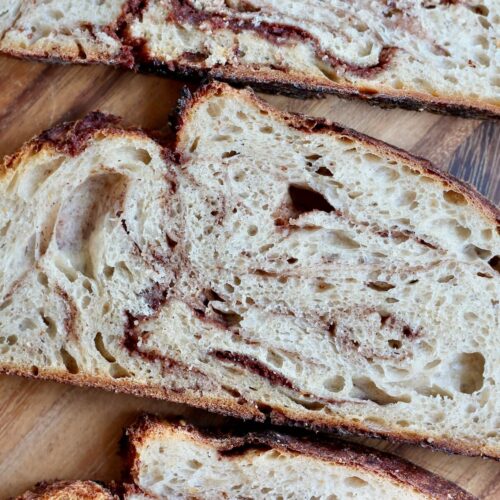
One key tip: don’t add the cinnamon to the dough, as it can inhibit yeast activity. Instead, sprinkle it in while shaping to create pretty cinnamon streaks in each slice.
Whether you’re gifting it to friends and family or slicing a loaf to toast for breakfast, this gingerbread sourdough bread is sure to make your holidays a little merrier.
Looking for more sourdough Christmas recipes? Give my sourdough monkey bread a try for a nostalgically sweet treat.
Disclaimer: Some links throughout this post are affiliate links. As an Amazon Associate, I earn from qualifying purchases. You can learn more by visiting my Affiliate Disclosure Page.
Ingredients & Substitutions
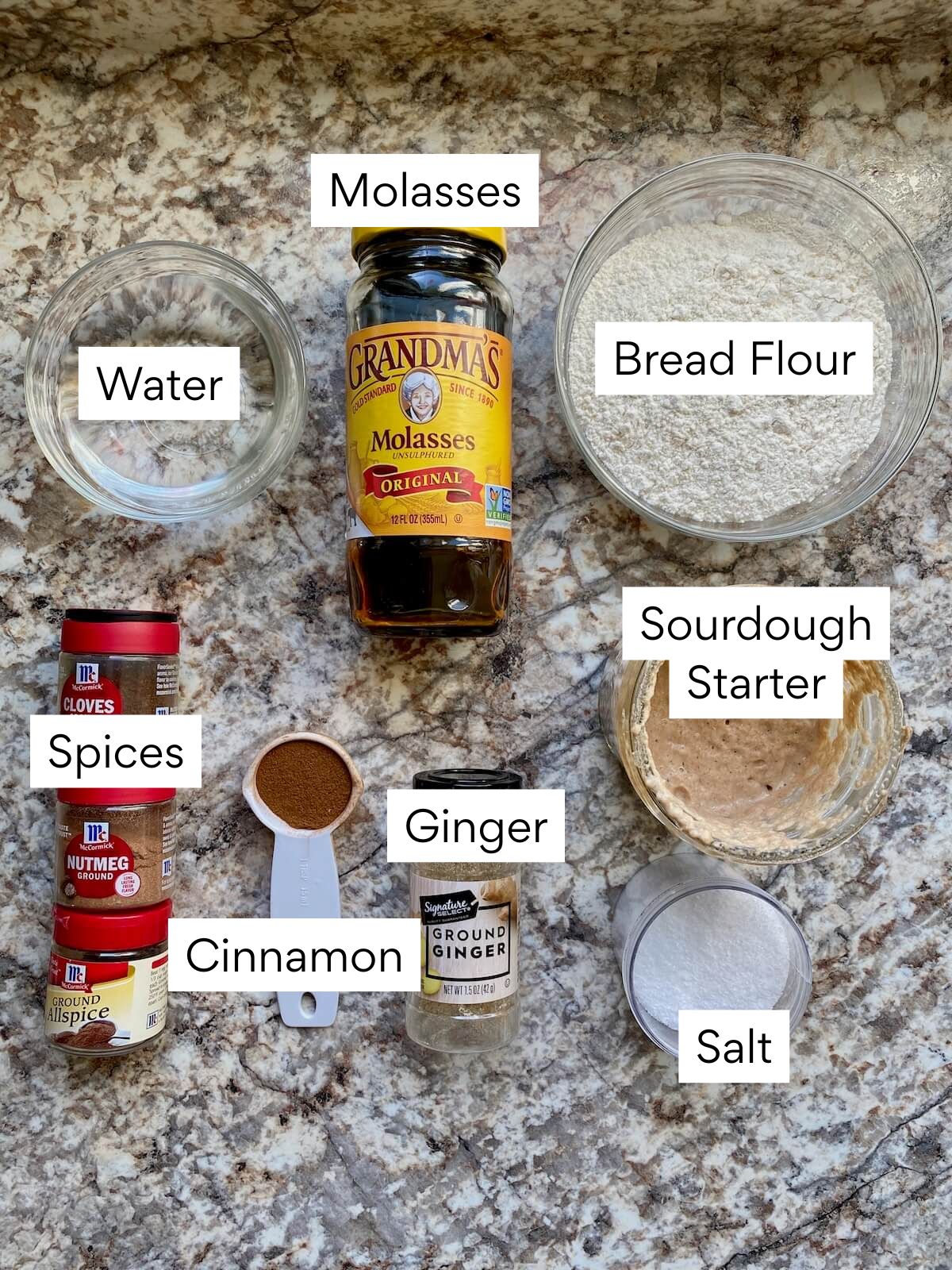
Here are some notes on key ingredients. For a full list of ingredients, check out the recipe card below.
- Active Sourdough Starter- Your starter should be bubbly and active before mixing the dough. If you only have fresh sourdough discard (1–2 days old), you can use it, but the dough may take longer to rise.
- Unsulphered Molasses- Provides rich, deep sweetness and that classic gingerbread flavor.
- Spices- A blend of ginger, cinnamon, allspice, cloves, and nutmeg gives the bread its warm, holiday-inspired flavor. Do not add cinnamon until shaping, as it can interfere with yeast activity during fermentation.
- Bread Flour- Gives structure, chew, and a good rise. You can substitute all-purpose flour, but the loaf may be slightly less chewy and flatter.
- Water- Use lukewarm or room-temperature water to encourage fermentation. You can adjust slightly depending on your preferred dough hydration and the humidity in your kitchen.
- Kosher Salt- Enhances flavor. I use Diamond Crystal Kosher Salt (2.8 grams per teaspoon). If you’re using Morton’s or table salt, use half as much or weigh it for best results.
Tips for Success
- Use an active starter. A well-fed, bubbly starter gives your dough the strength it needs for a good rise and a soft, open crumb.
- Weigh your ingredients. Using a kitchen scale ensures accuracy and helps you achieve the right dough hydration and texture.
- Hold off on the cinnamon. Adding it too early can interfere with yeast activity, affecting fermentation and rise.
- Be patient during bulk fermentation. Wait until the dough is puffy and nearly doubled. This step is key for a light, airy crumb.
- Build tension when shaping. A taut surface helps the loaf hold its shape and rise beautifully in the oven.
- Don’t skip the cold proof. Refrigerating the shaped dough develops flavor and makes scoring cleaner and easier.
- Cool completely before slicing. Allowing the bread to rest fully ensures the crumb sets and avoids a gummy interior.
How to Make Gingerbread Sourdough Bread
Follow these step-by-step instructions with photos to see exactly how to make gingerbread sourdough bread.
Step 1: Feed starter. Make sure your sourdough starter is bubbly and active by feeding it 6–12 hours before mixing the dough.

Step 2: Mix the dough. In a large bowl, whisk warm water, starter, and molasses. Add flour, salt, and all spices except cinnamon. Mix until no dry flour remains, then rest 20 minutes.


Step 3: Stretch and fold. Wet your hands and fold all four sides of the dough over itself. Rest 20 minutes and repeat three more times.


Step 4: Bulk fermentation. Cover and let dough double in size. This can take 4–12+ hours.


Step 5: Shape + add cinnamon. Turn dough onto a floured surface, stretch into a rectangle, sprinkle with cinnamon. Fold like a letter, then shape into a round or oval.


Step 6: Cold proof. Place dough seam-side up in a rice-floured proofing basket. Refrigerate 12–16 hours.


Step 7: Bake. Preheat a lidded Dutch oven to 450°F. Transfer the dough on parchment into the hot Dutch oven, add 2 ice cubes for steam. Cover and bake 45 minutes. Remove the lid and bake 5–10 more minutes. Cool the loaf on a wire rack for at least 2–4 hours before slicing.


Baker's Timeline
Use this sample timeline to help plan your gingerbread sourdough bread:
- 8:00 PM (Night Before): Feed your starter.
- 8:00–8:30 AM: Mix the dough & rest 20 minutes.
- 8:30–9:30 AM: Complete stretch and folds.
- 9:30 AM–5:30 PM (varies): Bulk fermentation (until doubled in size).
- 5:30–6:00 PM: Add cinnamon + shape the dough.
- 6:00 PM–6:00 AM (Next Day): Cold proof in the fridge overnight.
- 6:00–6:45 AM: Bake at 450°F.
- 6:45–8:45 AM: Cool completely before slicing.
Note: Rise times can vary depending on the strength of your starter and the temperature of your kitchen and dough. Use visual cues—like when your dough has doubled in size—rather than the clock.
How to Store
Keep the whole loaf or slices of gingerbread sourdough bread in a bread box or airtight container at room temperature for up to 3 days.
For longer storage, slice and freeze in a freezer-safe bag for up to 3 months. Thaw at room temperature or warm in the toaster or oven before serving.
Serving Suggestions
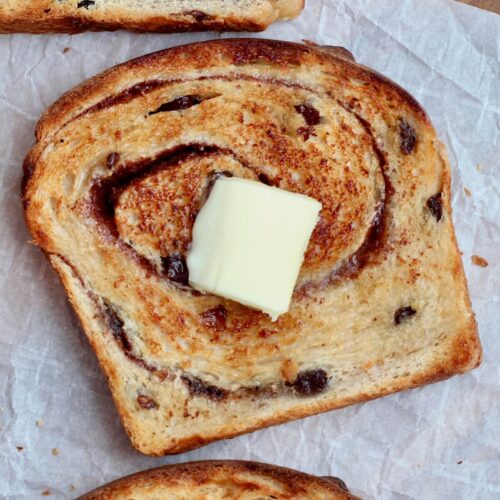
This gingerbread sourdough bread is delicious toasted with butter, cream cheese, cranberry jam, or nut butter. You can also use it for French toast or French toast casserole, sandwiches, or even cube and toast it for spiced croutons.
It also makes a lovely homemade gift for the holidays.


Are you tired of watching your sourdough discard go to waste?
It’s time to turn excess discard into something delicious with my new ebook - Everyday Sourdough!
Inside, you’ll find 27 tried-and-true sourdough discard recipes that will transform your leftover starter into mouthwatering creations your family and friends will love.
No more guilt about wasting your discard - with Everyday Sourdough, you have endless options to quickly make something amazing anytime.
Let's Connect!
Be sure to leave a comment below if you have any questions. You can also connect with me on Instagram, Facebook, Pinterest, or via email at [email protected].


📖 Recipe

Gingerbread Sourdough Bread
Equipment
- Straight-sided container (optional, for bulk fermentation)
- Proofing basket or bowl lined with tea towel
- Lame or sharp knife
- Bread sling or parchment paper
Ingredients
- 1 ¼ cups (300 grams) warm water 80-90℉
- ½ cup (100 grams) active sourdough starter
- ⅓ cup (110 grams) unsulphered molasses
- 4 cups (480 grams) bread flour
- 3 ½ teaspoons (10 grams) Diamond Crystal Kosher Salt measure in grams or reduce to 1 ¾ teaspoons if using Morton's Kosher Salt or table salt
- 1 tablespoon ground ginger
- ½ teaspoon allspice
- ½ teaspoon cloves
- ¼ teaspoon nutmeg
- 1 tablespoon ground cinnamon DO NOT mix into the dough; sprinkle into dough while shaping
- Rice flour for dusting proofing basket
- 2 ice cubes for steam
Instructions
- About 6–12 hours before mixing, feed your sourdough starter so it’s bubbly, active, and doubled in size. In a warm space (75°F) this may take 6 hours; in a cooler kitchen (65–68°F) it could take 12+ hours.
- In a large bowl, whisk together the warm water, sourdough starter, and molasses until dissolved. Add the flour, salt, and all spices except cinnamon, kneading until no dry flour remains. Cover and let the dough rest for 20 minutes.1 ¼ cups (300 grams) warm water, ½ cup (100 grams) active sourdough starter, ⅓ cup (110 grams) unsulphered molasses, 4 cups (480 grams) bread flour, 3 ½ teaspoons (10 grams) Diamond Crystal Kosher Salt, 1 tablespoon ground ginger, ½ teaspoon allspice, ½ teaspoon cloves, ¼ teaspoon nutmeg
- With lightly damp hands, lift one side of the dough, stretch it upward, and fold it over. Rotate the bowl 90° and repeat for all four sides. Gather the dough into a rough ball. Flip it seam-side down in the bowl, cover, and rest for 20 minutes. Repeat this stretch-and-fold process three more times, resting 20 minutes between sets.
- Cover the dough and let it rise until roughly doubled in size and is slightly jiggly with visible fermentation bubbles. This can take 4–12+ hours depending on your starter's strength and kitchen temperature. Using a straight-sided container can help you track the rise.
- Turn the dough onto a floured surface and gently stretch into a rectangle. Sprinkle the cinnamon evenly over the surface. Fold the long sides toward the center, then fold the short sides in (like folding a letter). Flip seam-side down and shape into a round or oval loaf. Note: this dough is shaped just once to help keep the cinnamon contained inside.1 tablespoon ground cinnamon
- Dust a proofing basket generously with rice flour and place the dough seam-side up inside. Cover and refrigerate for 12–16 hours.Rice flour
- The next day, place a lidded Dutch oven inside your oven and preheat to 450°F. Once the oven reaches temperature, let it heat another 30–60 minutes.
- Turn the dough out onto a double sheet of parchment or a bread sling (or both) to prevent the bottom from burning (molasses caramelizes quickly). You can also place a baking sheet on the rack below the Dutch oven to buffer the heat. Score the dough as desired, place 2 ice cubes in the Dutch oven for steam, and carefully transfer the dough inside using the sling or parchment. Cover with the lid and bake 45 minutes, then remove the lid and bake an additional 5–10 minutes for a deeper crust color.2 ice cubes
- Transfer the bread to a wire rack and cool for at least 2–4 hours before slicing.
Notes
- Storage: Store bread (sliced or whole) in a bread box or airtight container for up to 3 days at room temperature. Freeze sliced bread in a freezer-safe bag for up to 3 months. Defrost at room temperature or rewarm in the toaster, oven, or microwave.


Tara says
The gingerbread sourdough is in the oven as we speak! I am over-the-moon excited to try it! Thanks for the recipe! On another practical note; I was wondering what affect the ice cubes have on the texture of the crust?
Ashley Petrie, RDN, LDN says
Hi Tara! Aww I love how excited you are to try it — I hope it turns out amazing! The ice cubes help create a crisp, bubbly exterior while also keeping the crust a bit softer for longer, which can help with better oven spring. Enjoy! 🙂
Chandra says
Baked two loafs following this recipe. After stretching the dough to a rectangle and sprinkling on the cinnamon I also sprinkled on appx 2 tb of brown sugar. The flavor of the bread is very mild but good (you could probably double the spices for a spicer bread). The texture was fantastic. I found the bake time/temp way off. Had to cut the burned bottoms off both loaves. First loaf followed the 450 for 45mins plus 5min uncovered. Second loaf I decreased to 35mins plus 5 but still burnt. Next time I will try 425 for 30mins and 5 mins uncovered. Would make again.
Ashley Petrie, RDN, LDN says
Hi Chandra! I’m so glad you enjoyed the texture and would make it again. Thank you so much for sharing your feedback, it’s really helpful. I think the added brown sugar is likely why the bottoms were burning. The recipe itself only calls for cinnamon inside, and when brown sugar melts and caramelizes during baking, it can burn more easily, especially where the dough is in direct contact with the hot Dutch oven. That would explain why the bottoms browned too quickly even with a shorter bake time. Thanks again for taking the time to leave such a thoughtful comment, and I’m glad you still enjoyed the bread overall!
Chelsea says
Very happy with the flavor and texture of this loaf! Will say that I too am having to adjust time and temp. Forst loaf burned at prescribed time. Second loaf I reduced to 35 covered/5 uncovered and still have a burned bottom. May be the molasses causing that so I plan to drop my temp on the next go as I'm Excited to make a whole bunch for holiday gifts for the office!
Ashley Petrie, RDN, LDN says
Hi Chelsea! I’m so glad you loved the flavor and texture! I do think the molasses is likely playing a role here since sugars can caramelize and burn more easily on the bottom. Since I mention parchment or a bread sling in the recipe, I’ll go back and edit it to add a note about doubling up the parchment, using a bread sling if you have one, or even placing a baking sheet on the rack below the Dutch oven to help buffer the heat from the bottom. Dropping the temp a bit like you mentioned is also a solid approach. Thanks so much for the helpful feedback. I really appreciate it, and I’m glad this one’s a repeat for you!
Robin says
I mixed the dough yesterday, and it smelled wonderful! However, when I got it out of the refrigerator, the dough was very sticky and I could not transfer it to my Dutch oven as I had intended. What happened?
Ashley Petrie, RDN, LDN says
It sounds like it could have possibly overproofed. If it's summer where you are, the warmer weather (and sugar from the molasses) speeds up fermentation and even if it seems okay going into the fridge, if the dough is quite warm, it will continue to proof in the fridge. Sometimes it's best to shape it a tad early in the summer 🙂
Tamara says
Smells fantastic, but I had to take it out at 30min because it started to smell like it was burning. Uncovered, reduced the temp to 400 and baked another 5min. Next time I would start at 400 and may be able to do the 45min bake then.
Amanda Wright says
My loaf came out looking magical! I cannot wait to try it! After reading other reviews I decided to decrease the temp to 425 after the initial 450 preheating with the loaf pan. I used a cast iron loaf pan and put the two ice cubes in the bottom of it and let them melt (took about 4 seconds) and then put my dough in with a double layer of parchment. I baked at 425 covered for 35min and uncovered for 6-7 min to reach an internal temp of 205 degrees F. I did not use a pan on the rack below the bread to deflect the heat. It smells and looks amazing, and the bottom didn’t burn!
I was testing this out for the holidays and will definitely be making it again!!!
Ashley Petrie, RDN, LDN says
Hi Amanda! So glad it turned out well for you and so happy to hear you'll be making it again for the holidays! Thanks for sharing 🙂
Catherine Smith says
Delicious. Not sweet loved it toasted with unsalted butter.
Followed the recipe to the letter. Perfect
Ashley Petrie, RDN, LDN says
Hi Catherine! So glad you enjoyed it and thank you so much for sharing 🙂