
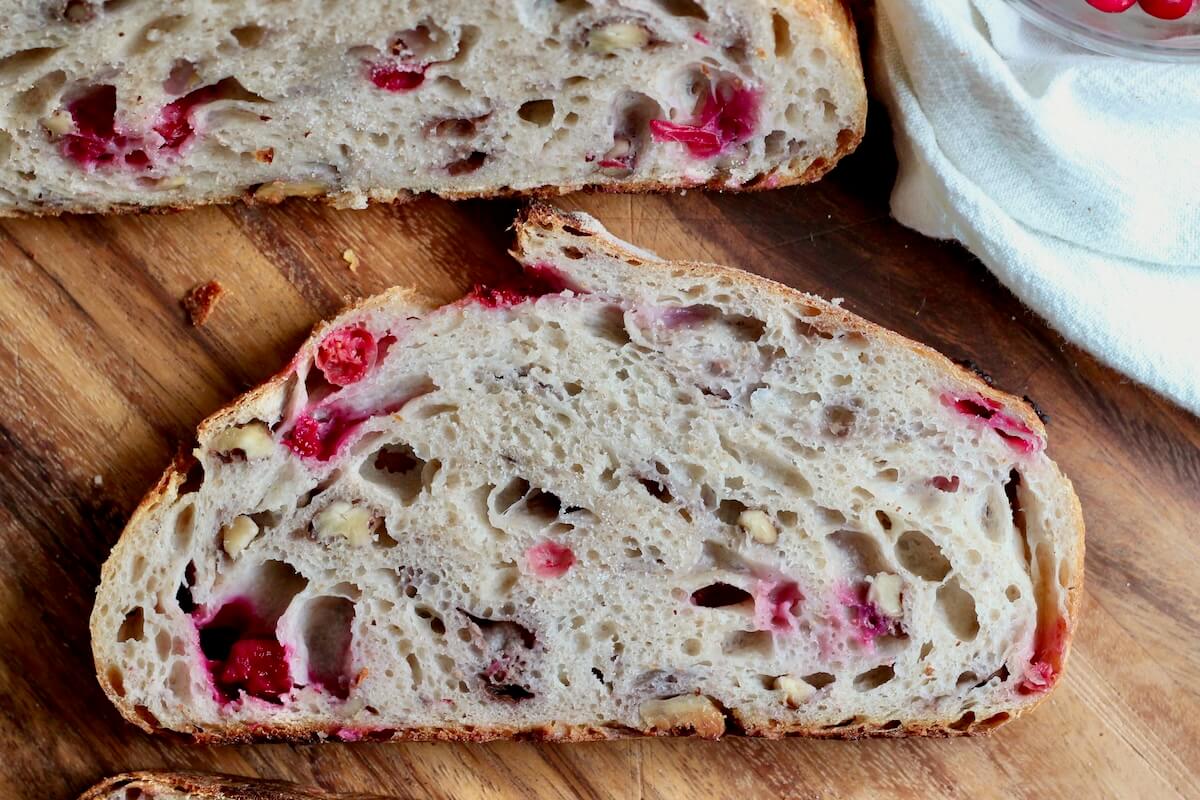
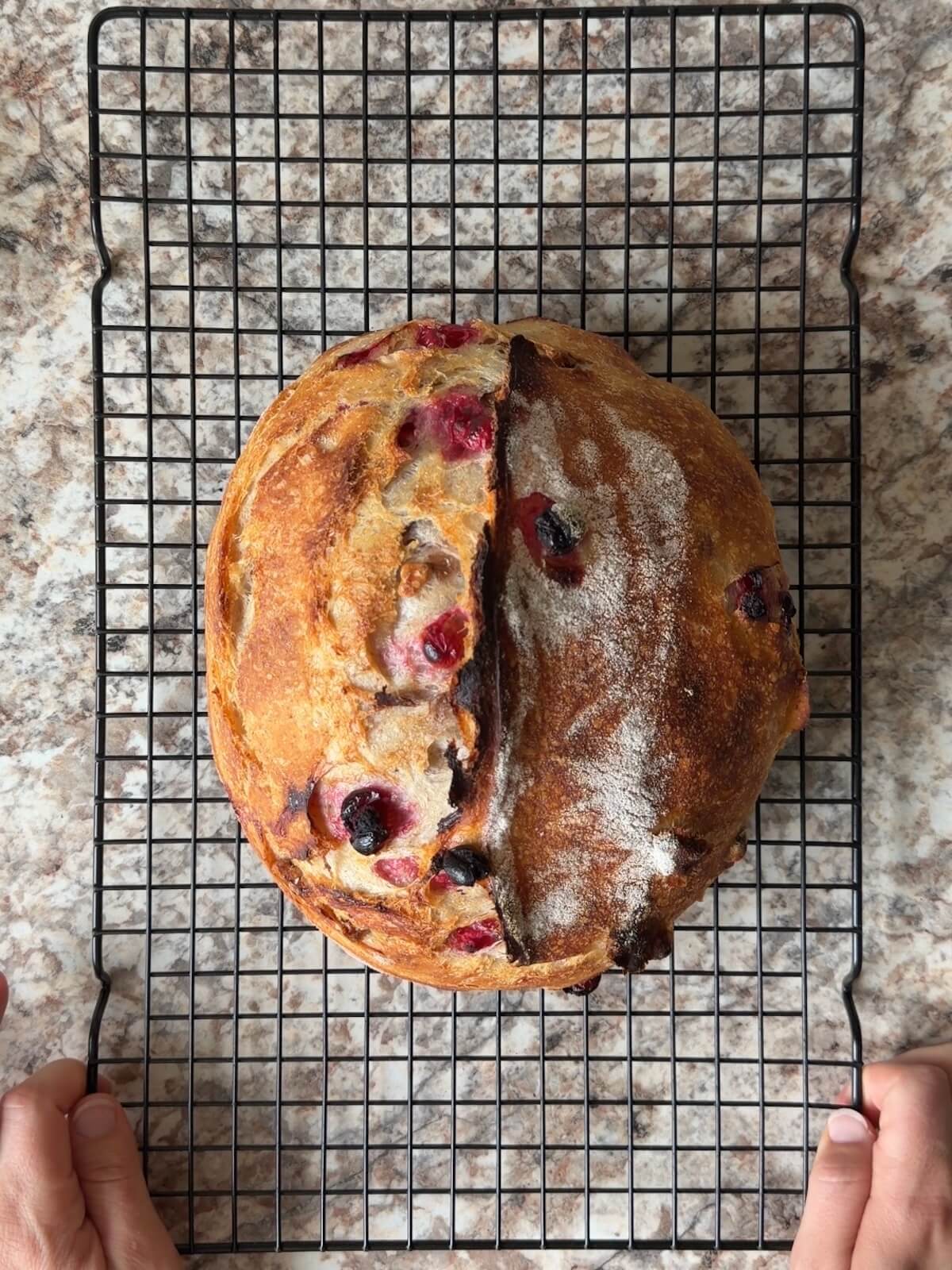
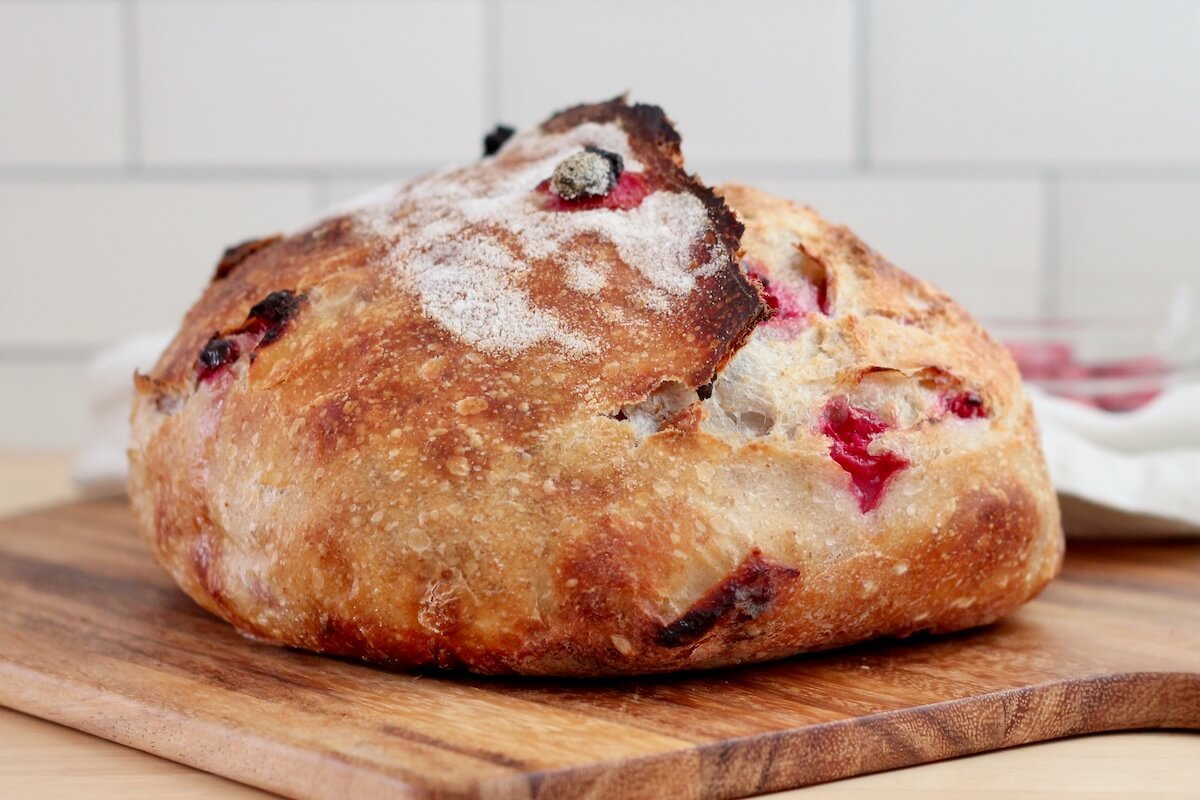
This Cranberry Walnut Sourdough Bread is loaded with dried or fresh cranberries and crunchy toasted walnuts. It’s an easy fall sourdough bread with a hearty, nutty flavor that’s perfect for baking all season long.
Have you ever seen how fresh cranberries are grown?
If you don't live somewhere with cranberry bogs, you may have never seen it! I'm lucky enough to live right next to a cranberry bog, which means every fall I get to enjoy loads of very local, very fresh cranberries.
This year, when my neighbor showed up with a big box of them, I was so excited. Not only did he give me plenty to experiment with some new sourdough cranberry recipes (coming soon!), but I could also revisit some older favorites, like this cranberry walnut loaf.
I first shared this recipe back in 2024, and it was one of the first sourdough inclusions I made and shared on the blog. It's such an easy, beginner-friendly inclusion, so needless to say, it was due for an update.
The original version uses sweetened dried cranberries. And while that version is delicious, I absolutely loved the tartness of using fresh cranberries instead. Either way, this is a fantastic fall sourdough bread for toast, sandwiches, or a charcuterie board.
I hope you give it a try and love it as much as I do!
Love cranberries? Check out my sourdough cranberry cheesecake bars or cranberry orange sourdough muffins!
Disclaimer: Some links throughout this post are affiliate links. As an Amazon Associate, I earn from qualifying purchases. You can learn more by visiting my Affiliate Disclosure Page.
Ingredients & Substitutions
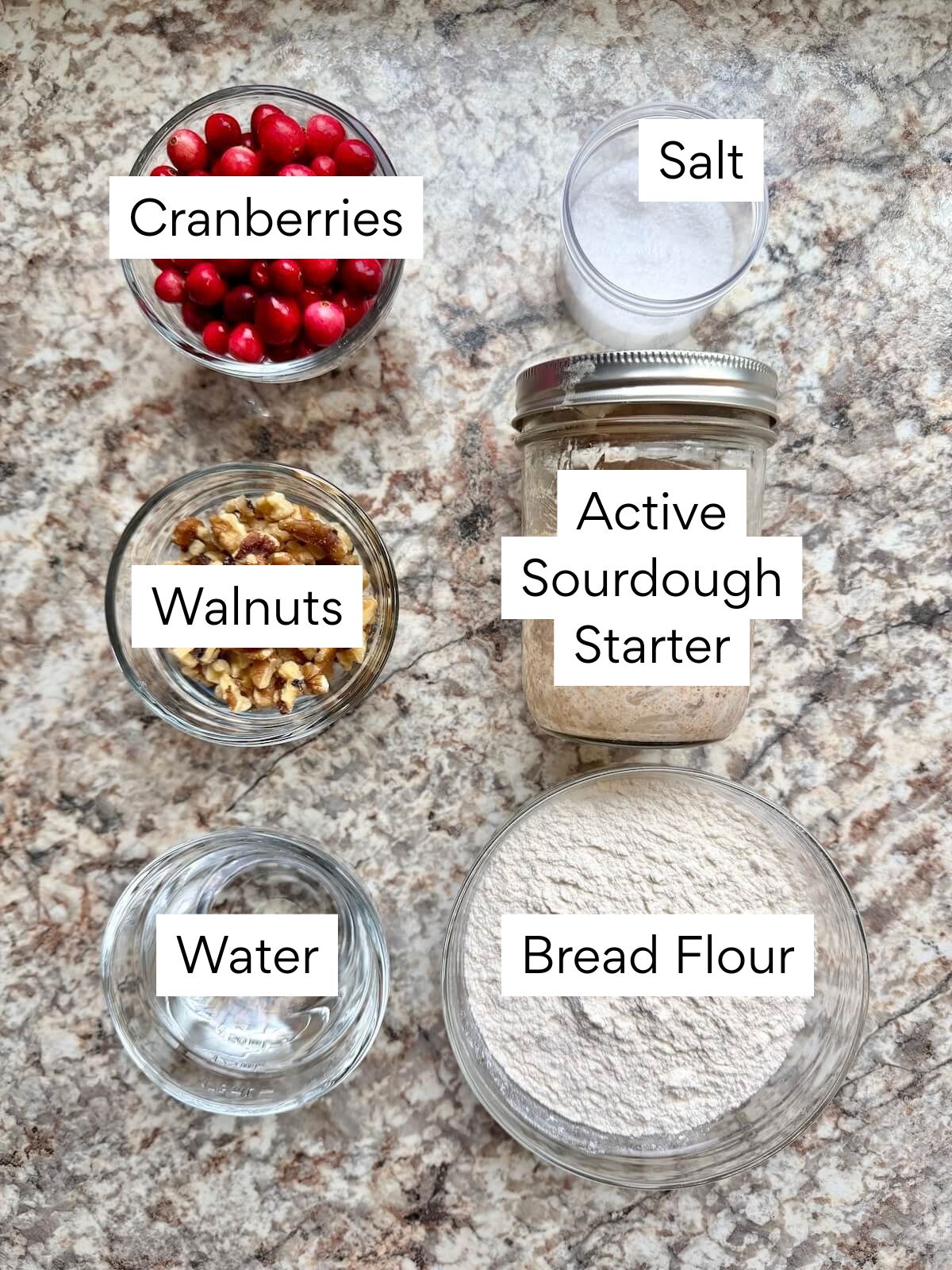
Here are some notes on key ingredients. For a full list of ingredients, check out the recipe card below.
- Active Sourdough Starter- Feed your sourdough starter 6–12 hours before making the bread. It should be active, bubbly, and at or near its peak when you’re ready to use it.
- Cranberries- You can use fresh or dried cranberries. Fresh cranberries have a more tart flavor, while dried cranberries are sweeter and add a little chewiness.
- Walnuts- Chop the walnuts into small pieces, then toast and cool them before adding them to the dough. You can substitute pecans or another nut or seed if you prefer.
- Bread Flour- Bread flour gives this loaf a chewy texture and helps it rise well. All-purpose flour can be used, though the loaf may have a slightly softer texture.
- Water- Adjust the amount slightly up or down depending on your preferred dough consistency.
- Kosher Salt- Enhances flavor and helps strengthen the dough. I use Diamond Crystal Kosher Salt (2.8 grams per teaspoon). If using Morton’s or table salt, weigh it for the most accurate measurement or use about half as much by volume.
Tips for Success
- Use an active starter. Make sure your starter is bubbly and at or near its peak before mixing the dough. A sluggish starter can make the long fermentation even longer.
- Toast and cool the walnuts first. Toasting brings out their flavor, but let them cool completely before adding them to the dough so they don’t affect fermentation.
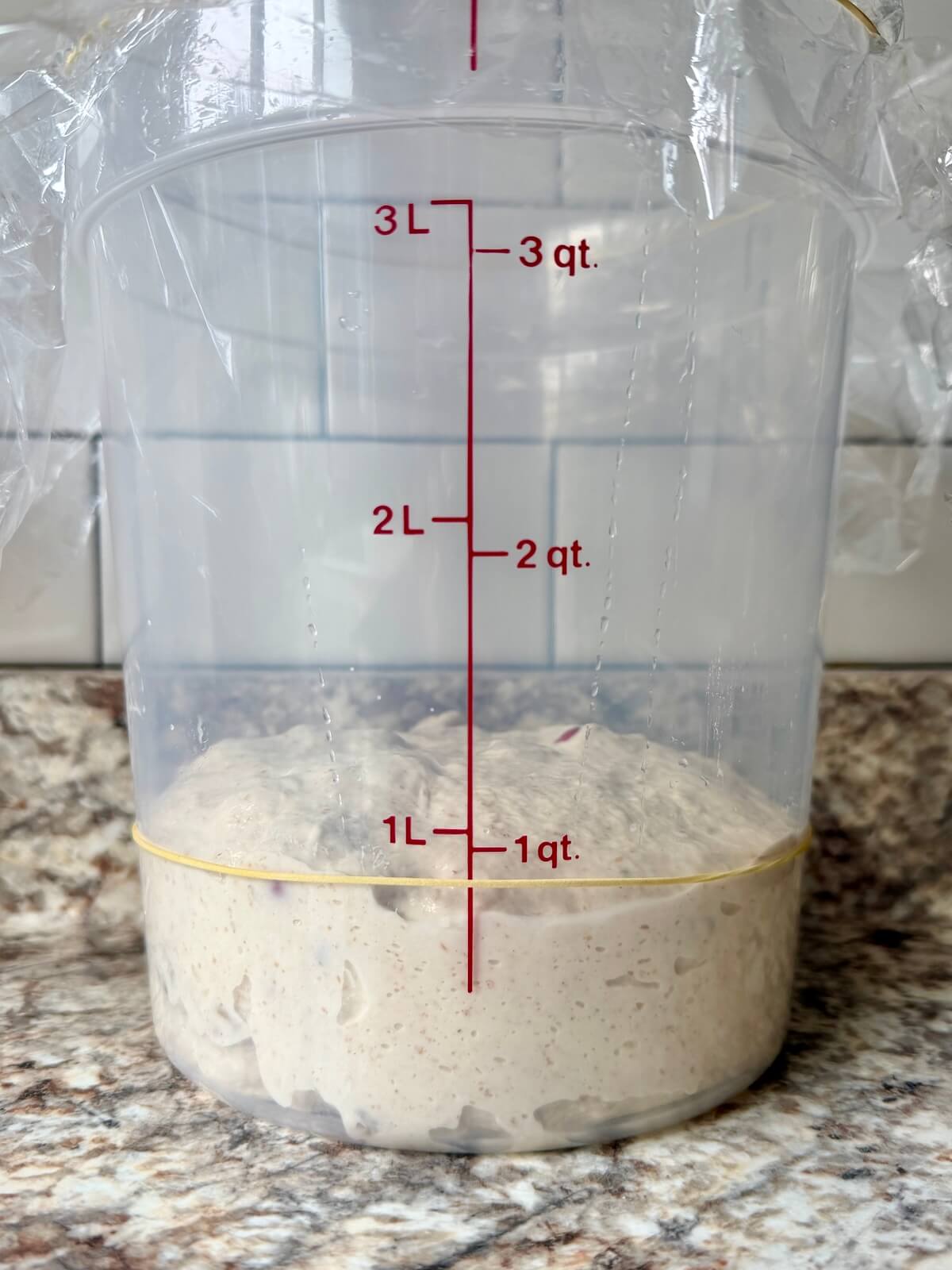
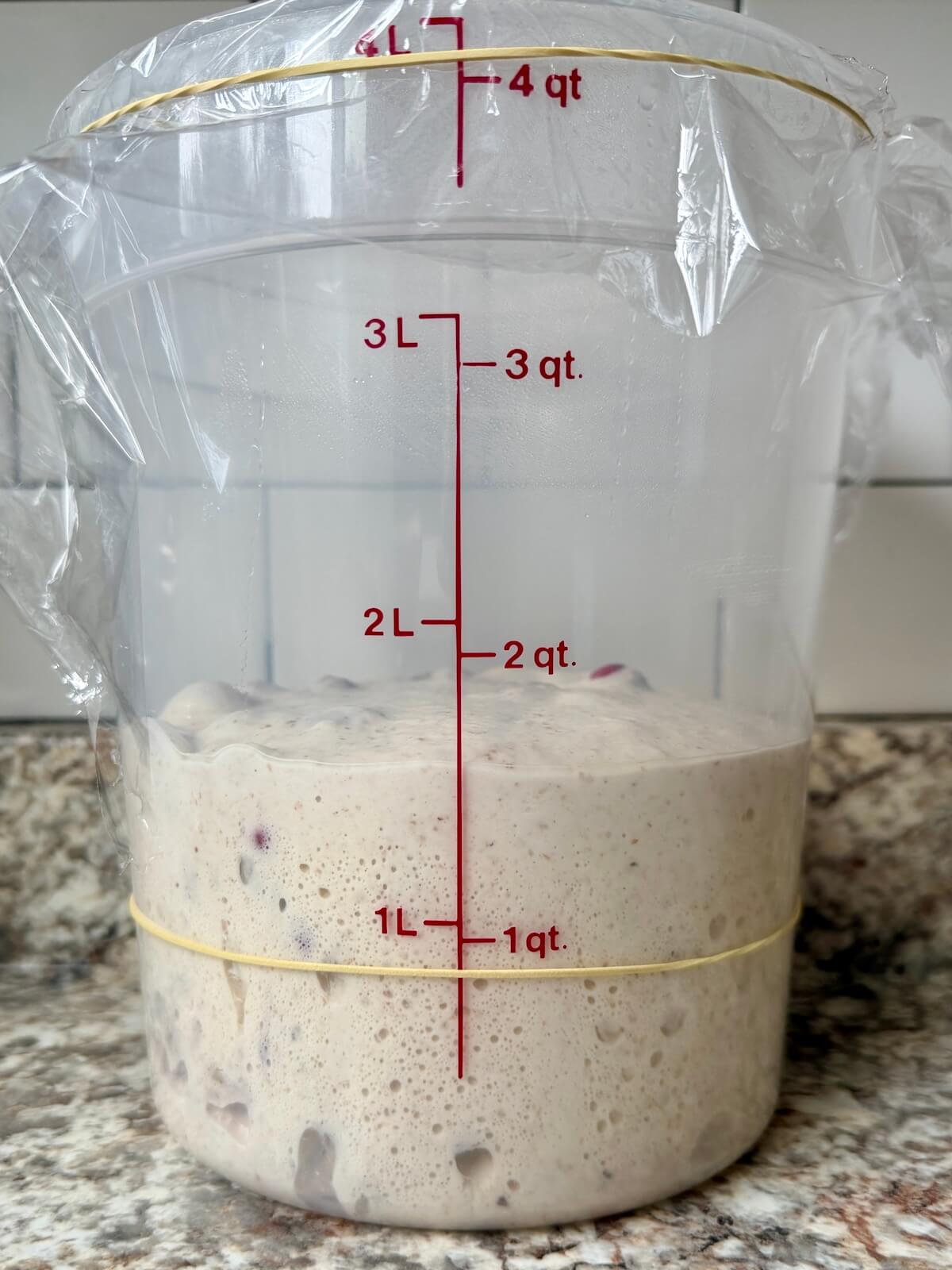
- Watch the dough, not the clock. Bulk fermentation can take anywhere from 4–12+ hours depending on your starter and kitchen temperature. Look for a dough that’s puffy, bubbly, and nearly doubled in size.
- Let it cool completely. Give the loaf at least 2 hours to cool before slicing. This allows the crumb to finish setting and gives you cleaner slices.
How to Make Cranberry Walnut Sourdough Bread
Here’s a step-by-step look at how to make sourdough bread with fresh cranberries and toasted walnuts. You’ll find the full instructions and ingredient measurements in the recipe card below!
Step 1: Feed your sourdough starter. Feed your sourdough starter 6–12 hours before mixing the dough, until bubbly and active.

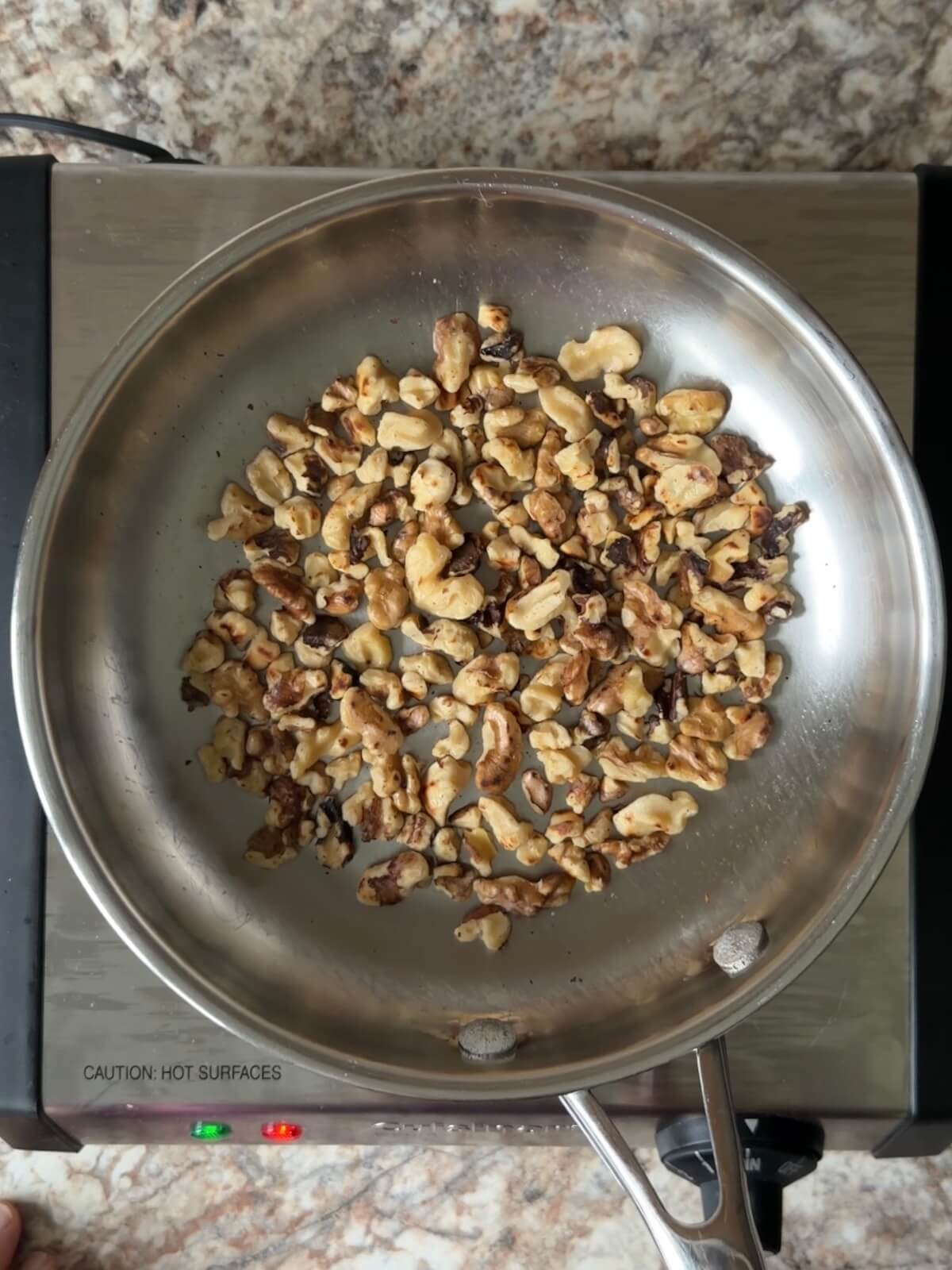
Step 2: Toast the walnuts. Toast the chopped walnuts in a skillet until fragrant and lightly golden, then let them cool.
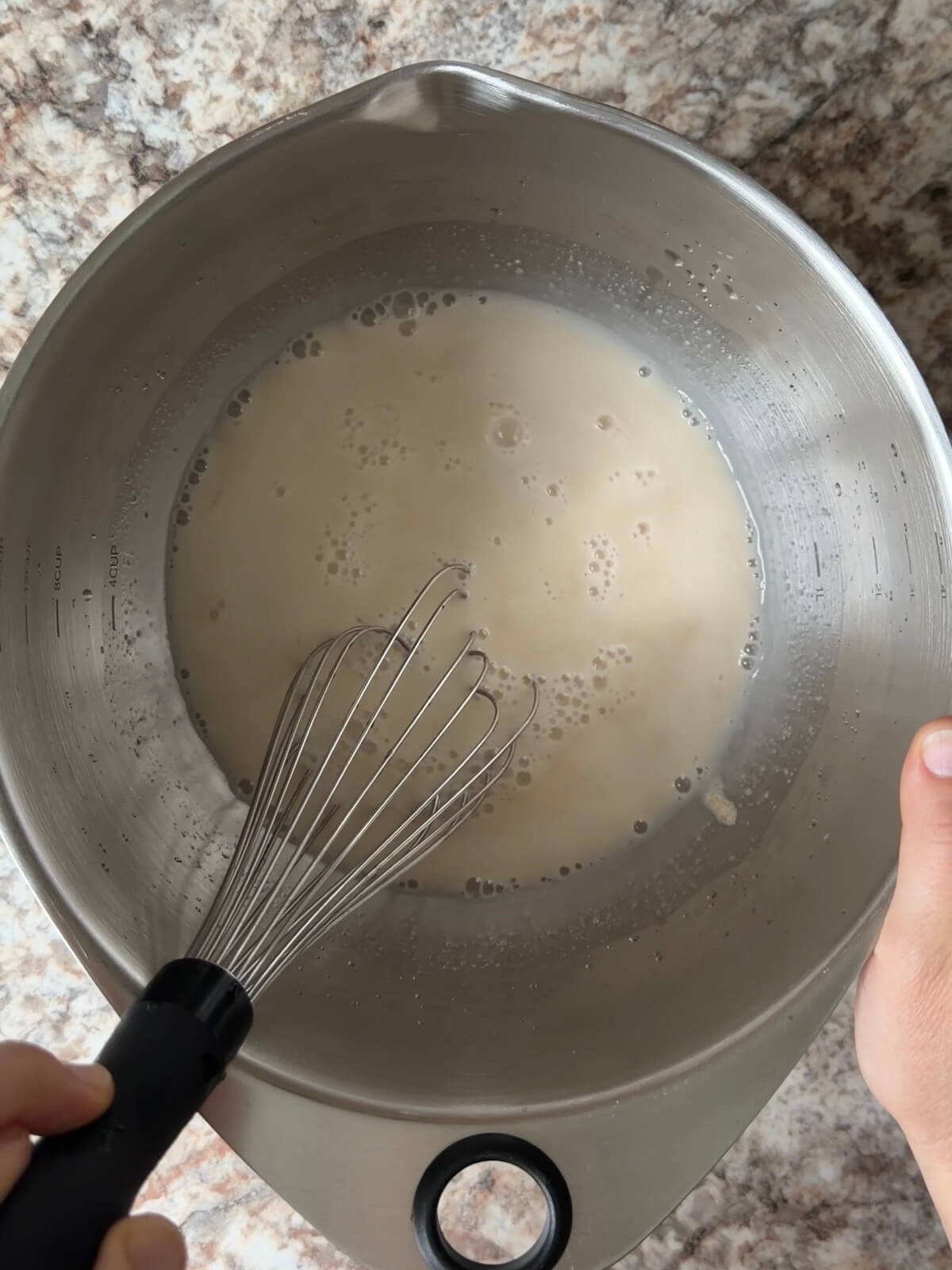
Step 3: Mix the dough. Combine the water and starter, then mix in the flour and salt. Let the dough rest for 20 minutes.
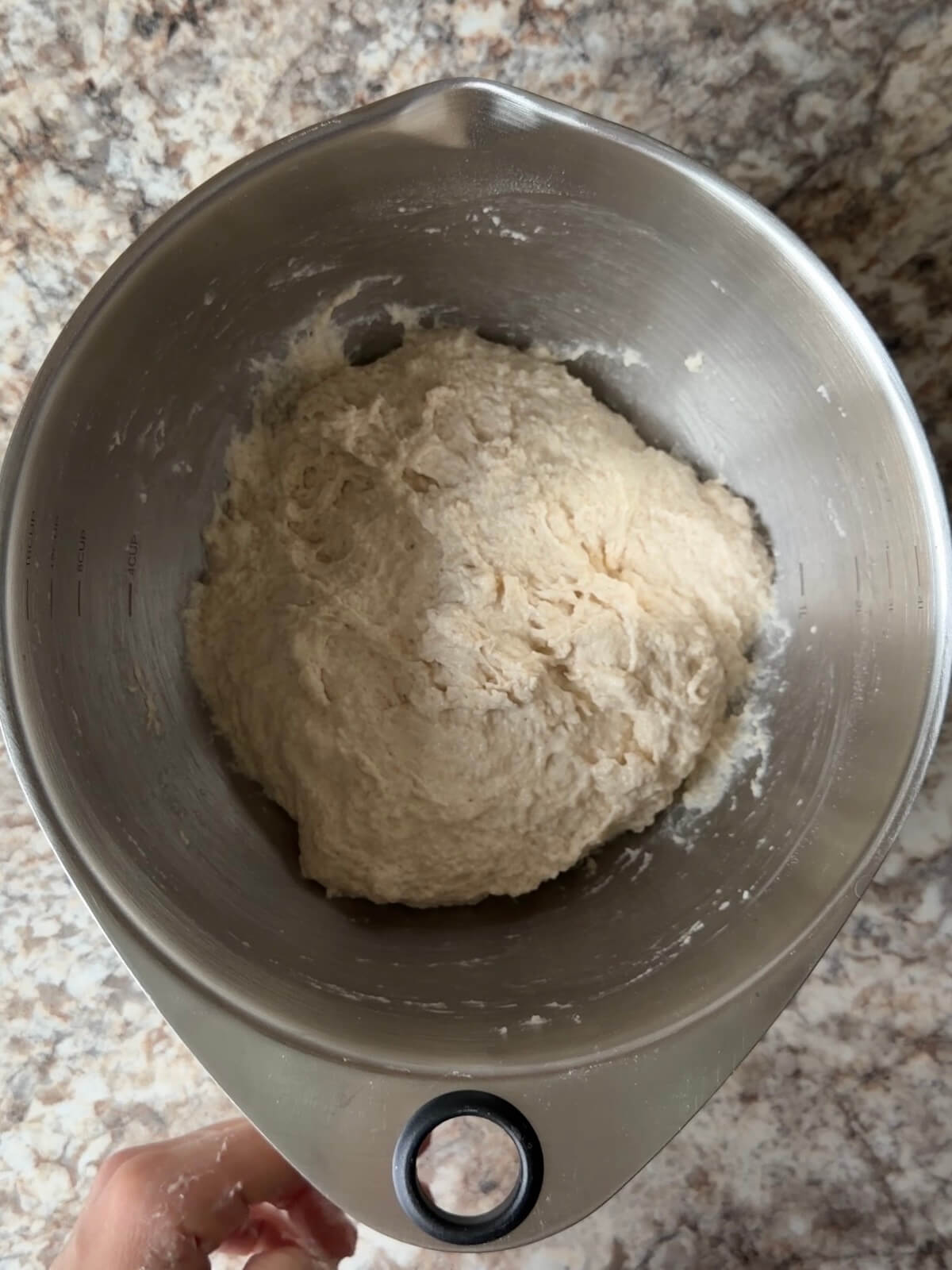
Step 4: Stretch and fold. Add the cranberries and walnuts in four portions, incorporating them with each fold. Rest 15 minutes, then repeat the stretch-and-fold process 3 more times.
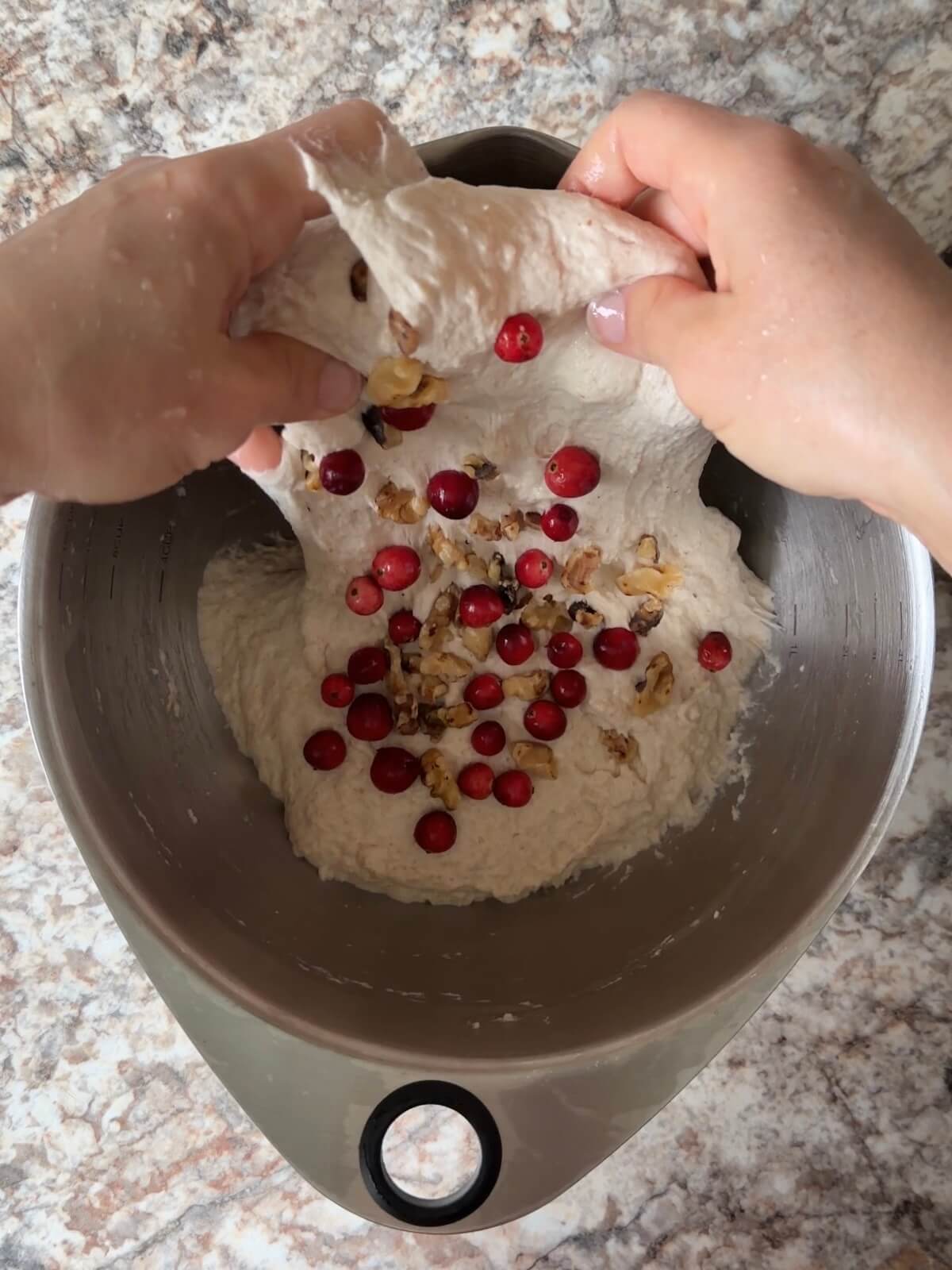
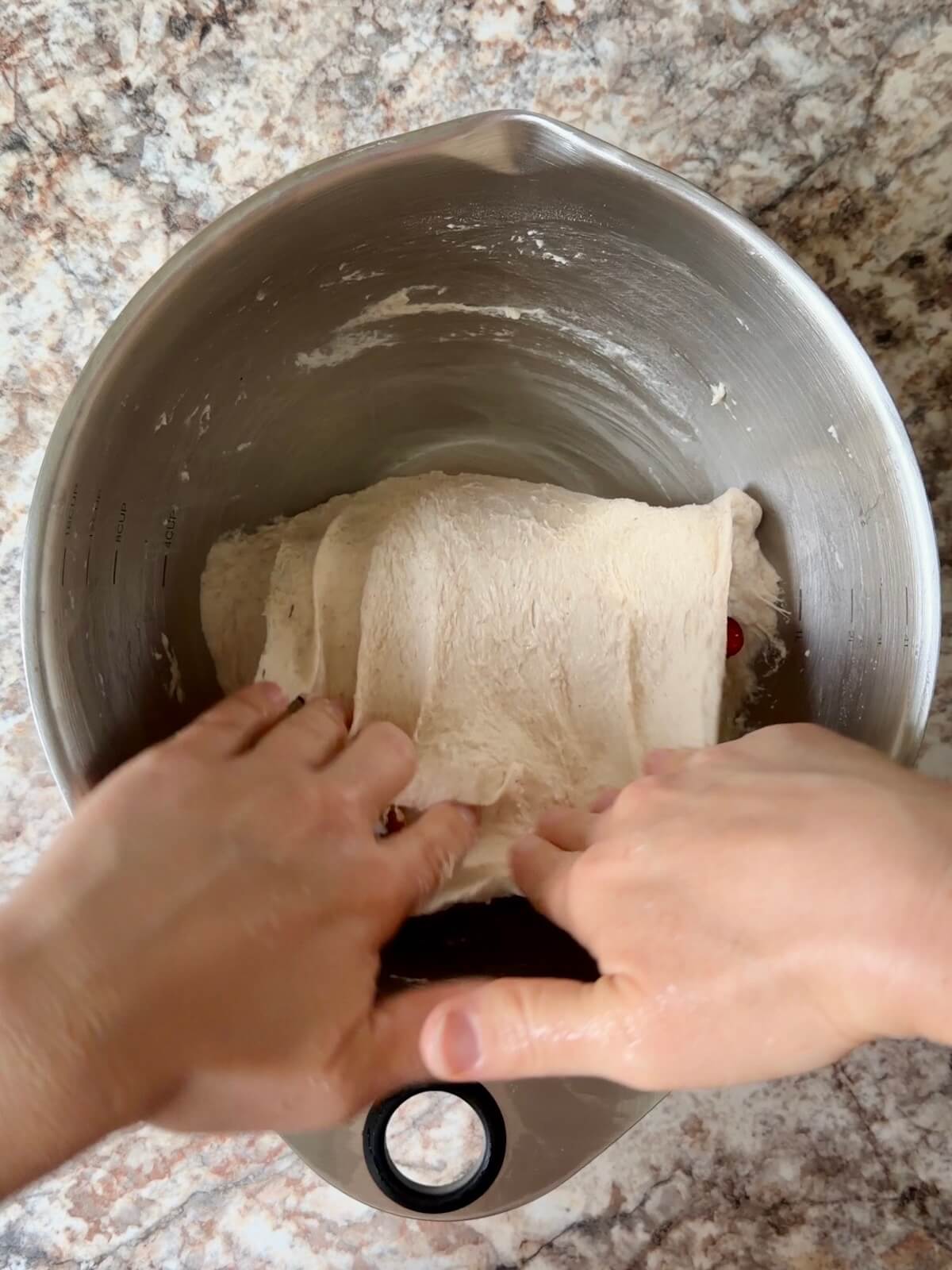
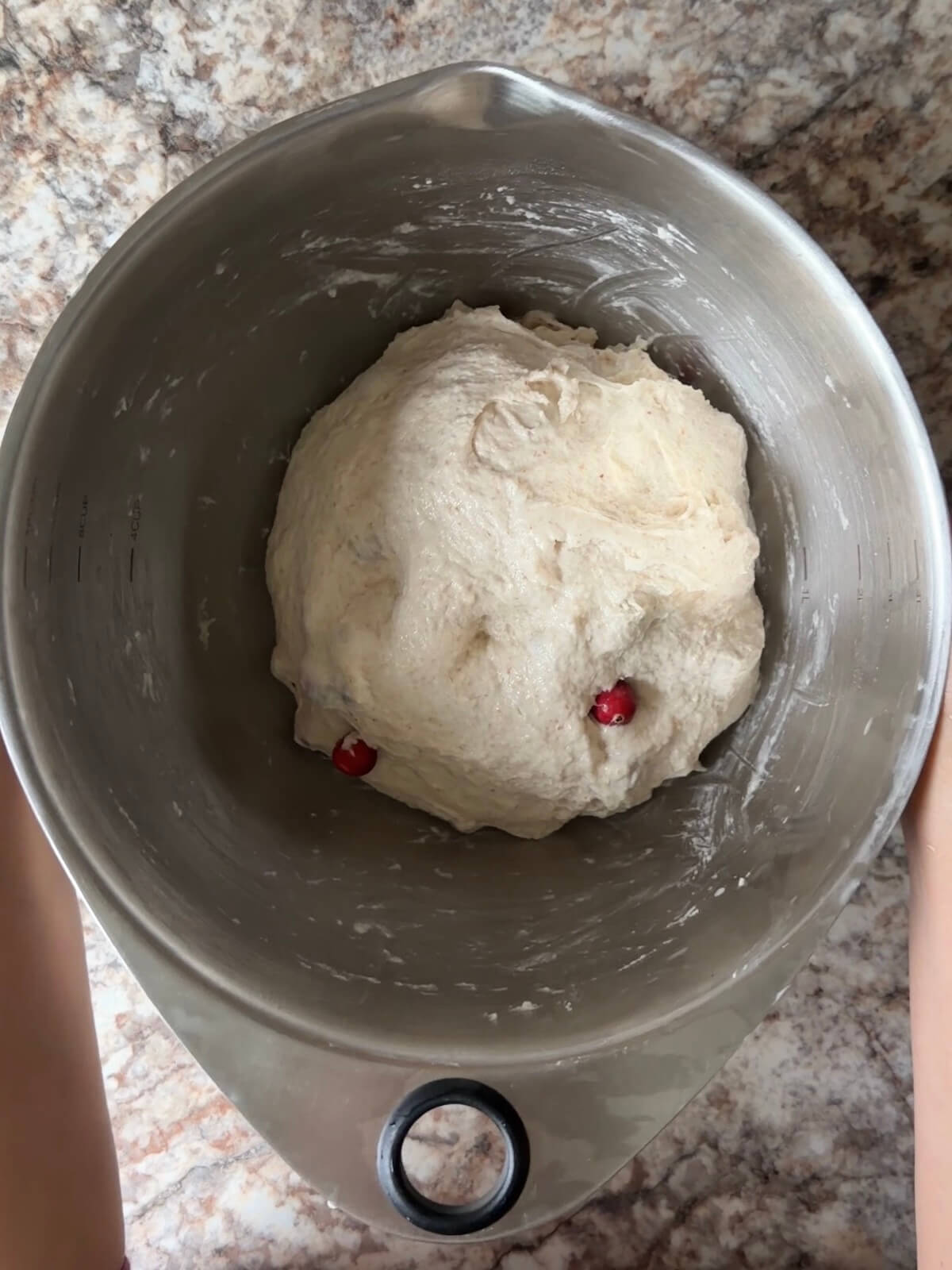
Step 5: Bulk ferment. Let the dough rise at room temperature until puffy, bubbly, and nearly doubled in size.
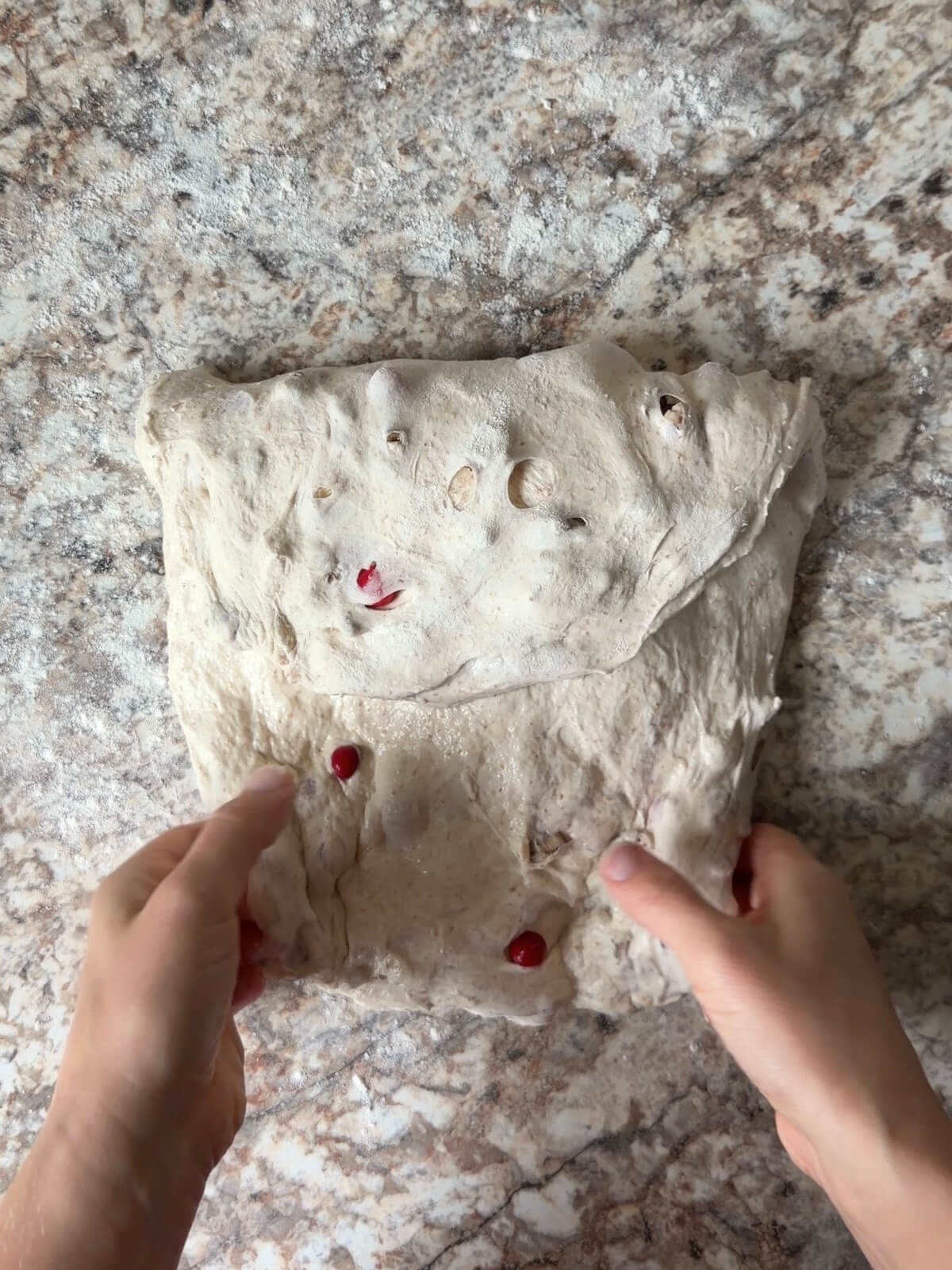
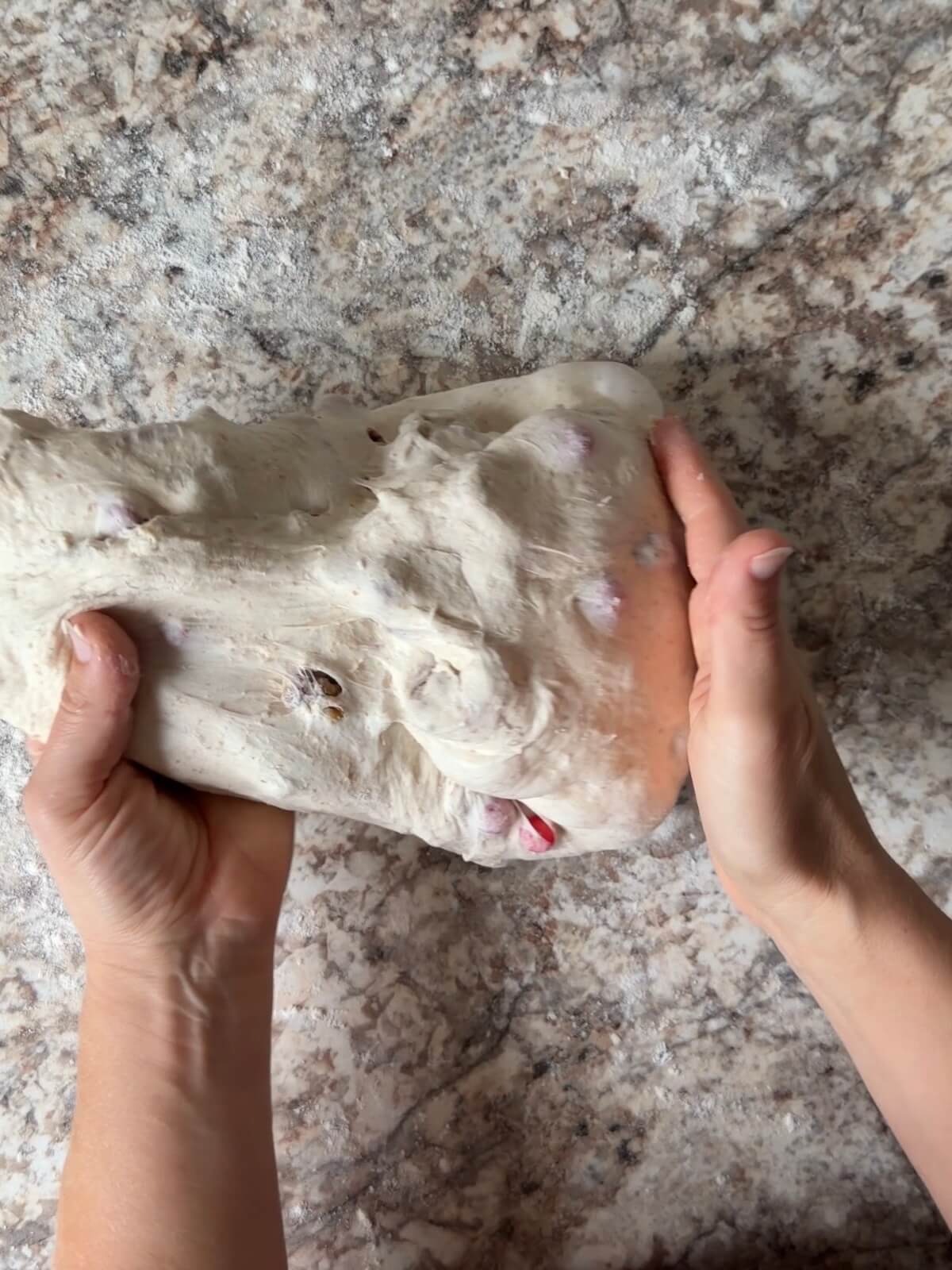
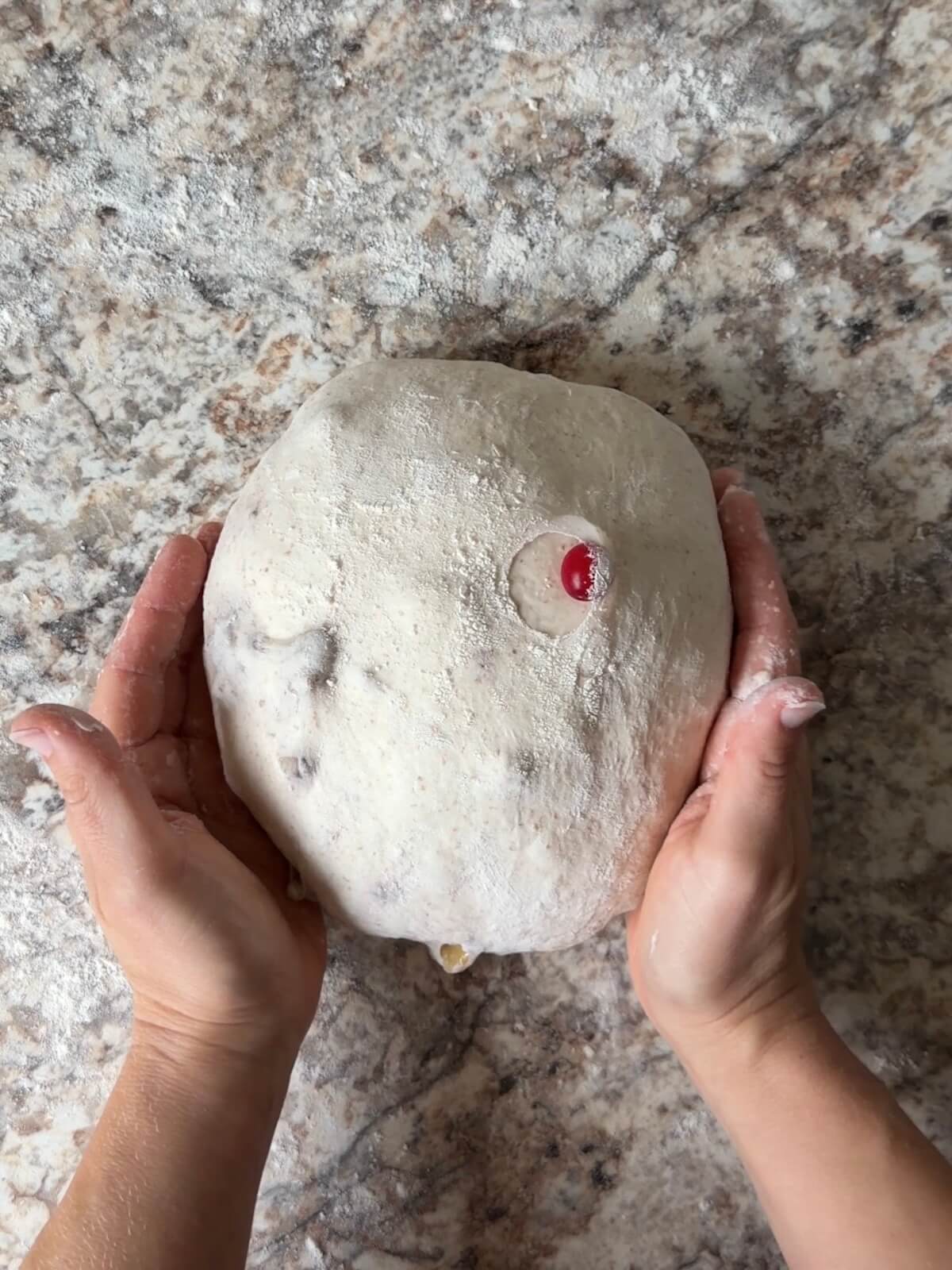
Step 6: Shape. Turn the dough onto a lightly floured surface, fold it into a tight ball, and shape until smooth and taut.
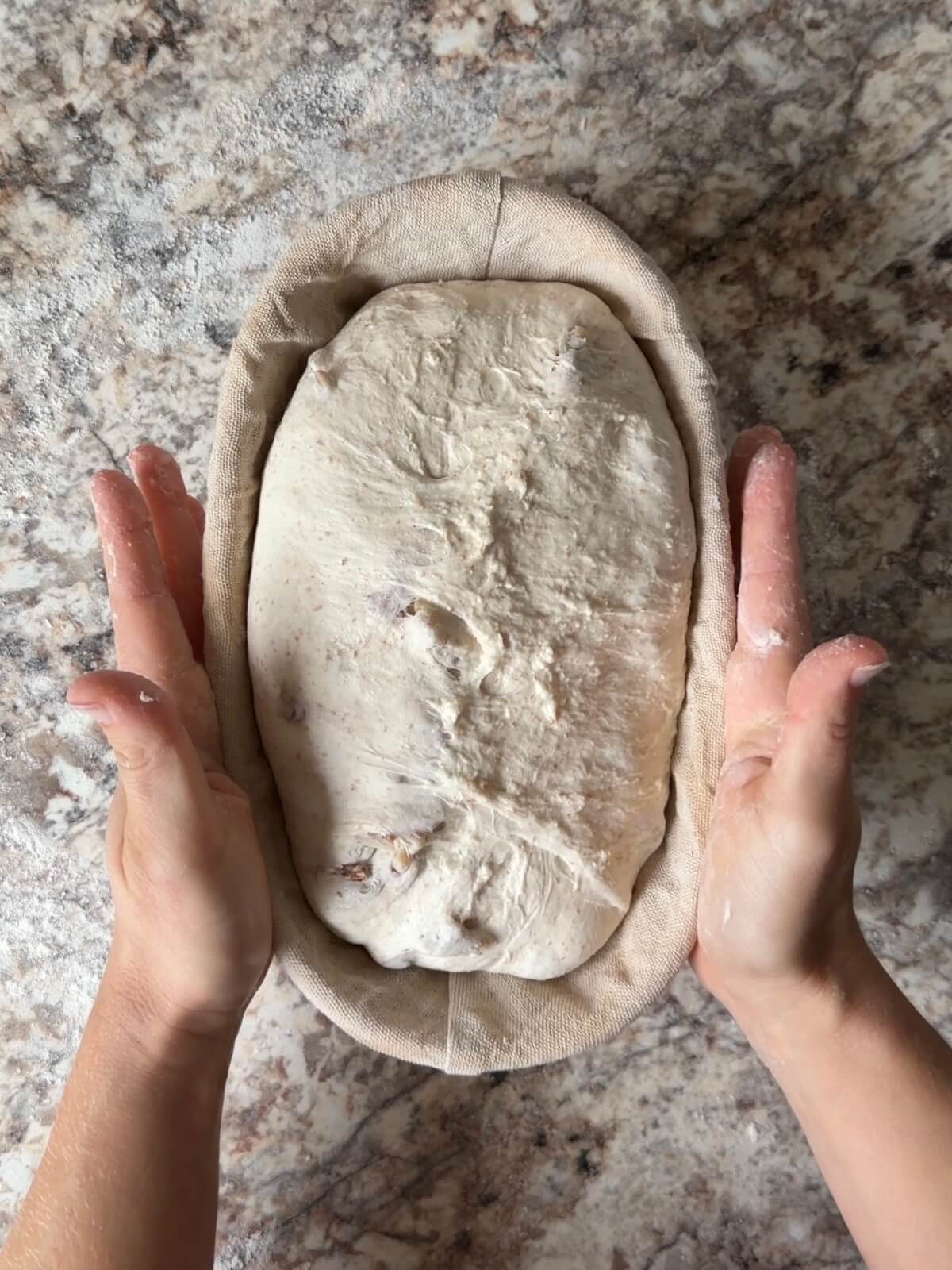
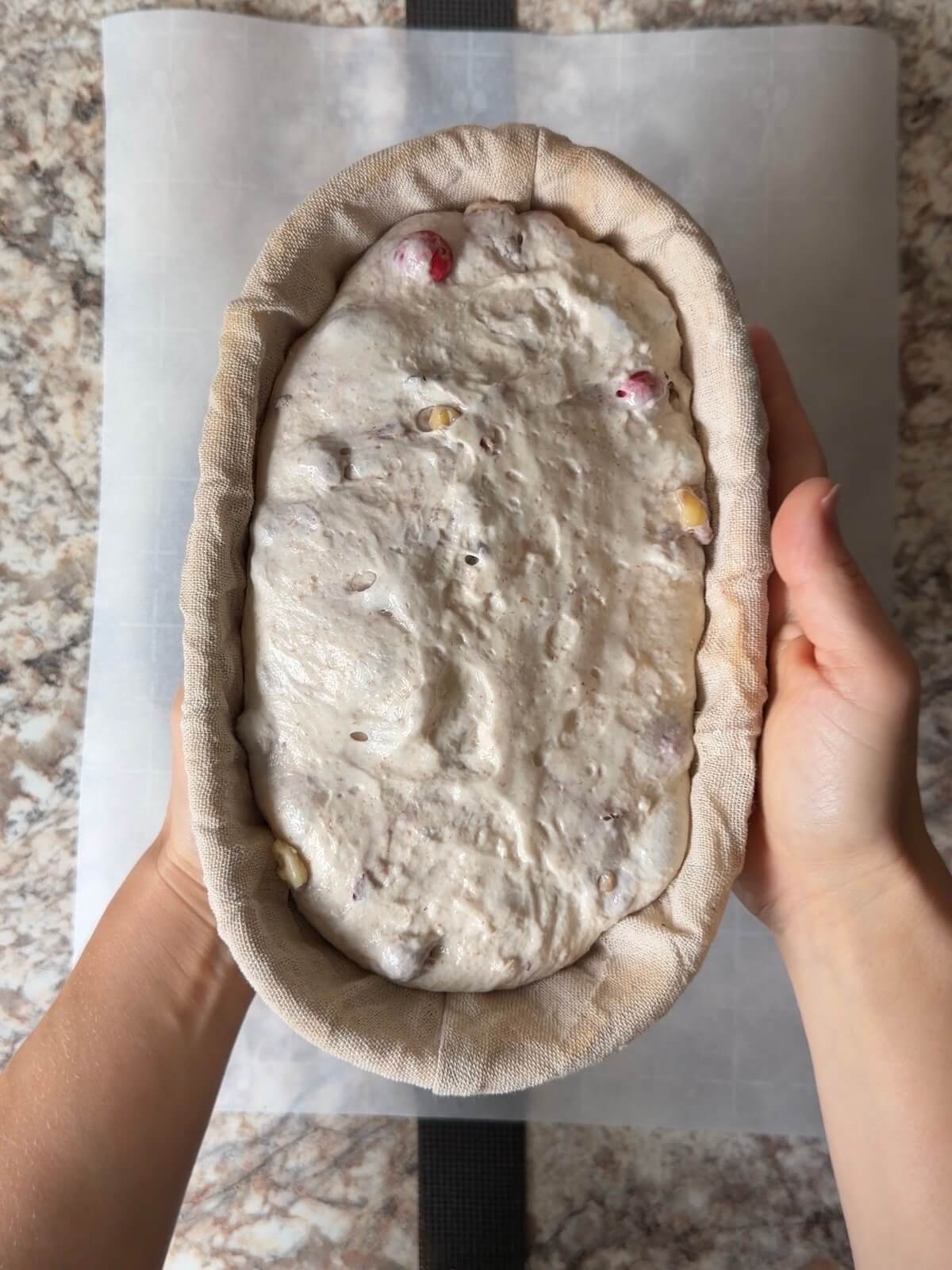
Step 7: Cold proof. Transfer to a rice-flour-dusted proofing basket, seam-side up. Cover and refrigerate for 12–16 hours.
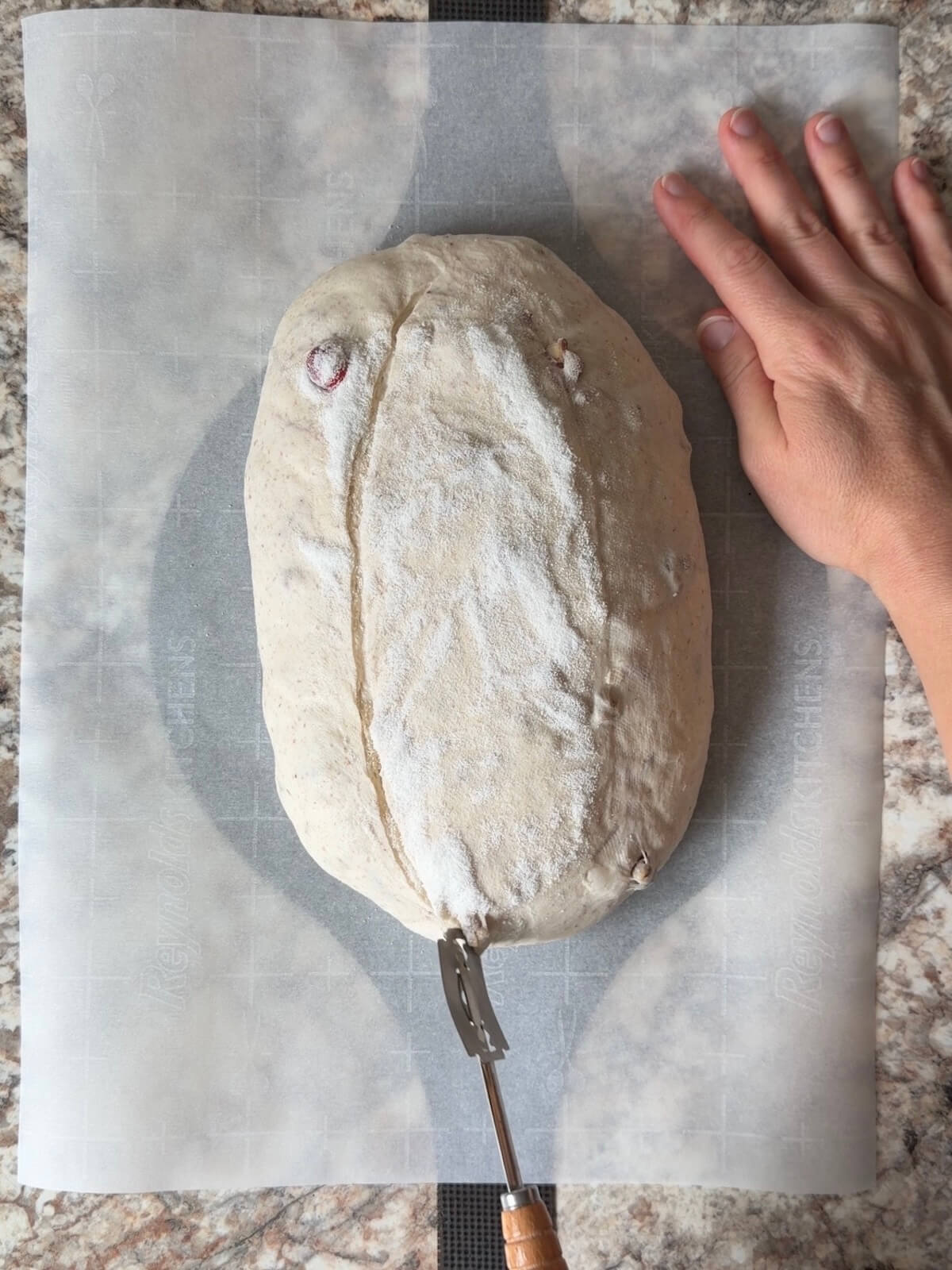
Step 8: Bake. Preheat oven to 450°F with a Dutch oven inside. Score the dough, add 2 ice cubes to the pot for steam, and bake 40 minutes covered, then 5-10 minutes uncovered. Let cool at least 2 hours before slicing.
Baker's Schedule
Here’s a sample timeline to help you plan your cranberry walnut sourdough bread.
- 8:00 PM (Night Before): Feed your starter.
- 8:00-8:30 AM: Toast walnuts and cool.
- 8:30–9:00 AM: Mix the dough and let it rest for 20 minutes.
- 9:00–10:00 AM: Perform stretch and folds; add cranberries and walnuts.
- 10:00 AM–5:00 PM (varies): Bulk fermentation (until nearly doubled in size).
- 5:00–5:30 PM: Shape.
- 5:30 PM–6:00 AM (Next Day): Cold proof in the fridge overnight.
- 6:00–6:45 AM: Bake at 450°F.
- 6:45–8:45 AM: Cool completely before slicing.
Note: Rise times can vary depending on the strength of your starter and the temperature of your kitchen. Always use visual cues—like a dough that has doubled and looks airy—rather than relying strictly on the clock.
How to Store
Store whole or sliced cranberry walnut sourdough bread in an airtight container or breadbox at room temperature for up to 3 days.
For longer storage, freeze the bread in a freezer-safe container or bag for up to 3 months. Thaw at room temperature or warm individual slices in the toaster.

Are you tired of watching your sourdough discard go to waste?
It’s time to turn excess discard into something delicious with my new ebook - Everyday Sourdough!
Inside, you’ll find 27 tried-and-true sourdough discard recipes that will transform your leftover starter into mouthwatering creations your family and friends will love.
No more guilt about wasting your discard - with Everyday Sourdough, you have endless options to quickly make something amazing anytime.
Let's Connect!
Be sure to leave a comment below if you have any questions. You can also connect with me on Instagram, Facebook, Pinterest, or via email at [email protected].

📖 Recipe

Cranberry Walnut Sourdough Bread
Equipment
- Straight-sided container (optional)
- Proofing basket or bowl lined with tea towel
- Bread sling or parchment paper
- Lame or sharp knife
Ingredients
- ½ cup (60 grams) chopped walnuts
- 1 ½ cups (360 grams) water
- ½ cup (100 grams) active sourdough starter
- 4 cups (480 grams) bread flour
- 3 ½ teaspoons (10 grams) Diamond Crystal Kosher Salt measure in grams or reduce to 1 ¾ teaspoons if using Morton's brand or table salt
- ½ cup (50 grams) fresh cranberries or ½ cup (60 grams) dried cranberries
- Rice flour for proofing basket
- 2 ice cubes for steam
Instructions
- Feed your sourdough starter 6–12 hours before you plan to mix the dough. It should be bubbly, active, and at or near its peak when you’re ready to use it. In a cooler kitchen (60–65°F), this may take closer to 12 hours, while a warmer kitchen (around 75°F) may take about 6 hours.
- Add the walnuts to a small skillet over low heat and toast until fragrant and lightly golden, stirring occasionally so they don’t burn. Transfer them to a small bowl and let them cool completely before adding them to the dough.½ cup (60 grams) chopped walnuts
- In a large bowl, whisk together the water and active sourdough starter until the starter is mostly dissolved. Add the bread flour and salt and mix until no dry flour remains and a sticky dough forms. Cover and let the dough rest for 20 minutes.4 cups (480 grams) bread flour, 1 ½ cups (360 grams) water, ½ cup (100 grams) active sourdough starter, 3 ½ teaspoons (10 grams) Diamond Crystal Kosher Salt
- Lightly wet your hands. Sprinkle about one-quarter of the cranberries and cooled walnuts over the surface. Grab one side of the dough, stretch it up, and fold it over the center. Rotate the bowl and repeat on all four sides, adding another quarter of the mix-ins with each fold. Once all of the mix-ins have been added, gather the dough into a loose ball, place it seam-side down, and cover. Let it rest for 15 minutes. Repeat the stretch-and-fold process 3 more times, resting the dough for 15 minutes between each round, for a total of 4 rounds.½ cup (50 grams) fresh cranberries
- Cover the dough and let it rise at room temperature until it has nearly doubled in size, looks noticeably puffy, and has bubbles throughout. This can take anywhere from 4–12+ hours depending on the temperature of your kitchen and the strength of your starter.
- Turn the dough onto a lightly floured work surface and gently stretch it into a large rectangle. Fold one short side toward the center, then fold the opposite short side over it, like folding a letter. Fold the two long sides toward the center in the same way. Flip the dough seam-side down. Using your hands or a bench scraper, gently pull the dough toward yourself across the work surface to create surface tension and shape it into a smooth, tight ball.
- Lightly dust a proofing basket with rice flour. You can also use a bowl lined with a clean tea towel. Transfer the dough to the basket seam-side up, pinching the seam closed if needed. Cover and refrigerate for 12–16 hours.Rice flour
- Place a lidded Dutch oven in the oven and preheat to 450°F. Once the oven reaches temperature, let the Dutch oven continue heating for 30 minutes.
- Turn the dough onto a piece of parchment paper or a bread sling and score the top with a lame or sharp knife. Carefully remove the hot Dutch oven from the oven. Add the ice cubes for steam, then carefully lower the dough into the Dutch oven. Cover with the lid and bake for 40 minutes. Remove the lid and continue baking for 5–10 minutes, or until the crust is deeply golden brown and reaches your desired level of doneness.2 ice cubes
- Transfer the bread to a wire rack and let it cool for at least 2 hours before slicing.
Notes
- Storage: Store in an airtight container for up to 3 days or freeze for up to 3 months.



Tammy says
Didn't have the dried cranberries so used dark raisins instead. I had the toasted walnuts on hand--I toast a pound of them at a time, then freeze until I need them--and I used my "Sourdough Bread" flour mix for all of the flour. My "Sourdough Bread" mix that I use to feed my starter and to make the bread is 2 cups bread flour, 2 cups all-purpose flour, 1 cup whole wheat flour, one cup rye flour, one cup rice flour, one cup oat flour and one cup buckwheat flour plus a cup of any other flours I run across. At various times I've added spelt flour, semolina flour, and another 'ancient grains' flour that I cannot remember the name of, but it began with A. It all depended at what I found at the local store or co-op. Part of the reason I developed it was because for over two decades I only had ONE sourdough recipe--the sourdough bread recipe in a mid 1960s edition of the Better Homes & Gardens cookbook. By the way, the sourdough starter I had in that cookbook is NOT the one the BH&G has featured since about 1980, possibly earlier. The starter recipe I use has milk or milk powder in it--you use milk or milk powder every fourth feeding--and you add a packet of yeast when you first mix up your starter. Later editions use a plain flour and water mix for the starter.
The bread came out good; I'm considering adding honey to the next batch.
Ashley Petrie, RDN, LDN says
Hi Tammy! So fascinating - I love that you use a mix of flours for your starter and bread. It's amazing how many different ways there are to make sourdough. I've never experimented with using milk powder in my starter, but I've heard of people doing that before and would love to try it. Same with using potato flakes. I might have to start experimenting soon! Glad you enjoyed the recipe - honey would be an amazing addition 🙂
Patrick says
Made this loaf this past weekend for a dinner party with friends and it was a smashing success. I added honey and orange zest to mine and was delighted with both. Incredible aroma, flavor and texture. This is a keeper for sure! Thanks so much for sharing.
Ashley Petrie, RDN, LDN says
Hi Patrick! Honey and orange zest are fantastic additions - glad you and your friends enjoyed it. 🙂