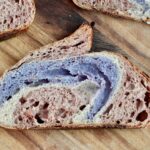
Patriotic Sourdough Bread
This Red, White, and Blue Sourdough Bread is a naturally-dyed patriotic loaf perfect for the 4th of July. Made with freeze-dried strawberries and butterfly pea flower instead of artificial food coloring, this colorful sourdough bread is so fun to make.
Servings 12 slices
Calories 195kcal
Equipment
- Straight-sided container (optional)
- Proofing basket or bowl lined with tea towel
- Bread sling or parchment paper
- Lame or sharp knife
Ingredients
Red Dough
- ½ cup (120 grams) water
- 3 tablespoons (40 grams) active sourdough starter
- ¼ cup (24 grams) freeze-dried strawberry powder
- 1 ½ cups (180 grams) bread flour
- 1 teaspoon (3 grams) Diamond Crystal Kosher Salt reduce to ½ teaspoon or measure by weight if using Morton's brand or table salt
Blue Dough
- ½ cup (120 grams) water
- 3 tablespoons (40 grams) active sourdough starter
- 1 tablespoon (12 grams) butterfly pea flower powder
- 1 ½ cups (180 grams) bread flour
- 1 teaspoon (3 grams) Diamond Crystal Kosher Salt reduce to ½ teaspoon or measure by weight if using Morton's brand or table salt
White Dough
- ½ cup (120 grams) water
- 3 tablespoons (40 grams) active sourdough starter
- 1 ½ cups (180 grams) bread flour
- 1 teaspoon (3 grams) Diamond Crystal Kosher Salt reduce to ½ teaspoon or measure by weight if using Morton's brand or table salt
- Rice flour for proofing basket
- 2 ice cubes for steam
Instructions
- Feed your sourdough starter 6–12 hours before mixing the dough so it is bubbly and active. In cooler kitchens (60–65°F), this may take closer to 12 hours; in warmer kitchens (around 75°F), about 6 hours.
- Make the red dough: In a medium bowl, whisk together the water, active starter, and freeze-dried strawberry powder until smooth. Add the bread flour and salt and mix until a shaggy dough forms with no dry flour remaining. Cover and let rest for 20 minutes.½ cup (120 grams) water, 3 tablespoons (40 grams) active sourdough starter, ¼ cup (24 grams) freeze-dried strawberry powder, 1 ½ cups (180 grams) bread flour, 1 teaspoon (3 grams) Diamond Crystal Kosher Salt
- Make the blue dough: In a medium bowl, whisk together the water, active starter, and butterfly pea flower powder until smooth. Add the bread flour and salt and mix until a shaggy dough forms with no dry flour remaining. Cover and let rest for 20 minutes.½ cup (120 grams) water, 3 tablespoons (40 grams) active sourdough starter, 1 tablespoon (12 grams) butterfly pea flower powder, 1 ½ cups (180 grams) bread flour, 1 teaspoon (3 grams) Diamond Crystal Kosher Salt
- Make the white dough: In a medium bowl, whisk together the water and active starter. Add the bread flour and salt and mix until a shaggy dough forms with no dry flour remaining. Cover and let rest for 20 minutes.½ cup (120 grams) water, 3 tablespoons (40 grams) active sourdough starter, 1 ½ cups (180 grams) bread flour, 1 teaspoon (3 grams) Diamond Crystal Kosher Salt
- Perform stretch and folds on all 3 doughs: Lightly wet your hands to prevent sticking. Working with one dough at a time, lift one side of the dough, stretch it upward, and fold it over itself. Rotate the bowl 90° and repeat until all four sides have been folded. Gather the dough into a loose ball and place it seam-side down in the bowl. Cover and rest for 15 minutes. Repeat this process 3 more times, resting 15 minutes between each round, for a total of 4 sets of stretch and folds.
- After the final stretch and fold, transfer the doughs into one large container by stacking them on top of each other with the white dough in the middle. Don’t mix or knead them together—the layers will naturally adhere as the dough ferments. Cover and let the dough bulk ferment until puffy, bubbly, and roughly doubled in size. This can take anywhere from 4–12 hours depending on your kitchen temperature and starter strength.
- Lightly flour your counter and gently turn out the dough. Carefully stretch it into a loose rectangle. Fold the short sides toward the center like a letter, then fold the long sides toward the center. Flip the dough seam-side down and gently tighten it into a round by cupping your hands around it and pulling it toward you.
- Dust a proofing basket or towel-lined bowl generously with rice flour. Place the dough inside seam-side up, pinching the seam closed if needed. Cover and refrigerate for 12–16 hours.Rice flour
- The next day, place your Dutch oven (with the lid on) inside your oven and preheat to 450°F. Once preheated, let it continue heating for another 30–60 minutes.
- Turn the dough out onto a sheet of parchment or a bread sling so it’s seam-side down. Score the top with a lame or sharp knife. Carefully place 2 ice cubes inside the Dutch oven for extra steam. Lower the dough into the pot, cover, and bake for 40 minutes. Remove the lid and bake for another 5–10 minutes until the crust reaches your desired color.2 ice cubes
- Transfer the bread to a wire rack and cool for at least 2–4 hours before slicing.
A straight-sided container makes it much easier to see when the dough has doubled.
Notes
- Note: The colored doughs may ferment at slightly different rates because the powders can affect hydration and acidity a bit.
- Expect some color variation: Natural food powders can vary in strength and shade, so your loaf may look slightly different depending on the products you use.
- Storage: Store in an airtight container at room temperature for up to 3 days or freeze for up to 3 months.
Nutrition
Serving: 1slice | Calories: 195kcal | Carbohydrates: 38g | Protein: 7.5g | Fat: 1g | Polyunsaturated Fat: 0.5g | Sodium: 302mg | Potassium: 96mg | Fiber: 1.5g | Sugar: 1g | Calcium: 13mg | Iron: 2.8mg
Did you try this recipe?Let me know! Comment below, or take a picture and tag me on Instagram @everydayhomemadebyashley.
